I’m old and my mind is going. Too much drugs, too much useless information clouds my brain. Which is why a lot of common knowledge straight up misses me.
As you are aware, I’m a nerd for New Testament/Early Christian history. Am I a Christian or a religious person? Not really, but I don’t understand the question enough to give a definitive answer (remember, my mind is going). I simply obsess over 1st Century Christianity because, as Bart Ehrman asserts, it might just be the most important era in Western History (I disagree. I think it’s the second most).
Unfortunately, there’s just not enough concrete information to definitely say what happened during Jesus’s real life ministry. Of course, speculating is part of the fun, but it’s also a curse. Because there’s so many gaps in the timeline, this invites a multitude of con artists and conspiracy mongers to perpetuate fabricated stories.
Which brings me to the “Secret Gospel of Mark”.
The actual Gospel of Mark, the one we have in the New Testament, is quietly the most important text in Western thought. I say this because the Gospels are certainly more widely read than something like Plato’s Republic, and Mark is the Gospel that Matthew and Luke based much of their texts on (the other source they both used, the hypothetical Q source, I would argue the author of Mark was familiar with as there are too many similarities…which would make Q the most important text. But Q remains hypothetical). Mark is therefore the oldest surviving account of Jesus’s life (the oldest surviving Christian writings, however, are the seven verified Epistles of Paul, with 1st Thessalonians being the oldest).
Now, there are A LOT of questions for Mark. Too many to recount here. It is the barest of the four canonical Gospels with plenty of peculiarities.
But what if someone credentialed allegedly came across evidence to fill in these gaps?
Enter Morton Smith, a Ph.D from Hebrew University and Th.D from Harvard Divinity, and professor of ancient history at Columbia University. Pretty impressive right?
I was made aware of this story when reading Ehrman’s Lost Christianities. I’ve never heard it before and I was shocked at my ignorance. Now Ehrman is probably the leading academic in the field of Early Christianity, and even he doesn’t quite know what to make of this story.
Briefly, Smith claimed to have found a lost letter from Clement of Alexandria, an early Christian theologian, which describes a variant of the Gospel of Mark and even provides a couple of passages. And boy oh boy! What passages they were!
The problem is that, allegedly, this lost letter was transcribed in the 18th Century, and Smith couldn’t provide the copy because it was property of a monastery in Jerusalem. He DID, however, provide photographs of the letter and scholars have determined that these writings were indeed in the style of Clement and Mark (and the handwriting was also of 18th Century style).
Additionally, Ehrman recalls a story of hearing another academic claiming to have seen the letter himself, despite the library still refusing to permit research into it. So, it’s safe to say that this letter genuinely existed.
Whether or not it was written in the 18th Century is a different story.
You see, because if there was one person on this planet that could have forged that document…well enough to fool many academics…Morton Smith was that man. And, apparently, he had a motive to do so (see Ehrman’s Lost Christianities).
For the record, I think the letter is a total, unambiguous forgery. Too good to be true+motive+means=bullshit. But I gotta tip my hat to Smith.
Every bullshit artist knows that eventually they’ll get caught in the lie. But the trick is to leave a shred of doubt. And Morton Smith either made the discovery of the millennium, or the greatest forgery of all time.
You know how there were a bunch of mediocre period films from the 80s and 90s?
You know, like Gandhi, Out of Africa, Titanic, Rob Roy, The Ghost and the Darkness, The Man in the Iron Mask, The 13th Warrior, Enemy at the Gates? Etc etc…
Has there ever been a movie that started off vanilla and then did a complete 180?
Like I have an idea of a period piece, during the Napoleonic Wars or Mongol Invasions or some shit, where the typical tropes are established: a virtuous hero, a mustache-twirling villain, a love interest, and a community standing up to the forces of evil, etc. The film will open with some boring quote on the nature of war: “In war, there are no heroes”, or whatever. Even the leading man will be the safest, whitest, most bland actor you can think of…one of the “Chris’s” probably (Chris Pratt, Chris Evans, Chris Pine). The entire first half will be nothing but tropes and cliches…even the cinematography and music are flat and unoriginal, to the point where the audience will stop paying attention…as our hero prepares his community for battle against some dumb villain.
Then the second half opens and all fucking hell breaks loose: the “hero” and his army, as one thing leads to another, just commits straight-up genocide in the most offensive and disgusting way possible. And the worst part: the “hero” doesn’t reflect on his dishonorable victory. To him, it’s all glory. The film is told from his perspective as he slaughters men, women, children, and takes slaves for good measure…all told through the lens of bland 90s filmmaking.
Then the lame quote from the beginning… “In war, there are no heroes” …reappears at the end, just so you can show the audience that you tried to warn them. And that’s the moral of the film: everyone is capable of evil so pay attention, we’re all blinded by ideology, blah blah blah
Is anyone else seeing what I’m seeing here?
Sure there are films that deliberately fuck with the audience, but is there one out there that fucks with the audience based on expectation (like making the audience believe they’re watching standard Hollywood fare, but reveal that they’re actually watching torture porn)?
Do people actually read Nietzsche or do they just quote him so that they appear smart?
Look, I love ramblings of insane people as much as the next guy but just because some dude from the past said something doesn’t make it correct.
Same thing with George Orwell. I legit never met anybody who read 1984. They claim that they have, but I know better. The libertarian types love bringing up Orwell, but I guess they forgot that while Orwell’s politics sound, to me, a bit nuanced, he was pretty solidly a leftist.
Maybe I just refuse to believe that anyone from the past has a greater insight into our present than we do today. It just doesn’t make sense. Bring Isaac Newton to the present and I guarantee that you could crush his ass in a game of Trivial Pursuit.
What are some other authors that stupid people claim to read (but actually didn’t)?
This was the first Star Trek movie I saw, so maybe I have a soft spot for it.
For the record, I don’t think Bill Shatner is the problem here. I’ll defend that man till death. The problem with this film is the poor special effects (mixed in with what I presume to be budgetary constraints) and some of the strange science that flies in the face of the grounded science of Star Trek.
I don’t think the script is the problem either. Sure there were some strange decisions. The romance between Scotty and Uhura was odd, especially since it was never hinted before (or after). Trek fans hate the idea of Sybok, Spock’s half-brother…which was also never mentioned before in Trek canon… but Sybok is actually an interesting character. However, the heart of Star Trek, particularly with the original cast, was the trifecta of Kirk, Spock, and McCoy, and this film contains some of the best scenes of them together.
The “antagonist”, the aforementioned Sybok, was originally intended to be played by Sean Connery. If that had managed to work out, I’m sure this film would be looked at more favorably. That being said, Laurence Luckinbill does a stellar job making this religious charlatan both sympathetic and charismatic, enough for you to believe that he could rip apart the friendship between the trifecta. I’d say he’s the second best villain in Trek film (behind, of course, Ricardo Montalban’s Khan).
But I applaud Shatner’s ambition here. Harve Bennet, then the head of Star Trek films, hated the idea of “the Enterprise searching for God, but finds the devil instead,” which may be a controversial concept within Star Trek, but it is an interesting idea in-itself.
Did it work?
Not entirely.
Could it have worked?
Yes. Which is why it’s a shame that Shatner never got a chance to do a proper Director’s Cut, especially given advancements in CGI technology.
They gave Robert Wise that opportunity with Star Trek: The Motion Picture, and its reputation has greatly improved.
But there is an interesting fan theory floating around the internet: the main plot of the film is Kirk’s dream while camping with Spock and McCoy in Yosemite. You watch the movie, and you can definitely draw that conclusion.
That’s how I watch it. And it becomes the greatest Star Trek movie ever made.
Maybe the internet isn’t such a bad place after all.
(Update: I’m 119 years old and I don’t understand technology. It doesn’t help that I lost the use of my left side brain at the Battle of Verdun. So forget all of this. It never happened. But I’m leaving this up because some of it is funny. I dunno. Then again I’ve been off my anticonvulsant meds the last few days)
So I was watching The Beastmaster when the Tanya Roberts bathing scene came on. I was about to “master” another “beast” if you know what I mean 😉😉😉 (Rip Torn gets me hot), but then I thought “I should create a Facebook page for my website!”
First, I tried setting up a business page, but Facebook forbids that with WordPress sites or some crap (or I have to buy some add-on, but I ain’t paying for that shit) so I set up a group page instead.
Here’s the link:
(not available)
“Why Facebook?” a question you’re probably not asking.
Because it’s the only social media site that doesn’t make me want to hire a hit man to set me on fire.
So come join! If you don’t then you probably have a tiny penis anyway. Not that there’s anything wrong with that. I’m just saying that you’re less of a man if you don’t join my group.
So if you want to regain your self-respect, you better join the Internet Ruined Everything group and meet other weirdos just like YOU.
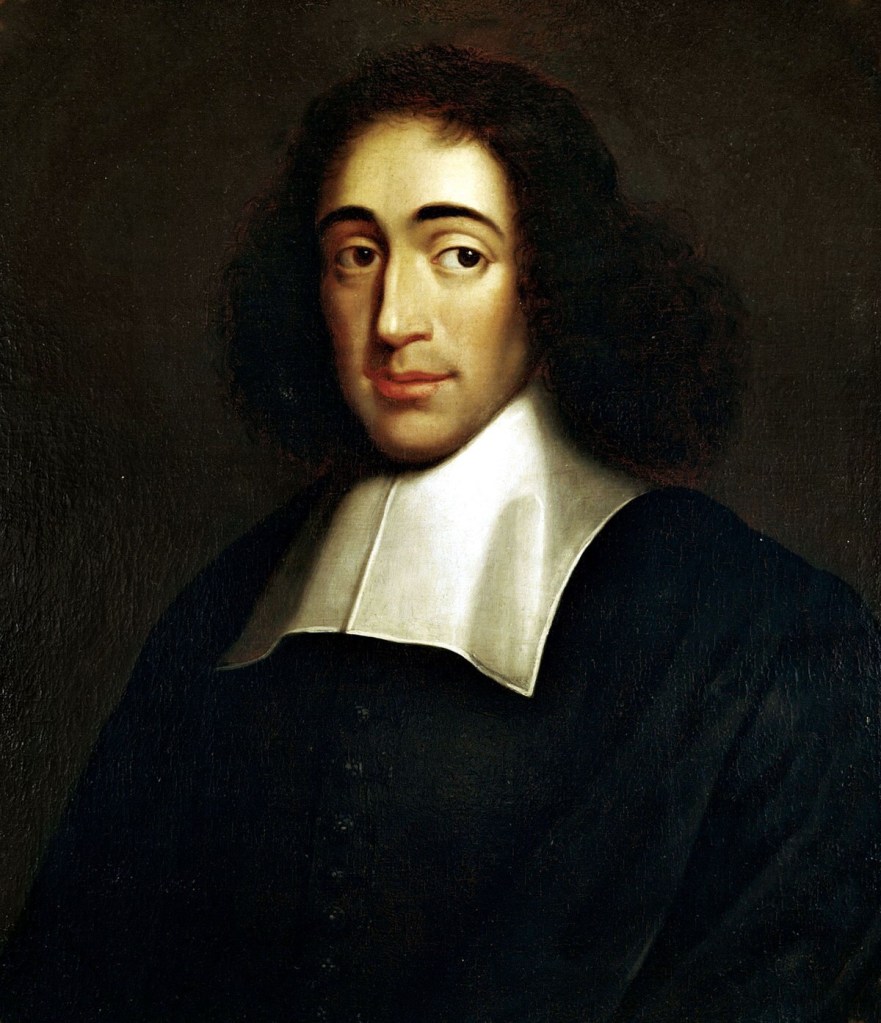
“The world would be happier if men had the same capacity to be silent that they have to speak” -Baruch Spinoza
Ludwig Wittengenstein infamously had a similar quote: “Whereof one cannot speak, one must be silent.”
This is true. There’s no use in filling the air with senseless chatter about things we do not understand.
Like I don’t understand why I got laid off. I’ll spend hours in the basement with a bottle of Jim Beam and a loaded 22. My wife will ask if everything is alright and I’ll respond with “whereof one cannot speak, one must be silent.”
“All of humanity’s problems stem from man’s inability to sit quietly in a room alone,” -Blaise Pascal
Of course Blaise Pascal also said “small minds=small penis, great minds=ordinary penis,” but there’s no doubting the wisdom of his former quote.
I’ve always been lazy. And I’ve always championed the virtue of laziness. Most of life is filled with completing useless tasks that are designed simply to keep you busy.
This is obviously true at work. But it’s also true in your personal life. Do you make the bed? Shop for clothes you don’t need? Take showers? Use the toilet when you can just poop your pants?
All of it is pointless.
This preoccupation with occupation is what leads to discontentment. And being discontent leads to suffering.
The true mode of happiness is being content with sitting in a room alone, alienating your family, falling into crippling debt, and drinking your own piss.
That’s the true thrust of Blaise Pascal’s philosophy.




 The Internet Ruined Everything