meh

My news feed has been buzzing the last 24 hours. More so than usual. No, it has nothing to do with the Russians possibly invading Ukraine. It’s the announcement of a fourth “Kelvin Timeline” Star Trek film.

Unlike most Star Trek fans, I am content with saying that Star Trek died with the last episode of Enterprise. And we all owe Rick Berman an apology (even though he sounds like a legit asshole).

So I don’t give a shit about this new film (written by a bunch of writers whose work I also don’t give a shit about). 🚨 Spoiler Alert 🚨: it’s gonna suck.

How do I know?

Let me tell you about two men named JJ Abrams and Alex Kurtzman.

Perhaps I shouldn’t be too harsh. They did revive Trek. Because of them, there are four…about to be five…Star Trek shows airing. Audiences change. As ridiculous as it sounds now, TOS fans were reluctant to accept TNG.

Now I’m a TNG fan that’s reluctant to accept Kurtzman Trek.

The thing that TOS and TNG had in common though is one VERY important thing: Gene Roddenberry. And Roddenberry was succeeded by Rick Berman, who was hellbent on carrying out his predecessor’s vision.

No such chain of succession with this new Trek.

JJ Abrams did do one thing right though: the first 10 minutes of Star Trek 09. And that kinda highlights my biggest gripe with this current set of producers: they are Kliff Kingsbury of Star Trek.

All three movies, plus Picard, plus Discovery, start off fairly strong in their opening acts (or first few episodes) and then inexplicably derail into a total train wreck.

Moreover, this new “cinematic” feel to Star Trek just doesn’t…feel right. Trek works best on a shoestring budget, phenomenal writing, and the perfect casting. Case in point: Wrath of Khan. It is probably the Trek film with the smallest budget, but it’s also considered the best.

There’s a Shakespearean, theater-like quality to the Roddenberry/Berman-era Trek that, I think, many fans find appealing (even if we didn’t appreciate it at the time).

Of course, those days of television and movies are over (in part, due to JJ Abrams’ impact on the industry) and that’s okay. Things change.

Which is why we must let Star Trek go.

pennies for the dead (part vii)

“Just be warned,” Joe said to me, “Hell ain’t what you think it is.”

“How so?”

“You just have to see.”

Joe, Pete, and I gathered our divinely blessed weapons and proceeded to the cellar in the woods. Joe went into the portal first, then Pete. I hesitantly went in last.

I felt my body break down into its molecular and atomic parts while time and space melted down. Then reality reconstructed itself and the three of us were in a large theater.

On stage was a nude couple: one an elderly woman and the other an average-looking dude with an abnormally large dong. A horse was also on stage. It was a community theater production of Equus.

“Ah shit. Now I know what you mean,” I said.

We rushed out of the theater, side by side, weapons on ready. We were men on a mission, a mission to find…and kill…Jezebel. And more importantly, we had to stop the dead from invading the earthly realm.

Outside the theater, we hailed a cab. The driver stopped and we all piled into the back. “Does anyone want to sit up here with me?” the driver asked. “Son of a bitch,” I said then got in the front seat.

“Where to?” the cabbie asked. “Downtown” Joe replied.

The cab driver then blasted Jon and Vangelis from the radio and was humming along. I turned to the backseat.

“Hell seems more boring and mildly irritating,” I said, “much like Minneapolis.”

“Yeah, but imagine spending spending eternity here,” Joe replied.

He had a point.

The cap pulled up to a downtown bank. We all piled out of the car. “Are you sure that the Empress of Hell and all of Damnation is here?” I asked.

“Of course, with their ungodly interest rates, there’s nowhere else she could be!” Joe said.

So the three of us…a wizard, an idiot, and a guy with a shotgun…walked into the bank lobby. We went up to a loan officer.

“We’re here to see Jezebel,” I tell the man.

“Do you have an appointment?” he asks.

I cocked the shotgun and blasted a hole in his chest. “She’ll be with you shortly,” the loan officer replied.

Security guards rushed into the lobby and began firing indiscriminately. Pete became an absolute beast and started slicing away with his machete. Joe unleashed fire bolts from his staff. I unloaded shell after shell from my shotgun.

As we looked over the absolute slaughter of security guards, with blood and guts strewn about the lobby, Joe nodded his head. “I think our plan is working out pretty good,” he said.

“I’m out of shells,” I said and dropped the shotgun. Then I pulled out the .38 and kissed it. “But I still got six shots.”

We all went into the elevator and Joe hit the button for the 666th floor. “Holy shit!” I said. “How many floors are in this building?”

32 minutes later, we arrived. Jezebel was in a conference call with all of her minions. She was planning the final stages of her Hellish invasion of earth.

“What took you so long?” she asked.

“Your slow ass elevator,” Pete said.

“You think your earthly powers can stop me?”

I lifted the .38. “Nothing can stop these bullets sister.”

TO BE CONTINUED…

enema at the gates (and why I go to bat for Dances With Wolves)

Most nights I can’t sleep. Most nights I can’t sleep because I can’t stop thinking about a film. Usually, it’s not a great film that’s keeping me up. It’s a film that could have been great, but everyone fucked up.

One such movie is Enemy at the Gates (2001).

It’s a shame. This movie could have been dope. So what happened?

Now forgive me, it’s been a few weeks since I’ve watched it so I won’t go into plot details. But the screenwriters shouldn’t have committed to telling a love story AND a game of cat and mouse.

Individually these stories could have been interesting on their own. The Battle of Stalingrad was such a test of the human spirit that it provides an interesting backdrop to any story.

But Enemy at the Gates falls victim to a very serious problem…a problem that plagued so, so many movies of the era: it tries to have it both ways. It wants to be a gritty war film AND appeal to 90s sentimentality.

“But it’s based on a real historical account,” you might say.

And lo and behold, this is largely true. Of course, it takes a few creative liberties. I doubt Joseph Fiennes’ character was real. Same with Ron Perlman’s…a character that I hated so much because it seems to have been included for expositional purposes only. Because the film takes such liberties…it is a movie after all, and not a documentary…then pick a lane.

If I were making this movie, I would have focused exclusively on the chase between Ed Harris and Jude Law. But there’s no sense in crying over spilled milk.

Enemy at the Gates appears to have been one of the last of the so-called “90s, mediocre, sentimental historical dramas.” I don’t hate all of these movies. In fact, I go to bat for perhaps the greatest example of this genre: Dances With Wolves.

“Can you believe that Kevin Costner beat Martin Scorsese at the Oscars?” everyone says to me.

No. That’s not surprising at all. Have you seen the movie? I will pound the table every chance I get: Kevin Costner DESERVED his Oscar.

Quote me on that.

Honestly, as much as it pains me to say this, if there’s a flaw with the movie, it’s the screenplay. That’s a big one. This might not have been obvious to audiences then, but it’s clear 32 years later. BUT, it appears to me that Costner was involved in the project from the moment of its inception, so the script was suited to his strengths.

Could anyone else have made Dances With Wolves?

No.

And here’s where Costner excels: every character…EVERY last character…has their moment, however brief, to shine. When Stone Calf is killed, you feel it. Even when LT. Elgin is killed, one of the “villains”, there’s a shred of sympathy for him. This helps you become immersed in this lovely, bloody world.

Costner approaches the subject matter, much like his character, in a child-like, gentle manner. Not a detail is missed. It felt genuine, and not at all like it was trying “to have it both ways”.

It worked. It worked so well that nobody was able to emulate that style. They tried. But where every mediocre 90s historical drama failed, only Kevin Costner succeeded.

(Yes, I’m including Braveheart)

(Not sure about Saving Private Ryan)

legit ?

You know how there were a bunch of mediocre period films from the 80s and 90s?

You know, like Gandhi, Out of Africa, Titanic, Rob Roy, The Ghost and the Darkness, The Man in the Iron Mask, The 13th Warrior, Enemy at the Gates? Etc etc…

Has there ever been a movie that started off vanilla and then did a complete 180?

Like I have an idea of a period piece, during the Napoleonic Wars or Mongol Invasions or some shit, where the typical tropes are established: a virtuous hero, a mustache-twirling villain, a love interest, and a community standing up to the forces of evil, etc. The film will open with some boring quote on the nature of war: “In war, there are no heroes”, or whatever. Even the leading man will be the safest, whitest, most bland actor you can think of…one of the “Chris’s” probably (Chris Pratt, Chris Evans, Chris Pine). The entire first half will be nothing but tropes and cliches…even the cinematography and music are flat and unoriginal, to the point where the audience will stop paying attention…as our hero prepares his community for battle against some dumb villain.

Then the second half opens and all fucking hell breaks loose: the “hero” and his army, as one thing leads to another, just commits straight-up genocide in the most offensive and disgusting way possible. And the worst part: the “hero” doesn’t reflect on his dishonorable victory. To him, it’s all glory. The film is told from his perspective as he slaughters men, women, children, and takes slaves for good measure…all told through the lens of bland 90s filmmaking.

Then the lame quote from the beginning… “In war, there are no heroes” …reappears at the end, just so you can show the audience that you tried to warn them. And that’s the moral of the film: everyone is capable of evil so pay attention, we’re all blinded by ideology, blah blah blah

Is anyone else seeing what I’m seeing here?

Sure there are films that deliberately fuck with the audience, but is there one out there that fucks with the audience based on expectation (like making the audience believe they’re watching standard Hollywood fare, but reveal that they’re actually watching torture porn)?

never, never, never say never again

Have I already written about Never Say Never Again?

Fuck it, I’ll do it again.

Never Say Never Again is the best “James Bond” film of the 80s

I will die on that hill.

I love that cold open: 007 choking out some dude to the tune of a cheesy love song. Classic. 

Also, there are some killer lines:

Bond: “Free radicals, sir?”

M: “Yes, they’re toxins that destroy the body and brain, caused by eating too much red meat and white bread. Too many dry martinis.”

Bond: “Then I shall cut out the white bread sir.”

OR

Moneypenny: “Have you got an assignment James?”

Bond: “Yes Moneypenny. I’m to eliminate all free radicals.”

Moneypenny: “Do be careful!”

Plus, who doesn’t love watching a 53 year old, toupee’d Sean Connery get ogled by a sea of 20 year old women?

And Barbara Carerra Fatima Blush? 

You could say that she’s an “attractive woman” and made me “sexually aroused”. But I’ve never had an erection before.

You have. But that’s because you’re fucked up.

star trek v: the final assault

This was the first Star Trek movie I saw, so maybe I have a soft spot for it.

For the record, I don’t think Bill Shatner is the problem here. I’ll defend that man till death. The problem with this film is the poor special effects (mixed in with what I presume to be budgetary constraints) and some of the strange science that flies in the face of the grounded science of Star Trek.

I don’t think the script is the problem either. Sure there were some strange decisions. The romance between Scotty and Uhura was odd, especially since it was never hinted before (or after). Trek fans hate the idea of Sybok, Spock’s half-brother…which was also never mentioned before in Trek canon… but Sybok is actually an interesting character. However, the heart of Star Trek, particularly with the original cast, was the trifecta of Kirk, Spock, and McCoy, and this film contains some of the best scenes of them together.

The “antagonist”, the aforementioned Sybok, was originally intended to be played by Sean Connery. If that had managed to work out, I’m sure this film would be looked at more favorably. That being said, Laurence Luckinbill does a stellar job making this religious charlatan both sympathetic and charismatic, enough for you to believe that he could rip apart the friendship between the trifecta. I’d say he’s the second best villain in Trek film (behind, of course, Ricardo Montalban’s Khan).

But I applaud Shatner’s ambition here. Harve Bennet, then the head of Star Trek films, hated the idea of “the Enterprise searching for God, but finds the devil instead,” which may be a controversial concept within Star Trek, but it is an interesting idea in-itself.

Did it work?

Not entirely.

Could it have worked?

Yes. Which is why it’s a shame that Shatner never got a chance to do a proper Director’s Cut, especially given advancements in CGI technology.

They gave Robert Wise that opportunity with Star Trek: The Motion Picture, and its reputation has greatly improved.

But there is an interesting fan theory floating around the internet: the main plot of the film is Kirk’s dream while camping with Spock and McCoy in Yosemite. You watch the movie, and you can definitely draw that conclusion.

That’s how I watch it. And it becomes the greatest Star Trek movie ever made.

Maybe the internet isn’t such a bad place after all.

life is suffering

Remember between the end of the Cold War and 9/11 when such overrated classics like The Matrix, Fight Club, and American Beauty reminded us that we are bored with life and need to escape reality?

Then a few planes crashed into some buildings and everyone was like “how horrible!” but were secretly like “oh thank god! Something interesting is happening in the world” because we’re sick and terrible people?

There’s something deep-seated in the human psyche that draws it towards suffering. It’s like we need it to be reminded that we’re still alive.

It’s sick.

We are sick and terrible people and a meteor needs to strike the earth to put us out of our misery.

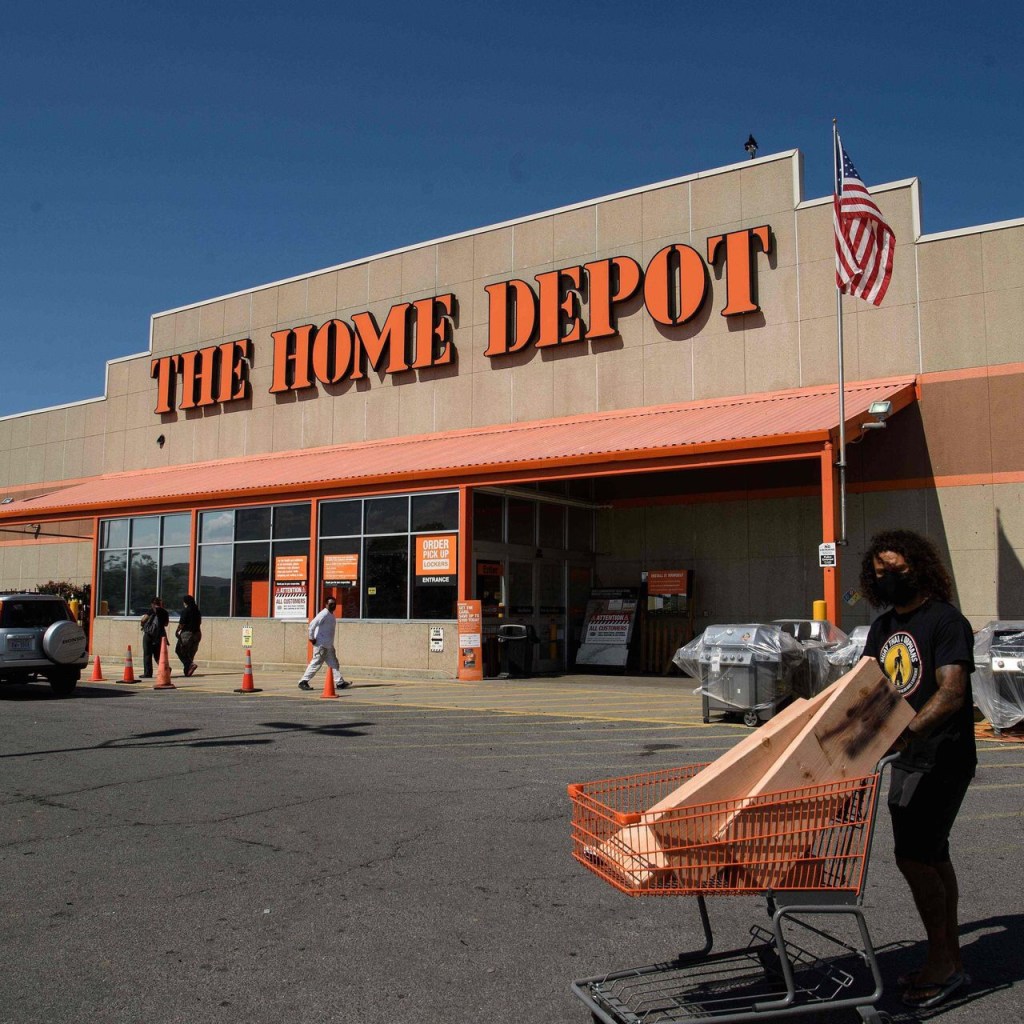
But until this happens, we have to occupy the time in between. So don’t forget to install those gutters, paint your walls, and plant those gardens….

Visit the Home Depot…

…How doers get more done!

penisball

So I was tossing and turning over night, agonizing over a specific question: is pop culture dead?

Of course, “pop culture” can never really “die” so long as there’s entertainment, fashion, etc. But has it fundamentally shifted in a way that requires new methods of critique?

Guys like Theodore Adorno were critiquing “pop culture” way back in the 1940s, claiming things like movies, music, etc. were massed produced commodities and were therefore not genuine (or whatever). But maybe the pandemic and the prolific use of the internet has changed the game.

Obviously these things have changed the way we interact with pop culture, but the question I’m concerned with is: “has the pandemic, and specifically the internet, changed the very nature of pop culture itself.”

(This is all from my dementia-driven perspective, btw)

Anyways, what made me agonize over this question is that everything feels a little passé. When people talk about reading tweets, I’m thinking “you’re still using Twitter?”. Even at 106 years old, I feel like I’m more “in the know” than most 20 year olds. It’s not because I’m “cooler” than them, it’s because they don’t give a shit. So how can “pop culture” be pop culture if it’s not popular?

Please help me. I haven’t slept in 27 days.

roboCop 2: greatest sequel ever made

First off, thank you to those who continually read this blog. I love all of you like a bastard child I never knew I had. But if we did have a child together, then I don’t know you and please don’t reach out to me.

Now on to the subject at hand:

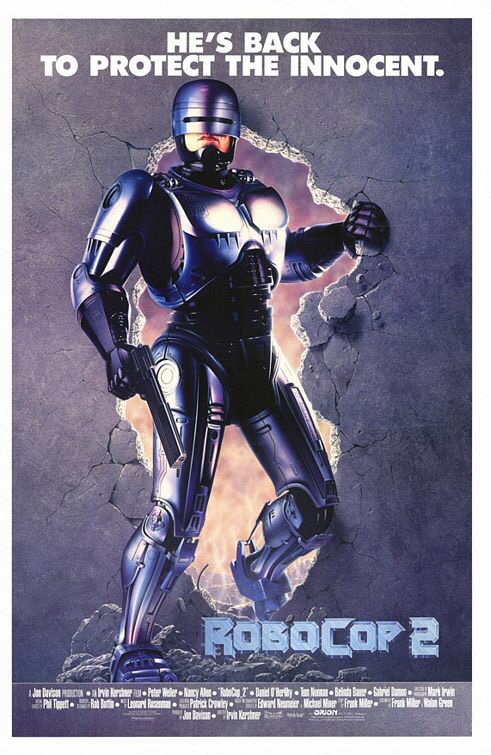
RoboCop 2

The first RoboCop is one of my favorite movies. Paul Verhoeven really knows how to tell a story from the perspective of the film’s ideology while simultaneously letting you in on the joke.

It’s a tough act to follow, and most claim that RoboCop 2 failed to live up to its predecessor. But I disagree. The reviews on IMDB are all over the place. Many say that it’s not a great movie, but there’s no consensus on why it’s not a great movie.

Yes, certain plot details go nowhere. This is probably the result of studio interference, which is typical for highly anticipated sequels. But my question is: who gives a shit? RoboCop 2 was made in the same vein as another infamous sequel released a week earlier: Gremlins 2: The New Batch and it should be viewed in that light.

Is it a GREAT film? Lol, no. It’s not supposed to be. When you make a sequel, you have two options: do something entirely different or double up on the same shit that was done before. The filmmakers chose the latter (which was the right choice).

Now Verhoeven definitely handled the gratuitous violence much more effectively in the first film, but that’s his specialty. At its heart, RoboCop is a satire on consumerism and corporate culture. The horrific violence and sci-fi aspects, which most people remember it for, was just the vessel to tell the story. RoboCop 2 threw up its arms and said “fuck it, we’re just gonna be satire”.

The villains are much more over-the-top, the commercials are much less subtle, and even RoboCop himself is more exaggerated. Many praised RoboCop for its self-awareness, well the same is true for RoboCop 2. In fact, it’s straight up mocking itself.

I’d say that RoboCop 2, along with Gremlins 2, might be the two most self-aware films ever made.

Does it deserve the 5.8 rating it currently has on IMDB? No.

A 6.8 seems more fitting.