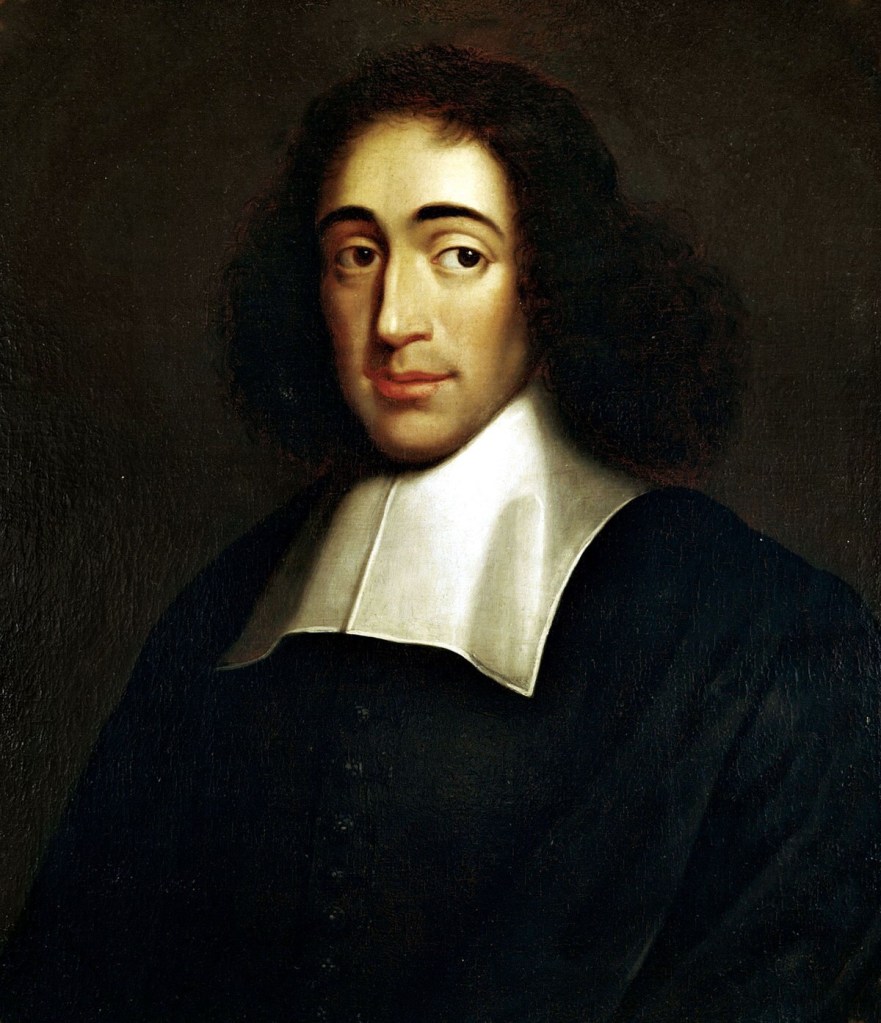
“The world would be happier if men had the same capacity to be silent that they have to speak” -Baruch Spinoza
Ludwig Wittengenstein infamously had a similar quote: “Whereof one cannot speak, one must be silent.”
This is true. There’s no use in filling the air with senseless chatter about things we do not understand.
Like I don’t understand why I got laid off. I’ll spend hours in the basement with a bottle of Jim Beam and a loaded 22. My wife will ask if everything is alright and I’ll respond with “whereof one cannot speak, one must be silent.”
The above interview is probably one of the the better, honest discussions I’ve seen in awhile regarding the nature of current politics.
It echoes my “everything is ideology” ranting, but Jonathon Gottschall takes it a step further: our ideology-making at the macro/political level amounts to nothing more than immersive storytelling.
Ideology, even ideological storytelling, can sometimes unite societies, but persistent vilification of fellow citizens will ultimately tear it down. With the internet, the “gatekeepers” of knowledge are gone, so it’s up to us to be skeptical…and humble…about the narratives we tell ourselves.
That’s really the only option we have.
So now comes the hard part of apologizing to those we vilified, and then the even harder part of forgiving those that vilified us.
I recommend watching the entire interview. If you have a right-wing or conservative perspective, you might think they’re dunking on you at the beginning, but they eventually turn that skepticism on their conversation and themselves.
While sitting on the toilet (which I clogged btw), I came across an interesting paper with a memorable title called “Explaining and inducing savant skills: privileged access to lower level, less processed information” by Allen Snyder, which you can read here:
Sometimes I engage in armchair (or toilet) philosophy, and this paper kinda reaches at what I’ve been screaming about on the internet for all these years: that we form ideological (or “holistic”, using the terms of the paper) perceptions on nature, which in effect disguises the TRUE reality of nature…BUT we have access to this “lower level, less processed”, pre-ideological information which is how we are able to speculate on this nature at all.
Savants don’t have a problem accessing this information, hence the subject of this paper. The reason they don’t is due to abnormal, neurodivergent functions in the brain that can be caused by genetic factors or injury. This permits them to see the world in its factual, literal state which can lead to incredible cognitive abilities.
However, in a “normal”, non-savant brain, we begin to categorize this literal information, which permits us to socialize, communicate, and operate on the barest of facts. Language presumably plays a tremendous role in this phenomenon. But these categories are merely a projection facilitated by prior experience and socialization. They are not actual “facts”.
But I’m just a guy sitting on the toilet. What do I know?
Besides, as all of you know, I refuse to breathe the same shit-reeked air that all you plebs breath in. When I do my shopping, I hold my breath in and sprint through the grocery store before passing out.
So I was tossing and turning over night, agonizing over a specific question: is pop culture dead?
Of course, “pop culture” can never really “die” so long as there’s entertainment, fashion, etc. But has it fundamentally shifted in a way that requires new methods of critique?
Guys like Theodore Adorno were critiquing “pop culture” way back in the 1940s, claiming things like movies, music, etc. were massed produced commodities and were therefore not genuine (or whatever). But maybe the pandemic and the prolific use of the internet has changed the game.
Obviously these things have changed the way we interact with pop culture, but the question I’m concerned with is: “has the pandemic, and specifically the internet, changed the very nature of pop culture itself.”
(This is all from my dementia-driven perspective, btw)
Anyways, what made me agonize over this question is that everything feels a little passé. When people talk about reading tweets, I’m thinking “you’re still using Twitter?”. Even at 106 years old, I feel like I’m more “in the know” than most 20 year olds. It’s not because I’m “cooler” than them, it’s because they don’t give a shit. So how can “pop culture” be pop culture if it’s not popular?
Ep 1: Dorthy has to keep Sophia from escaping the house during COVID lockdown. Blanche reveals she had a questionable fling with Jeffery Epstein. Rose believes everything she reads on the internet and begins denying the Holocaust.
I never thought anyone would take my shit posting seriously enough to write out an entire comment longer than the initial post itself. But I forget, “the internet ruined everything”.
Btw, this comment was made on my “your damn right ignorance is bliss!” post.
I don’t know if this person was real or some bot trying to spread some article around (about COVID, a subject that I don’t recall discussing on this blog), but my response was “the post was a joke”.
But then I got to thinking: was I joking?
Sure, the intent was to post some stupid thought that crossed my mind. But the more I think about it: hell yeah an existence void of desire and knowledge of good and evil sounds pretty damn good!
Of course, that’s not how my hater saw it. He/she thought I was embracing “keeping the masses ignorant”, or “listening to establishment propaganda”, or blah blah blah.
I get it. I got lost down that road of political ideology too. I’ve spent all of 2021 trying to get over it. That’s why I created this blog for fuck’s sake.
But there is no truth in ideology. That’s why it’s ideology. We have to form these ideologies. You know why? Because the truth is too terrifying to handle.
That’s why I always thought that Plato’s Allegory of the Cave, the shit in The Matrix, “the truth shall set you free”, etc. kinda miss the point. To get the gist of what I’m trying to say, Slavoj Zizek, whatever you think about him, once said about the shitty film The Joker (paraphrase): “it’s through the mask that we can be our true selves.”
Because there is nothing underneath the mask.
So you want the truth?
Here it is:
The “establishment”, however you want to define that, doesn’t give a shit about you. They don’t even give enough of a shit to form a conspiracy to fuck with you. They don’t think about you. They don’t fear you.
You are nothing.
You were born from standard biological processes and one day you will return to nothing. Most people you know do not think about you. When you die, only 3 or 4 people will truly mourn for you. After a few weeks, you will be forgotten.
This has been the story of billions of people throughout history. Statistically speaking, you will be totally, utterly forgotten.
Beyond this life lies nothing.
So in this life, there is absolutely nothing stopping you from doing the most heinous crime you can think of. Absolutely nothing. You can do it right now.
So what are you gonna do with that freedom?
You think there’s someone pulling the strings? Well guess what buddy, it’s worse than that: NO ONE’S pulling the strings.
The universe is just there. It’s infinite. YOU’RE NOT. You will never make sense of it.
I hope everyone reading laughs at this, because that’s the only sane response.
So now you can understand why I want to be “ignorant”. We should admire the Christians, Muslims, Jews, Buddhists, Sikhs, Jains, Hindus, etc etc. Hell, I’ll even admire Conservatives, libs, leftists, rightists, libertarians, etc. At least they believe something.
There nothing wrong with sublimating our beliefs and desires into ideologies, but, taking from Sigmund Freud, the aim of this life should be to “sublimate well”.
Anyways, gotta go. Left my wallet at Hardee’s. Bye ✋
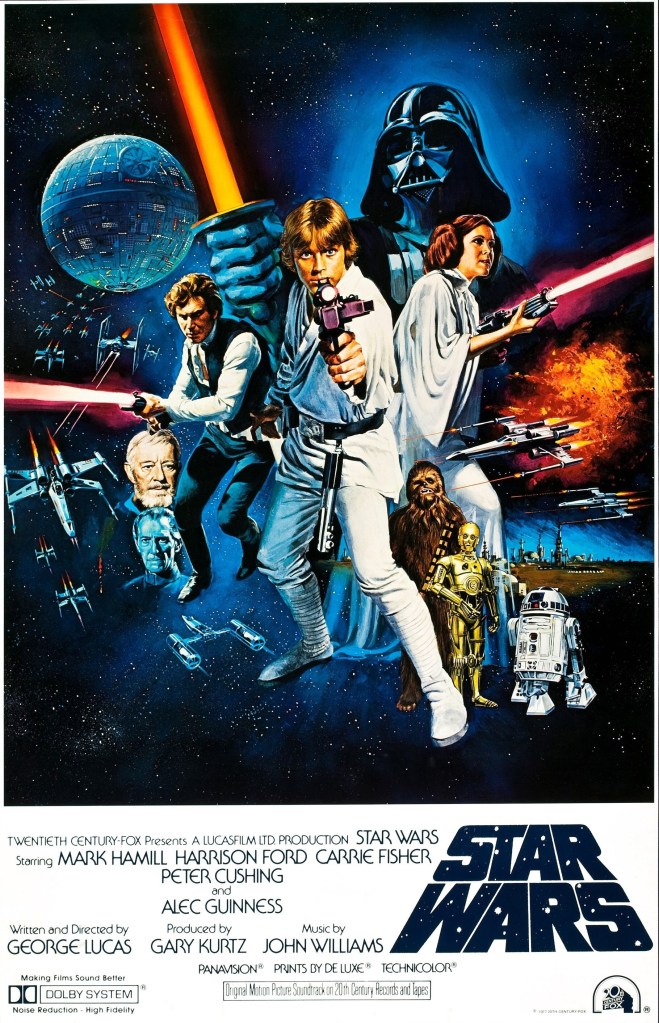
When it comes to the Star Trek vs Star Wars debate, I stand firmly on the Star Trek side (the Gene Roddenberry/Rick Berman era. Not the JJ Abrams/Alex Kurtzman era). I prefer my science fiction to be a bit more grounded. Star Wars, to me, is more Sci-fi/Fantasy.
The success rate of Star Wars, in terms of quality per production, is well below 50% (Star Trek hovers at around 50%). If you think about it, there are really only TWO really good Star Wars films: Star Wars and Empire Strikes Back. The Mandalorian is alright, but it’s a bit too predictable. Nevertheless, I can appreciate George Lucas’ creation. Despite some of the terrible storytelling, when historians reflect on the artful impact of cinema, Star Wars will be to film what William Shakespeare was to the English language or Plato to philosophy.
Star Wars is so ubiquitous in modern culture that people don’t stop to appreciate how it really was a game changer. Watch a Hollywood film before 1977 and watch one after. You’ll see that film and pop culture entertainment was forever changed by it.
To be honest, I don’t think George Lucas’ screenplay (or direction) was that revolutionary. The revolutionary aspect was the production design, music, special effects, and editing (although I’d argue that the James Bond films were far more revolutionary in film editing). In this respect, Lucas was more of a CEO overseeing various departments in creating a lived-in universe. For Star Wars, the stories were always secondary. What grabbed everyone’s attention was the myths and scope: it was like watching an ancient epic being played out on the big screen in a way that films before weren’t able to capture.
So I don’t think that devout fans enjoy Star Wars because of their incredible stories and performances (unless they’re watching because of Harrison Ford). It’s purely an aesthetic experience. Make a Star Wars movie without storm troopers, Star Destroyers, light sabers, Boba Fetts, Jedis, Death Stars, etc. then you probably wouldn’t have a Star Wars movie.
You could make the argument that you can’t make a Star Trek movie/TV show without Starfleet. But fans of Trek have shown to be more open to bending its internal rules to further explore its universe.
But I don’t know dude, you like what you like.
But you know who my favorite Star Wars character is?









 The Internet Ruined Everything