After Christian (Bale’s) funeral, I began lamenting some of my decisions at the production studio. “Maybe I shouldn’t have asked him to gain 150lbs,” I said.
“You’re one arrogant son of a bitch,” Jeffery Greco said.
“Don’t blame me for his death!” I replied. “Chris could’ve turned down the role!”
Kat was two sheets in the wind when she spoke up. “I’m finished in this town,” she said. “Because of you, I’ll never work again.”
“Lay off the sauce, Kat,” I said. “Now pour me a drink.”
“There’s no way we can release the film now,” Kat continued. “$7 billion down the toilet!”
“Now calm down!” I interrupted. “We’ll just have to do some reshoots. I’ll step in for Chris’s role. I’m an Academy Award-winning actor too, ya know?”
“Hold on there bucko,” Greco said. “There ain’t no way the studio will let you back on the set. Not after the lawsuit with Dallas and killing your leading man. That’s to say nothing about the numerous investigations into your international holdings!”
“If the film’s gonna be completed,” Kat said, “then your assistant, Pee-Wee, will finish production.”
“Well that Machiavellian son of a bitch,” I said. “I knew he had an ulterior motive.”
“Since we are 90% finished with filming, we’ll use CGI to complete Chris’s scenes,” explained Kat. “That will considerably jack up the budget, but we have no other choice.”
“Then I guess I’m fired,” I said as I stood up. “But I still want full credit for directing this picture.”
“Not happening,” Kat replied.
“Kat, you’ve crossed me for the last time,” I said. “I’m going to the Director’s Guild. If you want a court battle, you’ve got one sister!”
“This Tastes Like Ass is obviously a modern classic,” said Bryce Howard Dallas Antonio, the screenwriter, “but I think it lacks the nuances of some of the earlier postmodern classics from David Lynch and Martin Scorsese.”
Dallas showed up to the pre-production meetings wearing a tweed jacket, a derby, and a walking cane. I wanted to smash that cane right onto his dick.
Sets were going up. I had enough on my plate. But Dallas insisted on following me around.
“Do you like David Lean?” he asked.
“Yeah, he was hott.”
“What’s your biggest influence?”
“I don’t know. Alcohol?”
I was signing papers left and right. I was too busy to listen to this shit. After Dallas called Smokey and the Bandit the most overrated movie of the 70s, I grabbed him by the jacket.
“Listen here shitwad,” I said, “you’re right out of film school. You know who I am? Google my name. I may have diabetes, cirrhosis of the liver, and a venereal disease that doesn’t have a name, but I can still kick your ass. So listen to my advice grasshopper, watch your ass!”
The executive in charge of production, Jimmy Greco, saw what was happening and rushed out of his office. He waddled his fat, Jerry Stiller-lookin ass right up to my face. “You can’t touch the screenwriter!” he screamed. “That’s against WGA rules!”
He then straightened out Dallas’ jacket and ran a hand through his hair. Afterwards, he pointed his finger at me. “Listen here buster,” Jimmy said, “if you pull a stunt like that again, I’ll have your ass!”
“Oh you want my ass?” I replied. I dropped my pants. “You want my cock too?” I turned around and started twirling my penis.
“You’re a fool,” Jimmy said.
“I’M the fool? The only fool here is that idiot screenwriter!”
Jimmy escorted Dallas away. The cast and crew stood around gawking.
“Everyone back to work!” I yelled and pulled up my pants.
I took out a cigarette and walked up to Pablo. “Take it easy, James,” he said.
I lit up the cigarette. “How did the contract negotiations go?” I asked.
“Great!” Pablo replied. “You’ll be pleased to know that you’ll move up the billionaire’s list.”
“I’m a billionaire?”
“James, you’re one of the richest men in the world. You have real estate holdings all across the globe. You even own the deed to the Kremlin for fuck’s sake!”
“Isn’t that a bar in Tallahassee?”
***
I was having brunch with Brett Ratner when Kat slapped down a newspaper. The article read “NOTORIOUS FILM DIRECTOR EXPOSES PENIS…AND ASS…TO CAST AND CREW.”
I looked up to Kat and she began speaking in a monotonous, scripted voice. “The board wanted me to tell you that if you do that again, they will remove you from the project. Please be more considerate of the crew,” she said.
She never made eye contact.
“Kat,” I replied, “as you know, I run my sets a little differently. Besides, per our agreement, I was allowed to change the script so that the entire jury would be nude throughout production. Bare cock will be all over the set. What difference does one more make?”
“This is the position of the board and the production team,” she said, still refusing to make eye contact.
I shrugged. “Very well, will that be all?”
“That is all,” Kat replied and began walking away. Then she stopped. “There is one other thing…”
She turned around and looked me in the eye.
“We are already running over budget,” she continued. “We are having trouble securing funds from the European market. Would you be considerate enough to loan $900,000,000 to help cover pre-production costs?”
I thought for a moment.
“Sure I’d be happy to give you nearly a billion dollars,” I said. “But in return, I want to make more changes to the script.”
I’m assuming Western history and civilization is defined by the culture of Europe and North America from the time of Alexander the Great onward.
Eastern civilization, I guess, includes India and China.
Meanwhile Ancient Egypt is left in no man’s land, along with the Middle East, Latin America, and Polynesia. And African civilization, history, religion, and philosophy gets neglected entirely.
And somehow, if common logic is to be believed, none of these civilizations interacted and influenced each other. Ever.
Civilization itself is a nebulous term. Same thing with culture (I’m not including “society” here because apparently, as some academic jerk wad told me, “society” doesn’t exist. Whatever that means). Yet somehow, for some reason, we’re supposed to preserve these things because that’s what shaped our perspective on things.
I’m not saying that I disagree, I’m just asking people to interrogate these things a little further. I’ve said before that a sense of belonging is necessary to form an identity. We are who we are by our relationship with others.
But how much is culture and civilization, both ill-defined terms, a part of achieving a sense of fulfillment? I’ve heard people from all different stripes…from Conservatives, Marxists, and even libs….that this is the case, but it’s never been explained. It’s not like we have a choice in the matter, and it operates under the presumption that people are essentially blank slates and are nothing like you and me.
It’s just not true.
We’re still cavemen, meant to dwell in tribes of only a few hundred people, yet we’re faced with a constantly changing world. We have fallen into what Benedict Anderson calls an “imagined community”, where no one knows each other, not even our neighbors, but we’re supposed to believe we form some kind of community. I guess our natural instinct is to preserve what we have.
Anderson was specifically addressing the phenomenon of nationalism and how traditional political philosophy failed to account for its emergence. It’s hard for us to believe, but nationalism is a fairly recent development. It is not intrinsic to our understanding of community. But along with all the political paradigms that came before, the concept of nation state will also go away.
I’ve said it before, and we all know it, but change is the fundamental force in the universe. You can fight that, but it’s futile. Permanence is an illusion. The sense of permanent self is also an illusion: our bodies, minds, memories too, are constantly changing
Being a caveman and defining yourself against the “other” is easy. And maybe I’m wrong. But at least be honest with yourself.
Anyone who claims to be is conning you out of your money.
Especially if you’re a guy, avoid these “experts” like the plague. Women should too, but I don’t think women take that shit seriously. Men on the other hand…there can be disastrous consequences.
Sucks for all you single people out there. You should really get in a relationship.
I read a lot of blogs from single folks. I get it, dating sucks. Not that YOU suck, it’s just the whole rigamarole.
I haven’t been single in 10 years. Love my family. Best thing that ever happened to me. Couldn’t recommend it enough.
But I’ve been there. I’ve hopped from one dating site to another, scrolling through countless boring profiles. It’s easy to get resentful, I would know. Outside of relationships, I’m the most resentful person you’ll ever meet. So I’ve seen that side.
I’m average looking, got a small pp, have no money, and I’m a dumbass. So if I can do it, so can you!
Here’s my advice: stop overthinking it.
You either feel it or you don’t. If you keep getting rejected, sorry bud…I’m sure you’ve heard it before, YOU’RE the common denominator. Accept the challenge. We’ve all had to spend our time in the wilderness. Your issues probably stem from problems that are hindering your romantic capabilities. You should probably address those. Just sayin’.
A lot of people want to discuss the differences between men and women, but I’ve learned something: other than our physical differences, men and women are exactly the same, at least in terms of needs and wants. No one likes to hear that because projecting their insecurities on the opposite sex justifies their resentment. But it’s true. Sorry.
If you’re looking for a fuck, that’s easy.
But if you’re looking for love, you got it all wrong. If you have a perfect image of “Eros” that no one can live up to, you don’t deserve love.
Love is built on respect, concern, a desire for another’s wellbeing. It requires you to get out of your own head. To many of you single folks haven’t learned how to check your own selfishness. If you’re only concerned on what your “lover” can give you, you don’t deserve love and I hope you remain single forever.
I’m reaching that age where some of my superiors are younger than me. I don’t begrudge them. They all deserves their spots. Some older guys I work with don’t appreciate that they got passed over, but I think it’s our responsibility…as the “elders”…to bestow upon the younger generation what wisdom we have learned (in my case, what little wisdoms I have learned).
I don’t know if this is a regret I have, it’s more like a big “what if”. I spent some time in the military. Even did three years of ROTC in college. It’s laughable to think I could have been an officer now, but it almost happened (before I realized that I loved drinking WAY more than I loved the military). Despite the abysmal failure of that endeavor, a few lessons stuck with me.
“Just make a decision,” I’d always hear, “don’t worry about if it’s the correct one.” I thought that was stupid advice at the time, especially in a military situation where people’s lives might depend on it. But it seems to make a little more sense now.
Who are the three greatest military commanders of all time? It’s obvious: Captain Kirk, Captain Picard, and Captain Sisko.
The three guys in the middle
“But they aren’t real,” you might say.
So? Real life isn’t real.
I remember Mike Stoklasa praising Bill Shatner’s acting capabilities (in a video discussing Shatner’s hatred of Mike Stoklasa). You can laugh all you want, but it’s true: Shatner is an extraordinarily effective actor. And, for better or worse, Captain Kirk is Bill Shatner and Bill Shatner is Captain Kirk.
Kirk understands that he is playing a part as Captain of the Enterprise. He has to project confidence as its leader because the survival of his ship might depend on it. Shatner, I think, understands that Kirk himself is playing a part, which might explain some of the strange speech patterns he exhibits throughout the series and films.
That’s why I think it’s great that the handlers of Star Trek (at least back then) cast classically trained thespians for the role of the Captain. Just the ability to “play the role” is necessary for the crew to rally behind, even when the leader isn’t completely confident in his (or her) decisions.
Obviously Picard is the superior Captain. No disrespect to Shatner, but Patrick Stewart knows when to dial up the acting and when to hold back (even if, in my belief, Stewart didn’t completely understand the appeal of his character or StarTrek). But what Picard does better than anyone is embrace his mission: “explore strange new worlds”. He seeks out moral quandaries and mysteries because he understands that these hold the secrets of the universe. He’s an explorer but not in the usual sense of the term.
I think to be a leader, one has to be open to that sort of exploration.
Of course, Sisko was far more grounded than either Kirk or Picard. He had a life outside of Starfleet and his job was to navigate the political complexities of a particular section of the galaxy. While Kirk and Picard were explorers, Sisko’s mission was different: he was an ambassador attempting to bring together warring factions. But just like everyone else, he had to “play the part.”
“But those were actors that had scripts,” you might say. “Real life doesn’t have a script.”
True that, but if you understand the more technical aspects of your work, in a sense you kinda already do have a script. You can’t just willy nilly your way through a job, you are confined and in many aspects you have direction. It’s just making the best decision with the options you have.
So I think it’s interesting that the three best Captains in Star Trek history each explore the three most important aspects of leadership: confidence (or the projection of), eagerness to accept challenges, and being the middle man between conflicting parties. But most importantly, “just play the part.”
I tried to do one of those challenges where people write a book in a month. It didn’t work.
It’s a good story too: about some dumbass that works at a toilet factory whose boss gets kidnapped. All of this causes uproar in this small town. As the situation grows more absurd and contrived, our dumbass has to rescue his boss. I was exploring my contempt for politics and storytelling in general.
While I think about it, contempt is actually the driving force behind all of my writing. Whenever I begin to write, I have to hold back my urge to say “im gay suck my penis lolz.”
If I did ever write a finished work, it would go something like this:
“Chapter 1: Fuck you
Chapter 2: my dick is small
Chapter 3: my balls are too
Chapter 4: I’ve definitely had sex before
The eND“
Now if I read that, I’d think “that’s a damn good book.” But it would have an audience of exactly one person. Most people expect a novel to be “good”, and “have a story”, or whatever.
My style just doesn’t transfer into long form, immersive storytelling.
Nor into short form really. My way into writing a story consists of how many times I can say “penis”, “gay sex”, “cum”, and have people actually read it. That’s why “A Shot at the Title” is my finest short story. Honestly it’s a banger. Someone should probably give me an award for it. But most times, when the author doesn’t give a shit and hates their audience, the work’s just not gonna be good. Ya know?
That’s why I’ll probably never go back to writing on Medium or any other platform for that matter. I don’t think the shit I want to do would transfer over there. I have complete creative control over here. If I want to post a video of me spreading my ass and saying “this is what I think of Denmark”, no one can tell me no.
I watched two movies back-to-back (unintentionally) that had helicopter chases.
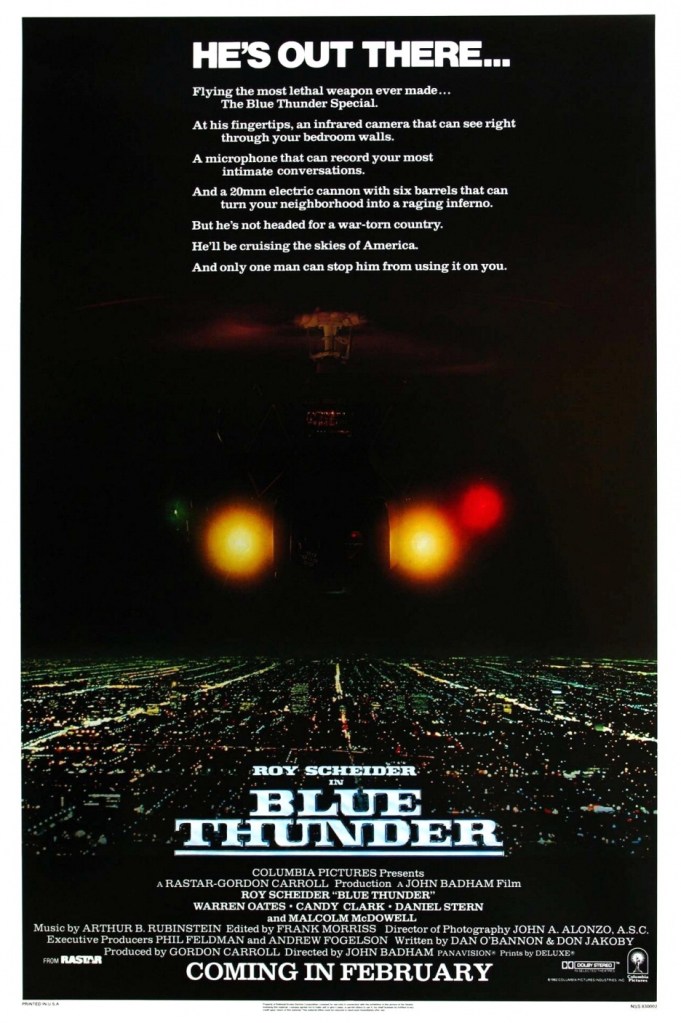
The first was Blue Thunder, staring the greatest leading man of all time…Roy Scheider. It is also the greatest movie that Paul Verhoeven never made.
No disrespect to the highly competent John Badham, but Verhoeven would have crushed the shit out of this material. The film takes place in 1980s LA and is about a police pilot and Vietnam vet, played by Scheider, who gets introduced to a military-style helicopter that the city wants to use for patrol. The villain is Malcolm McDowell, a British man that somehow became a Lt. Colonel in the US Army, who for some contrived reason wants to kill Scheider. The fascistic overtones are right up Verhoeven’s alley, and even some of the story beats would be echoed in Robocop four years later.
But the movie looks incredible. John A. Alonzo is really an unsung hero in the field of cinematography. The handheld work is really ahead of its time, and masterfully done. After watching the first scene of Scheider walking out to his helicopter, I was shocked that this came out in 1983. It’s a natural look that even films today have trouble emulating.
And that final helicopter chase was incredible. All of the concerns that Scheider’s character had regarding public safety goes out the window once when he gets hunted by fighter jets and Malcolm McDowell. Chicken factories and buildings get blown up while debris falls on the people below. Meanwhile, Candy Clark drives like a bat out of hell down the streets of LA. As far as 80s action movies go, I’m not saying that it’s up there with the Schwarzenegger, Verhoeven, and John McTiernan classics, but it is very good. In fact, I would say it was a prototype for subsequent 80s flicks.
The other film was less of a banger but no less interesting (for various reasons). It was Dennis Hopper’s Backtrack (or Catchfire, idk). There are apparently two versions: theatrical cut and a directors cut. I guess I watched the director’s cut.
Hopper himself was apparently dissatisfied with the original version and had his “directed by” credit given to Alan Smithee. Honestly, he should have taken his name off the director’s cut as well.
What’s it about? Not sure.
I think Jodie Foster accidentally sees a mob hit by Joe Pesci and Pesci tries to track her down by hiring Hopper and Hopper falls in love with her (and she with him).
Now I’ll say this because I’ve said enough about dude’s bodies in this blog and it’s time women get their due: Jodie Foster is fiiiiiiiiiiiine as hell in this movie. You could say that I was “sexually attracted” to her. It made me uncomfortable (in my pants specifically). I could understand why Hopper didn’t want to kill her.
But the problem with this movie (one of many) is that Dennis Hopper is, I’m sorry to say, not fit for the role. Hopper is at least 25 years older than Foster. There’s nothing romantic about their scenes together. They’re downright creepy. It’s a role that someone like Nicholas Cage, Mickey Rourke, or Sean Penn could have aced at that time.
That being said, Hopper REALLY makes some decisions in this movie, both in front of and behind the camera. To be honest, I don’t even know what he’s trying to do. Is that accent New York or Cajun? Does he know his lines or is he just making shit up? Now no one on God’s green earth could have saved this screenplay, but Hopper’s visual flair and strange acting decisions steal the show…almost to the point where you forget that heavy hitters like Joe Pesci and Vincent Price are also in the movie.
When I realize that there’s other people that are more miserable than me, that makes me happy.
In truth, I don’t know what happiness is.
I assume that it’s a state of contentment. This, as opposed to a constant state of euphoria. Presumably, many people would think that waking up with a blowjob while mainlining pure heroin then driving your Ferrari 95mph through a school zone would be peak happiness. But I don’t know, if someone lived a true carefree existence, that would breed some degree of resentment. Contentment wouldn’t necessarily only entail “being happy” all of the time, but it would be a place where daily struggles don’t cause a sense of existential dread.
Work, family, belonging, or having a sense of purpose in general, would be necessary to achieve this state of happiness.
Contrary to what you might believe about me, I actually have a good career, a loving family, and live in a place that I don’t necessarily love, but it doesn’t annoy the shit out of me. It wasn’t always this way, I just sort of stumbled into it (one of the amazing things that happen when you stop drinking). I’m not “happy” all of the time, but I would say that I’m in a general state of contentment.
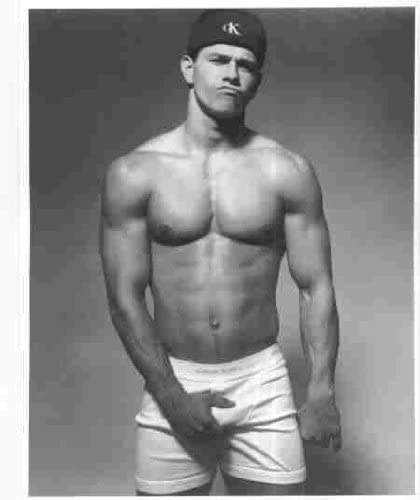
My ideal state of pure bliss would be to own a cottage in the English countryside, wear a tweed jacket and monocle, and say “lovely” and “jolly good” all of the time. It’s not fame and fortune. I’m convinced that the only person that has found fame and fortune rewarding is Mark Wahlberg. Everyone else resents it.









 The Internet Ruined Everything