Good fucking riddance šŸ«”

So according to RedLetterMedia, along with the rest of the internet, movie theaters are dead.

Thank GOD, am I right?

I know that theater-going has been a religious-like experience for cinephiles for nearly 100 years. It sucks peen to some extent with the implication being that movies no longer hold the cultural relevance they once did. But with the supposed ā€œdeath of theatersā€ something good is happening, I think.

Hear me out.

This is of course easy for me to say considering I’ve only been to the theaters maybe three times in the last decade. Many filmmakers would argue that movies are meant to be seen on the silver screen. This is of course an antiquated argument. With advancements in home theater technology, the theater is almost a hassle. Depending on which market you live in, going to the movies could cost nearly $50 with concessions. This is to say nothing about having to sit in a room with people who have no respect for the sanctity of watching a movie. To be honest, I never much understood the ā€œcommunal experienceā€ of the theater. I simply don’t give enough shit about other people’s raw emotions regarding a picture. My best experiences at the theater have been at matinees with maybe one other person in attendance; so in other words, it’s mostly me and my OWN thoughts. THAT’S how god intended movies to be watched. And if that’s the case, then the home theater has nullified the movie theater.

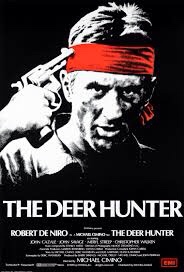
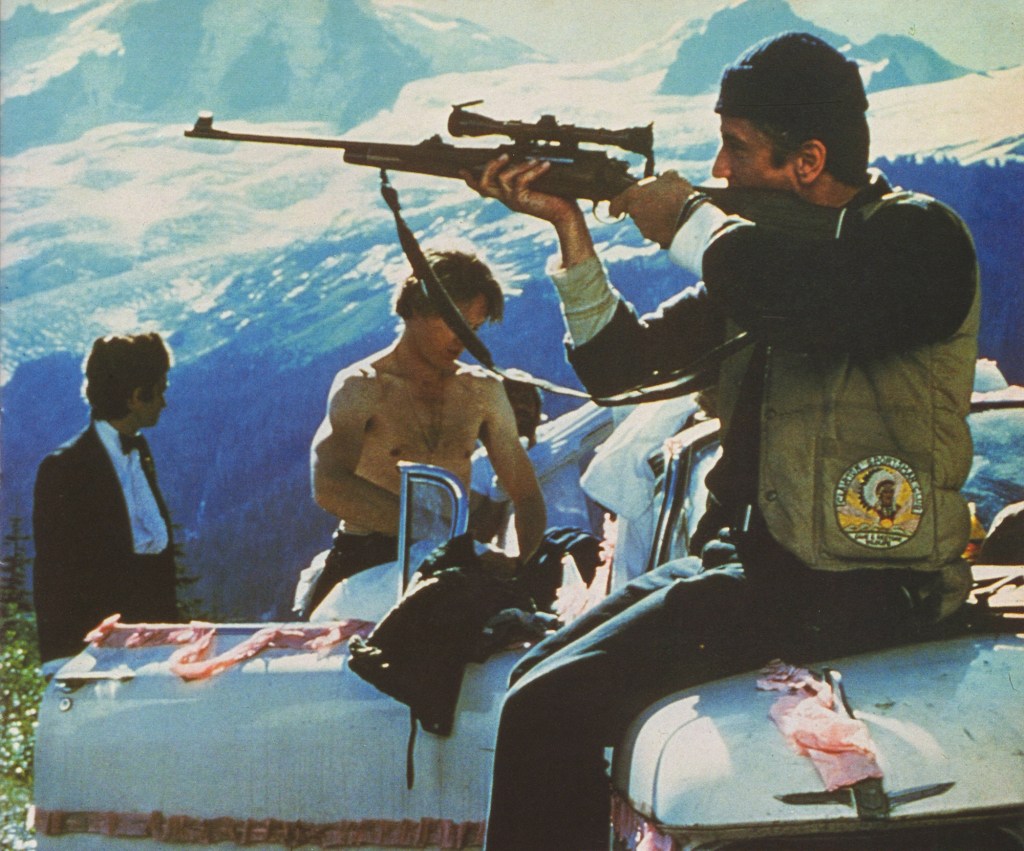
But I did mention that this is a good thing right? Because this is evolution; and cinema is evolving into a higher stage of art appreciation. It’s idiotic to associate the death of theaters with the death of cinema as a whole. We can piss and moan about the Internet and streaming services all day, but the fact is those two things have contributed to an even greater appreciation and interest in movies. Even in the shitty ones! Crap that was pumped out in the 70s and 80s and were largely forgotten for 30 years are finally having their day in court! I thought I was all alone in the world when I balled my eyes out while watching The Deer Hunter at 11 years old. Now, 106 years later, every dick and titty swinger on this planet has got opinions about that film! So contrary to popular opinion, I think movies are more popular than ever.

It’s just a couple of things have happened that has led to this paradigm shift in movie going experience: 1) movie theaters have become obnoxious and expensive. 2) wide scale releases have been limited to big-budget tentpole films. 3) competition from television and streaming services have likely contributed to more refined tastes (this one is more speculative). And 4) it’s cheaper to stay home and wait for the movie to hit Netflix or Amazon Prime.
Hollywood Icarus

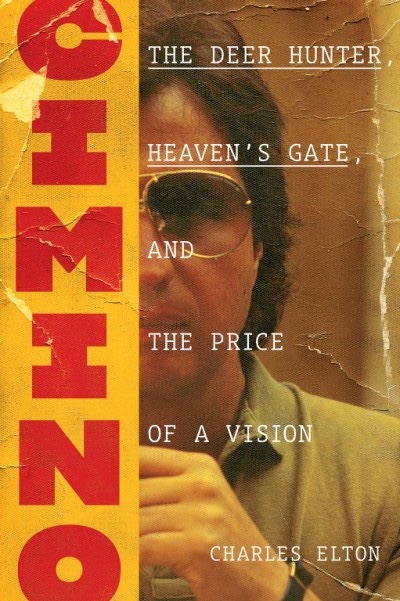
I finally found something that sheds some light on the screenplay The Man Who Came to Play, which was later repurposed into The Deer Hunter. Apparently it was a light-hearted buddy comedy, according to Charles Elton, author of Cimino: The Deer Hunter, Heaven’s Gate, and the Price of a Vision. Can you imagine if THAT movie got made? I’ve always thought that Russian Roulette was a barrel full of laughs. Fortunately the only thing from that script that made into The Deer Hunter was the element of Russian Roulette. The entire thing was re-written by Cimino and Deric Washburn because Cimino never saw a screenplay that he didn’t want to completely rewrite. This was partially the reason why he was later fired from Footloose.

I respect the hell out of Cimino. He was certifiably insane and one of the greatest bullshit artists to have ever lived. After watching him address the crowd at Locarno Film Festival, I suddenly had the courage to go with my instincts and never apologize. It was the most insane appearance I have ever seen. Charles Elton obviously felt the same way. In his biography of Cimino, Elton was a frequent apologist for the director’s genius and often blamed studio producers for his failures, including Steven Bach, one of the many studio executives for Heaven’s Gate who later wrote The Final Cut which has, more or less, become the official history for the making of that movie.

In defense of Elton, he is partially correct. Heaven’s Gate wasn’t the only big budget auteur-driven film to have bombed around that time. William Friedkin’s Sorcerer and Francis Ford Coppola’s One From the Heart are two notable examples. The film industry was changing towards the direction of crowd-friendly features, probably thanks to the success of Star Wars and Jaws, and Cimino was the scapegoat for why creative control was wrestled away from directors.

But Cimino didn’t help himself. At no point while reading Elton’s book did I feel sorry for the auteur. My admiration for Cimino never diminished, but…at least according to Elton’s telling…he was so shut off from reality that he was only able to come to his senses after it was too late. Cimino even admitted that he simply couldn’t get along with middle management, which is a sentiment that I can relate to, but in the case of Heaven’s Gate, perhaps he needed to dial it back a bit. The picture simply isn’t good, regardless of what contemporary European critics might argue. It is bloated and self-indulgent and probably could have benefited from studio interference…during production, at least…to tighten it up. But as it stands today, Heaven’s Gate stands as the most notorious reminder of unbridled artistic genius run amok, even though Cimino wasn’t the first (or last) to be guilty of this crime.

The man who came to play

I’ve always said that the greatest movie ever made is The Deer Hunter. And it’s no secret that I experience the most insane dreams possible.

So last night, I dreamt that The Deer Hunter was never produced at all and instead, in its place, the original script titled The Man Who Came to Play was made. I know nothing of this apparently ā€œspecā€ script, other than it involves friends going to Las Vegas to play Russian Roulette. Michael Cimino and Deric Washburn later repurposed this screenplay into The Deer Hunter, switching out Vegas for Vietnam.

In fact, as far as I know, only the Russian Roulette scenes survived in the final draft from the original treatment. There’s no telling what The Man Who Came To Play would have looked like, but if my dream is any indication, it would have fit in well with the dark 70s canon.

This script, written by Louis A Garfinkle and soap opera actor Quinn Redeker, is apparently for sale online. There’s no telling how much it costs and I couldn’t find any of its story details, but my main question is why did this friend or friends go to Vegas to play Russian Roulette?

Did they do it willfully?

Were they coerced?!

I understand why Cimino and Washburn repurposed it. It made sense for the time and it absolutely worked. But I like to play this game of ā€œwhat ifā€. Nowadays, I find the original concept to be far more darker and nihilistic, especially if the friends were written to be Vietnam vets.

I can’t help but think that The Man Who Came To Play would have made a terrific spiritual sequel to Taxi Driver. Think about it: Bobby DeNiro as Travis Bickle. We’ll pretend that the ending to Taxi Driver wasn’t the dying dream of a mass shooter. Instead, Bickle survives and goes to Vegas where’s he’s once again disgusted with the crime and decadence of Sin City. One way or another, he finds himself reliving the nightmares of Vietnam; he begins entertaining depraved businessmen by hitting the underground Russian Roulette circuit.

I see a lot of Paul Schrader’s ā€œGod’s lonely manā€ in Garfinkle and Redeker’s concept. But oh well. We got The Deer Hunter instead and we should all be thankful for that.

But if anyone knows anything about this script, please reach out to me.

Death of a theater

There’s a lot of bitching about the supposed death of movie theaters. The argument goes that the only way to appreciate filmmaking is on the silver screen with a fellow audience. Because of the proliferation of internet streaming, the communal experience cinema has fallen by the wayside.

Do I agree with this assessment?

Yes.

Do I give a shit?

No.

Perhaps I became a cinephile at the wrong time. I mean, I get it. I really do. But the dynamics of the filmgoing experience has changed. And that’s alright. EVERYTHING changes at some time or another.

But I quit caring about movie theaters a long time ago. Long before COVID even. The last time I’ve been to a theater was in 2017 to see Star Wars: The Last Jedi. This is largely because I have truthfully never bought into the ā€œcommunal experienceā€ of watching a movie.

I remember watching Joe Dirt in theaters long ago. I realized it was funny before everyone else did; before it became a cult classic. When Joe Dirt threatened to blow up the Grand Canyon and got poop spilled all over him, I laughed hysterically. Everyone else sat in their seats stone-faced. Audiences (except for me, of course) wouldn’t know what was funny if it bit them in the nuts. So fuck what other people think.

My argument is this: if you want to enjoy a movie, it has to be just YOU and the film. My love of cinema didn’t start in the theater. It started at 11 years old, after midnight, while watching Taxi Driver on Cinemax. Of course I was watching Cinemax at that hour to see some gratuitous T&A. At least initially. In fact, if anyone caught me, I would have probably quickly switched to porn and denied I was watching the classics of cinema. The first time I watched 2001: A Space Odyssey, it was with some friends and, to be cool, I had to say it was the most boring thing I’ve ever seen. But in my heart, I knew it was genius. At 12 years old, I stayed up late to watch The Deer Hunter and cried myself to sleep. I never told anyone that until years later. Enjoying a movie, to me, should be an intimate experience; it should reveal things about yourself both good and bad…things that you may never tell another living soul. THAT’S the power of filmmaking.

This isn’t to say that theaters don’t have their purpose. But I’d argue that theaters simply offer the spectacle of film. They serve a similar purpose to churches. Sure, everyone can come together and listen to a sermon, but to have a truly transcendental religious experience, one must transcend the spectacle and enter a state of gnosis; of opening one’s mind to things unseen. Movies can be more than a spectacle. They can be a revelation.

Honestly, the slow death of movie theaters probably started with VHS.

Paul SCHREDer

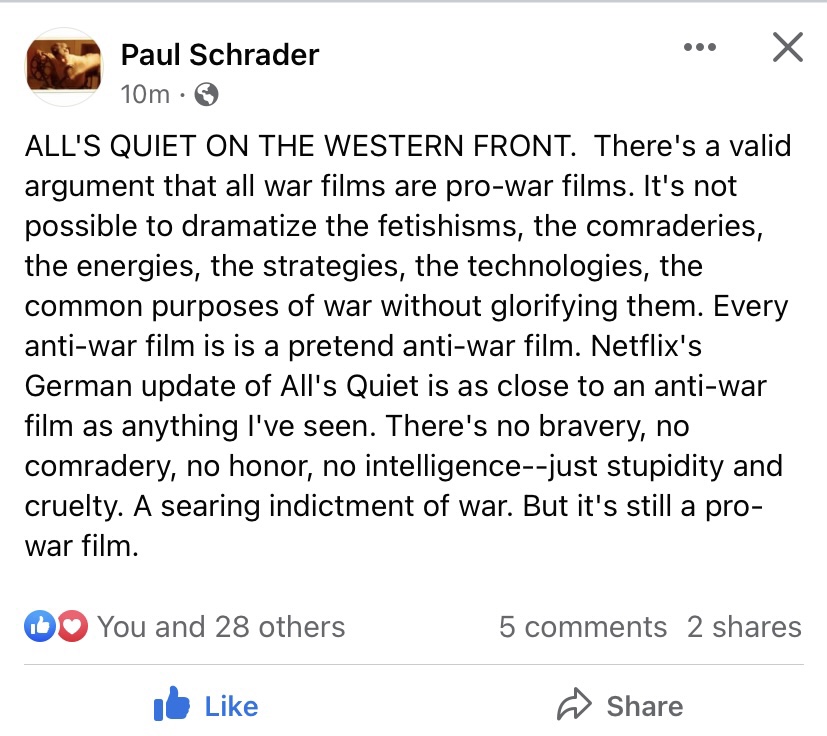
My man Paul Schrader is a truth bomb machine.

While I haven’t watched the latest iteration of All Quiet on the Western Front, based on what I’ve seen from other war films, I largely agree with his assessment.

In fact, the only REAL anti-war WAR film I can think of is The Deer Hunter. While it does depict Robert DeNiro torching a guy with a flame thrower (in what I think is it’s most out of place scene), replacing the horror of war with several rounds of Russian Roulette is about the only time I’ve seen filmmakers deprive the audience of the spectacle of battle. The ending, I think, should be taken ironically; we use patriotism to mask our grief.

(I’d also say that Stanley Kubrick’s Paths of Glory might be a true example of an ā€œanti-war WAR film)

In my view, the reasons why movies have trouble maintaining the guise of ā€œanti-warā€ is because film is fundamentally a visual medium. When movies are confined to ā€œshowing and not tellingā€, it’s almost impossible to not become spectacle.

And war is the ultimate human spectacle.

Understanding this, the only time a film can become truly anti-war…while simultaneously depicting war…is if it becomes a dark, dark comedy; almost to the point where it goes over the heads of the less sophisticated.

At least this is how I’ve always interpreted Apocalypse Now.

ā€˜the internet ruined everything’s’ canon of greatest films ever made

You know what the internet needs? Another list of greatest movies.

So, in no particular order:

The Deer Hunter (1978): I’ve discussed this movie at length numerous times. I think it’s the greatest example of the power of filmmaking.

Robocop (1987): For the simpletons, this is just another 80s action film. For those that know better, it’s the greatest satire ever made. But each time I watch it, the more horrified I become. The idea of ā€œRobocopā€ is terrifying. Imagine getting killed in the most violent way, then you get revived and made property of an evil corporation and begin to struggle to understand who or what you are. Hollywood is a lesser place without Paul Verhoeven.

-The Thin Blue Line (1988): This, along with Errol Morris’ (currently known for directing Chipotle commercials) Vernon, Florida are my two favorite documentaries. This is the story about a killing of a Dallas cop and a man getting rear ended by the justice system. I love Randall Dale Adams. He’s an everyday dude that took an unfortunate trip to Texas. We’ve all been there.

Star Trek II: The Wrath of Khan (1982): Yes, I’m a Trek fan. While every nerd has seen this movie dozens of time, I don’t think it gets the credit it deserves. It’s not really sci-fi, it’s more of a Shakespearean tragedy in space. In many ways, this film revived Trek. And director/writer Nicholas Meyer, who knew nothing of Star Trek prior to this, deserves credit.

Dances With Wolves (1990): I will go to my grave saying Kevin Costner deserved his Oscar. Fuck Martin Scorsese.

Taxi Driver (1976): We all know Martin Scorsese is a genius. And Paul Schrader may be the greatest screenwriter of all time. In the era of angry, lonely young men roaming the internet, this movie was well ahead of its time.

2001: A Space Odyssey (1968): if you’re gonna do science fiction, do it right. Everybody knows this movie. And because this movie rightfully gets the credit it deserves, we take it for granted. But, to this very day, it is the most ambitious film ever made.

The Taking of Pelham One Two Three (1974): I love movies that satirize a very serious situation. It’s kinda like Dr. Strangelove, albeit this film is dealing with a much less serious subject: the taking of hostages. Every actor is great, but Walter Matthau was an unusual talent. His face alone could carry a film.

No Country For Old Men (2007): The best movie made in the last 20 years. Cormac McCarthy may be the greatest living author and it ain’t easy adapting his work for the big screen. The nihilism, the existential themes, Javier Bardem, the vast, empty Texas landscape… ā€œokay, I’ll be a part of this world.ā€

Blood Diner (1987): Most fans of the B-movie, cult genre are familiar with this film but it should be more widely known with general audiences. Probably the funniest fucking movie I’ve ever seen.

the ā€œ2-filmā€ rule

So I was listening to some podcast while huffing glue and the two hosts introduced an interesting concept: if a film director makes two unquestionably great movies, then they belong in the canon of great directors.

It seemed like a sound enough argument. I’ve said it once and I’ll say it a hundred more times: it is extraordinarily difficult to make ONE good film. If a filmmaker can make one good movie, then replicate that impact in a subsequent film, then it’s obvious that the director knows what he/she is doing.

But the more you think about it, you come across some problems: specifically what it means to be ā€œgreatā€, or even a ā€œDirectorā€. Because if this criterion were true, then we find that a few questionable directors would belong in this canon.

Some examples:

Jonathan Demme (Silence of the Lambs, Philadelphia, Stop Making Sense)

John McTiernan (Predator, Die Hard, Hunt For Red October)

George Lucas (Star Wars, American Graffiti, THX-1138)

Ridley Scott (Alien, Blade Runner, Gladiator)

Robert Aldrich (Kiss Me Deadly, What Ever Happened to Baby Jane?, The Dirty Dozen)

William Friedkin (The French Connection, The Exorcist, Sorcerer)

Etc, etc, etc

While there are a bunch of notable films on those director’s resumes, would any of those directors be considered ā€œgreatā€? (IMHO, I would say ā€œyesā€ for Friedkin, Aldrich, and McTiernan. ā€œNoā€ for the others.)

A ā€œthree filmā€ criteria would fix this: Ford, Hitchcock, Wilder, Lean, Kubrick, Kurosawa, Coppola, Scorsese, Tarantino, and Spielberg would easily hurdle this barrier. But what about directors that made ONE unquestionably great film?

The Deer Hunter is arguably the greatest film ever made. And it was the only great movie that Michael Cimino directed.

But here’s another example: Orson Welles.

Citizen Kane IS unquestionably the greatest movie ever made. Now name another movie he made that had a similar impact? The Magnificent Ambersons? Touch of Evil? The Lady From Shanghai? Sure, they were good to VERY good. But were they Citizen Kane…or even Deer Hunter…great? Yet every cinephile would undoubtedly place Welles as one of the greats in film history.

And what about the niche directors…David Lynch, Paul Verhoeven, John Carpenter, Sergio Leone, and even Paul Schrader, etc etc? I’d argue that it’s these directors that have the greatest influence on younger audiences.

What about the directors that aren’t auteurs? Some operate more as ā€œCEOsā€ in their craft. George Lucas is one of these guys. Ridley Scott is too (and Spielberg to some extent). My personal fav is John Sturges, who directed such bangers like The Magnificent Seven, The Great Escape, and Bad Day at Black Rock (a forgotten classic).

So I don’t know, the ā€œtwo filmā€ rule doesn’t seem to work (neither does the idea of a ā€œcanonā€). It’s all too subjective.

As a side not, I didn’t mention very many European directors or auteurs of other nations. That’s obviously my American bias. Like it or not, cinema is the one (and only) contribution that the US has uniquely made to the arts. Nevertheless, these filmmakers deserve a shoutout. The Japanese, Korean, and Italian directors have a distinctiveness that I greatly appreciate and I regret not mentioning more of them. The Mexican film industry is criminally underrated. British directors, at least with their mainstream work, mimic their American counterparts. Tarkovsky, Costa-Garves, Wim Wenders Fellini, Herzog, and Pasolini are all incredible as well.

But the French New Wave sucked.

best soundtracks in film history

Star Trek II: The Wrath of Khan (James Horner)- Listen to that opening track. Then listen to it again. James Horner (RIP) had a distinguished career, and this is where he started to get noticed. And honestly, he never really topped it.

Star Trek: First Contact (Jerry Goldsmith)- Some say Goldsmith was phoning it in during the 90s. That’s okay. Everyone was. But he kinda zigged here when any other composer would have zagged. Many consider this Trek film as ā€œDie Hard in spaceā€ so anyone else would have done their best Michael Kamen impression. Goldsmith didn’t do that. He went right for the emotional gut and it worked.

Dances With Wolves (John Barry)- When playing this on the piano, I like to mix it with Goldsmith’s First Contact score. That’s all I got to say about that.

Blade Runner (Vangelis)- Man I love the crash that kickstarts the opening credits. Vangelis is the only one that could have done this film justice. Tears in Rain is one of the best songs in electronic music history. Speaking of Vangelis….

Alexander (Vangelis)- The screenplay is godawful, Colin Farrell is terrible, and Oliver Stone is out of his league in this one. But despite all of that, I’d still say that this is an okay film. But Vangelis’ soundtrack gets overlooked. It’s different in that Vangelis tries to do a traditional score with his use of strings, but there are some electric elements that are worth looking out for.

Merry Christmas, Mr. Lawrence (Ryuichi Sakamoto)- The only reason people know this movie is because of the soundtrack, and for good reason. But the film as a whole is an overlooked gem.

The Deer Hunter (Stanley Myers)- You get one song and one song only on this soundtrack. But that’s all that’s necessary.

The Last Temptation of Christ (Peter Gabriel)- Gabriel’s international sound puts a modern spin on a familiar story. Every track slaps, but A Different Drum might be the standout.

deer Hunter is the greatest movie ever made

Along with Tourette’s Guy and Randall Dale Adams, Michael Cimino is my spirit animal.

And The Deer Hunter is Cimino’s finest hour. Nay…the finest hour in film history.

I always love it when filmmakers buck tradition. Now I love James Bond as much as the next guy. But honestly, I’m glad they killed Bond in the latest movie. I hope they do it in every Bond movie going forward. Don’t give the audience what they want. Give them what YOU want.

And The Deer Hunter does that.

So why does no one mention it as one of the great classics of 70s cinema…up there with The Godfather, Taxi Driver, and Apocalypse Now?

Michael Cimino probably has something to do with that. His notorious flop Heaven’s Gate ruined his reputation forever. But as I mentioned, Cimino doesn’t give the audience a rewarding cinematic experience.

There’s a wedding scene that takes 9 hours for fuck’s sake.

But I’ve said this once and I’ll say it a thousand times: The Deer Hunter is not a film. It’s a fever dream.

You know…you’ve had those dreams that were so powerful that you feel forever changed when you awake. But you can’t explain it to others.

So you don’t talk about it again.

That’s the Deer Hunter.

That’s why it sort of gets lost in the shuffle when the subject of greatest movies ever made is discussed. You can’t explain it.

What’s it about?

It’s about coming back from Vietnam.

But is that what it’s really about?

I suppose it’s subject is of family, of friendship…of surviving…and it’s all loosely held together by a plot of three friends going to Vietnam, getting separated, then coming home.

When the the Deer Hunter is brought up, it’s usually in reference to the Russian Roulette scene. And that is a DAMN GOOD scene, perhaps the most tense in all of film. But the ending is perfect.

Is it meant to be sarcastic? Hopeful? Pessimistic?

It all ends ambiguously and unresolved.

Much like a dream.

Michael Cimino might have been a one hit wonder, but damn…