

“Am I in heaven? What happened to me?” I asked myself.
“ICU,” the doctor said.
THE END
“Am I in heaven? What happened to me?” I asked myself.
“ICU,” the doctor said.
THE END
First off, thank you to those who continually read this blog. I love all of you like a bastard child I never knew I had. But if we did have a child together, then I don’t know you and please don’t reach out to me.
Now on to the subject at hand:
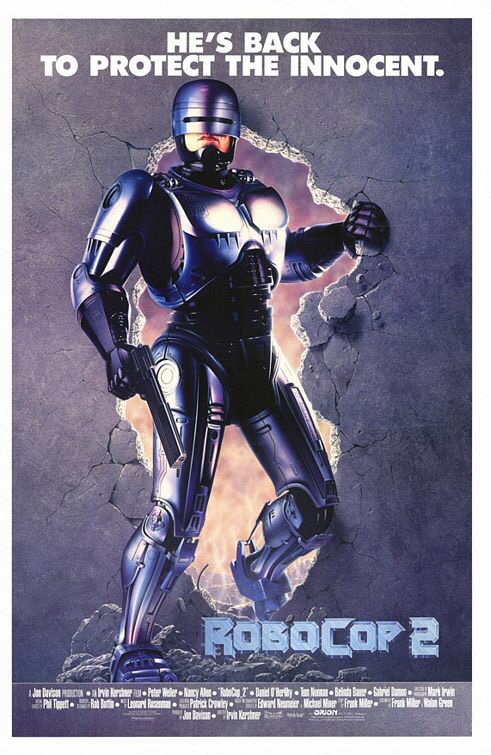
RoboCop 2
The first RoboCop is one of my favorite movies. Paul Verhoeven really knows how to tell a story from the perspective of the film’s ideology while simultaneously letting you in on the joke.
It’s a tough act to follow, and most claim that RoboCop 2 failed to live up to its predecessor. But I disagree. The reviews on IMDB are all over the place. Many say that it’s not a great movie, but there’s no consensus on why it’s not a great movie.
Yes, certain plot details go nowhere. This is probably the result of studio interference, which is typical for highly anticipated sequels. But my question is: who gives a shit? RoboCop 2 was made in the same vein as another infamous sequel released a week earlier: Gremlins 2: The New Batch and it should be viewed in that light.
Is it a GREAT film? Lol, no. It’s not supposed to be. When you make a sequel, you have two options: do something entirely different or double up on the same shit that was done before. The filmmakers chose the latter (which was the right choice).
Now Verhoeven definitely handled the gratuitous violence much more effectively in the first film, but that’s his specialty. At its heart, RoboCop is a satire on consumerism and corporate culture. The horrific violence and sci-fi aspects, which most people remember it for, was just the vessel to tell the story. RoboCop 2 threw up its arms and said “fuck it, we’re just gonna be satire”.
The villains are much more over-the-top, the commercials are much less subtle, and even RoboCop himself is more exaggerated. Many praised RoboCop for its self-awareness, well the same is true for RoboCop 2. In fact, it’s straight up mocking itself.
I’d say that RoboCop 2, along with Gremlins 2, might be the two most self-aware films ever made.
Does it deserve the 5.8 rating it currently has on IMDB? No.
A 6.8 seems more fitting.

Golden Girls Rebooted
Ep 1: Dorthy has to keep Sophia from escaping the house during COVID lockdown. Blanche reveals she had a questionable fling with Jeffery Epstein. Rose believes everything she reads on the internet and begins denying the Holocaust.

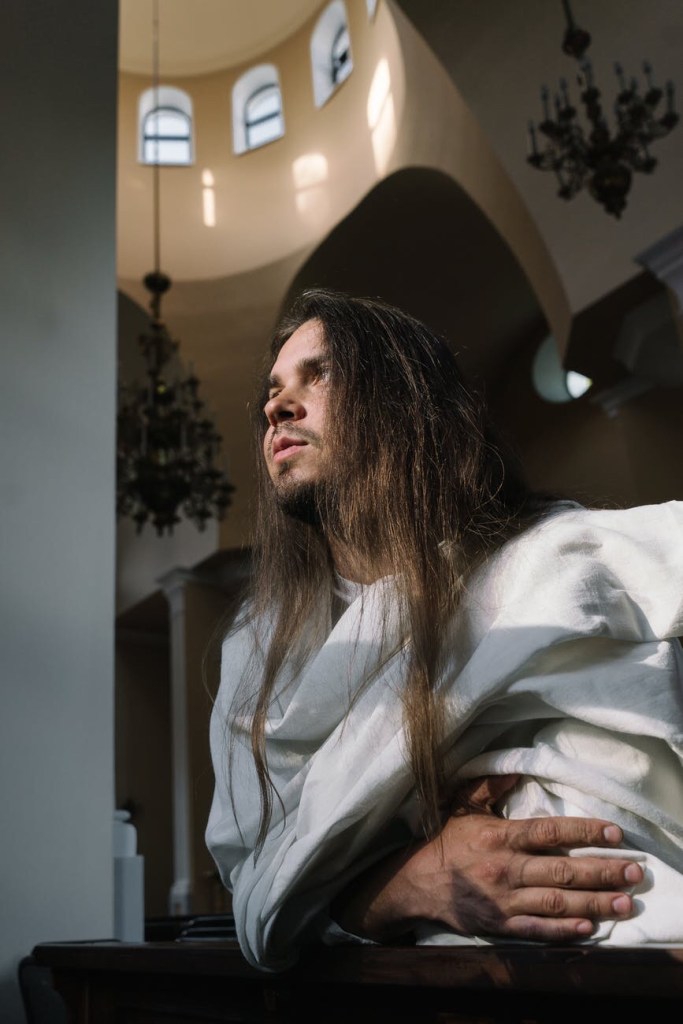
It’s interesting to view Jesus scholarship over the last 50 years. Most of it seems to reflect more on the political climate of the era it was written rather than on the actual historical Jesus, i.e. by turning Jesus into “Jesus the Revolutionary”, “Jesus the Mystic”, “Jesus the Philosopher”,etc.
It’s an easy mistake to make. Arguably I make it when I refer to Jesus as a “populist” figure of the time (I don’t mean that as a compliment. I mean that in its most literal sense: Jesus was addressing working class problems in a religious/political context.) It’s very difficult to separate our biases from the subject being analyzed, especially one as controversial as the historicity of Jesus.
I think there’s a (growing) minority consensus that Jesus took some influence from the Cynics. Some quack scholars might even say he was an outright Cynic.
I think this is an interesting question. In my view, the majority of mainstream scholars, both Christian and secular, wish to paint Jesus as a figure that almost emerged from a vacuum. It makes sense actually. All of the earliest, independently attested documents (The hypothetical Q…which survives almost in its entirety between the Gospels of Matthew and Luke…the epistles of Paul, Gospel of Mark, and Josephus) make no mention of Jesus’s origins (Q and Mark both start with the Baptism of Jesus by John the Baptist). So an attempt to say anything about Jesus’s influences, other than that of John the Baptist, would be pure conjecture. But there are some interesting parallels between Jesus and the Cynics: Mark 6:8, the location of Nazareth and its proximity to an apparent hotbed of Cynicism, Jesus’s confrontational style and eschewing of fame and fortune, embracing of poverty, etc. etc.
But read the Cynic texts. To the Cynics, Diogenes was their “Christ figure”. They all tried to emulate him. And to be honest, he was a disgusting asshole. While Diogenes definitely had his influence, I doubt he would have accumulated very many personal followers. I mean, many might have tried to ACT like him, but there’s no way anyone could have spent more than 10 minutes around him. Jesus, meanwhile, was probably trying to do something entirely different and would have certainly disapproved of things like…I dunno…MASTURBATING and SHITTING in public.
In my humble view, the Cynic modus operandi was likely something that was in the air at the time which some itinerant and apocalyptic preachers might have adopted. But just because that aesthetic was in vogue at the moment doesn’t mean that they were practicing Cynics.
While it’s fun to speculate, the simplest explanation is probably the correct one: Jesus was an apocalyptic Jewish preacher preaching to a mostly Jewish audience.

Ever wonder how nice it would be to not know how to read?
Or how about being a eunuch? You never have to have sex again. Sounds like a good deal to me.
What about being a monk? You know, never having to talk, being separated from society, and you get to read all day.
Or better yet, how about being a eunuch monk that doesn’t know how to read?
Sounds like my ideal existence.

I swear that I don’t plan what movies I’m gonna watch. I sit on my ass and scroll through some app on my smart TV and find random shit.
Oddly enough, the two movies I watched back to back were Werner Herzog’s Woyzeck and William Peter Blatty’s The Ninth Configuration. Both films are about military personnel dealing with insanity and philosophy….not subjects that you find in most films.
This is probably not one of Herzog’s more appreciated films and I wasn’t entirely certain what to make of it. If you watch it, it probably wouldn’t come as a surprise to you that it was shot in 18 days. For a period piece, it’s very small scale and stage-like. But knowing this might help on a second viewing.
Klaus Kinski plays the titular character Woyzeck. He’s a lowly soldier that’s essentially being gaslit by his commanding officer and a quack doctor. He’s a loving father and husband, but his wife sleeps around with another officer and that officer publicly humiliates Woyzeck. Finally, he murders his wife.
Other reviewers called this an “anti-Enlightenment” film. I think that’s apt. The two men egging on Woyzeck’s decent into madness are obsessed with science and philosophy. The officer even mocks Woyzeck, stating that he lacks “morals” due to his status in society. Woyzeck defends himself, claiming that as a man without money or education, he simply does what’s “natural”. When viewed from this perspective, the Enlightenment ideals espoused by the Officer and Doctor come across as abusive, while Woyzeck is actually the only sane and moral person in the movie. The small scale of the movie contributes to the anti-enlightenment narrative, as it isn’t flashy or self-congratulatory like we’ve come to expect with these kinds of films.
Meanwhile, The Ninth Configuration couldn’t be more different. I could tell you what it’s about, but then I’d be lying. I just know it takes place in a castle acting as a psychiatric ward for Vietnam vets, Stacy Keach is in it, and there’s a bar fight. The movie is totally disorienting. At times it’s a psychological drama, other times it’s a comedy, and at one point it becomes an 80s action flick. The tone is all over the place. Perhaps that’s by design but I’m not totally convinced. Either way, this disorder contributes to the overall mystique of the film.
It should also be noted that The Ninth Configuration apparently exists in The Exorcist expanded universe. Not that it has anything to do with those films, except that one of the characters is in the first one.
To be honest, if I watched these movies in isolation, I wouldn’t be a fan of either. But they work very well in tandem. The military aspect of both films seems trivial, but when we consider the discipline and order that the military provides, it contrasts with the chaos associated with insanity. Additionally both films expose the problem of insanity in different ways. One is very plain and straightforward. The other is a complete fucking mess. Woyzeck proposes that insanity is brought forth by the imposition of morals, logic, possession, and science. Ninth Configuration says that it’s the absence of such ideals…or more precisely, the absence of God… is it’s true driving force. Woyzeck is nihilistic. Ninth Configuration is hopeful. Yet both might agree that insanity arises out of the eternal battle between chaos and order.

“Hi, bookie? I’d like to place a bet on the NCAA Miami game.”
“Ohio or Florida?” the bookie asks.
“Both are disgusting”
THE END

It was alright. Can’t complain.
That’s all

Now hear me out:
If you get REALLY high, then Moonraker can become a decent, but not a GREAT film instead of the cocaine-fueled nightmare that is now.
What I love about the James Bond franchise is that it’s pure spectacle. It doesn’t shy away from that. In fact, it full on embraces it…at least during the 60s, 70s, and 80s.
What people don’t realize about the Sean Connery through Timothy Dalton era is that the plot DOES NOT MATTER. At all. Not in the slightest. They’re all screenplays based on story beats: 1) Cold open 2) Titles 3) Moneypenny/Q/M 4)Intro to villain, etc etc. and it always ends with the villain lair exploding and Bond fucking the Bond Girl. The facade of a story is always in service to hitting those beats.
It’s like listening to a Phil Spector produced album where the sheer scale of the production covers up the limitations of the artist.
Now Moonraker crosses the line from being spectacle to straight up insanity. It’s obvious that the producers were just throwing shit up on the screen in a desperate attempt to compete with Star Wars. But underneath all that bullshit, there is a decent James Bond film.
The scene that is often cited as being the moment Bond jumps the shark is the gondola chase. But did you know that that scene is completely useless? It advances the plot in no way. Who’s chasing Bond? Why are they chasing him? It’s assumed to be the villain’s henchmen, but that’s never made clear. As far as Bond knows, it’s just random dudes. There are no consequences for the chase either. You can cut it out completely, and nothing in the story would have been missed. Not even a story beat. The very next scene is a fight with a henchmen where a shit ton of glass gets broken. There is literally no point in the gondola chase.
Honestly, half the shit that takes place in Venice could be cut. Only two important things happen there: you learn that the villain is using a chemical agent in his diabolical plot and the Bond girl is actually a CIA agent. The death of the first henchmen takes place there, which explains the appearance of Jaws later in the film, but I’d argue that this character could be cut completely and nothing would be missed.
Could Jaws be cut out? Probably not. Unlike most things in this film, Jaws actually advances the plot. But his character could be made less ridiculous by introducing him in the Rio Carnival sequence (who cares why he’s there? It should be obvious). Unfortunately that stupid ass love interest ends up becoming useful for Bond at a key point, so that shit has to stay in. BUT all that crap afterwards can be cut out.
Now the film goes completely off the rails after Bond escapes the ambulance, and not much can be done to fix that. 007 has to go into space 🤷♂️. But if roughly 1/4 of the movie gets edited out, you’d have a nice little spy film.
I wish someone would make a fan edit of this.

So I was watching Spalding Gray’s Terrors of Pleasure when I thought “I’d probably enjoy this if I was sober.” So then I searched for something on Amazon Prime.
I came across a comedy called Faith Based, about two buddies that try to make a Christian film. It had all the ingredients to make a good film, or at least a movie that I’d enjoy. But it serves as a good reminder of how difficult it is to make a good motion picture.
It’s a story that I’d otherwise enjoy: about mediocre, yet good natured, talent trying to break into the big leagues by making a movie to help save their father’s church. Naturally, they discover the business is populated by cynical assholes.
Some of the jokes land. When the lead characters explain that “no one wants to see a movie where they don’t recognize anybody” and the camera lingers on the two actors you don’t recognize, I chuckled a bit. The film could have used a bit more of that self-awareness.
But I really am like my lead character in A Shot at the Title: I rarely watch a movie that I don’t want to completely rewrite and redirect. I think the film could have been salvaged by jettisoning all the Office inspired interviews and extending the length. The movie couldn’t have been made for very much money, but the production quality is pretty good. Maybe lingering on some of the shots would have extended its impact.
Of course, it’s not my movie, but if I were making it, as the lead characters go through their trials and tribulations, I would have played with audience by getting the movie as close to a shitty Christian film as one could possibly go before pulling the rug out from under them. That would have accentuated one of the film’s themes: that all of our hopes and dreams are actually just a scheme to make some asshole more money.
But if you’re interested, despite its subject matter, it’s not an anti-Christian or anti-religious movie. At its heart, it’s a film about family, community, and belonging. Nothing we haven’t seen a hundred times before.
Anyways, now I’m sober. Back to Spalding Gray.
 The Internet Ruined Everything