star trek v: the final assault

This was the first Star Trek movie I saw, so maybe I have a soft spot for it.

For the record, I don’t think Bill Shatner is the problem here. I’ll defend that man till death. The problem with this film is the poor special effects (mixed in with what I presume to be budgetary constraints) and some of the strange science that flies in the face of the grounded science of Star Trek.

I don’t think the script is the problem either. Sure there were some strange decisions. The romance between Scotty and Uhura was odd, especially since it was never hinted before (or after). Trek fans hate the idea of Sybok, Spock’s half-brother…which was also never mentioned before in Trek canon… but Sybok is actually an interesting character. However, the heart of Star Trek, particularly with the original cast, was the trifecta of Kirk, Spock, and McCoy, and this film contains some of the best scenes of them together.

The “antagonist”, the aforementioned Sybok, was originally intended to be played by Sean Connery. If that had managed to work out, I’m sure this film would be looked at more favorably. That being said, Laurence Luckinbill does a stellar job making this religious charlatan both sympathetic and charismatic, enough for you to believe that he could rip apart the friendship between the trifecta. I’d say he’s the second best villain in Trek film (behind, of course, Ricardo Montalban’s Khan).

But I applaud Shatner’s ambition here. Harve Bennet, then the head of Star Trek films, hated the idea of “the Enterprise searching for God, but finds the devil instead,” which may be a controversial concept within Star Trek, but it is an interesting idea in-itself.

Did it work?

Not entirely.

Could it have worked?

Yes. Which is why it’s a shame that Shatner never got a chance to do a proper Director’s Cut, especially given advancements in CGI technology.

They gave Robert Wise that opportunity with Star Trek: The Motion Picture, and its reputation has greatly improved.

But there is an interesting fan theory floating around the internet: the main plot of the film is Kirk’s dream while camping with Spock and McCoy in Yosemite. You watch the movie, and you can definitely draw that conclusion.

That’s how I watch it. And it becomes the greatest Star Trek movie ever made.

Maybe the internet isn’t such a bad place after all.

Assthetics

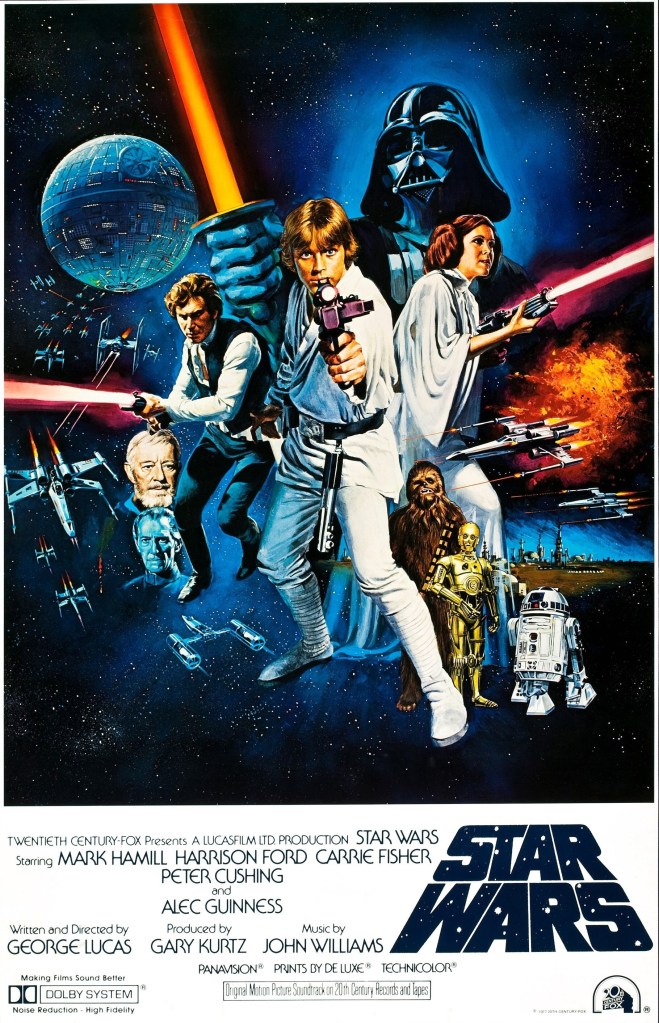
When it comes to the Star Trek vs Star Wars debate, I stand firmly on the Star Trek side (the Gene Roddenberry/Rick Berman era. Not the JJ Abrams/Alex Kurtzman era). I prefer my science fiction to be a bit more grounded. Star Wars, to me, is more Sci-fi/Fantasy.

The success rate of Star Wars, in terms of quality per production, is well below 50% (Star Trek hovers at around 50%). If you think about it, there are really only TWO really good Star Wars films: Star Wars and Empire Strikes Back. The Mandalorian is alright, but it’s a bit too predictable. Nevertheless, I can appreciate George Lucas’ creation. Despite some of the terrible storytelling, when historians reflect on the artful impact of cinema, Star Wars will be to film what William Shakespeare was to the English language or Plato to philosophy.

Star Wars is so ubiquitous in modern culture that people don’t stop to appreciate how it really was a game changer. Watch a Hollywood film before 1977 and watch one after. You’ll see that film and pop culture entertainment was forever changed by it.

To be honest, I don’t think George Lucas’ screenplay (or direction) was that revolutionary. The revolutionary aspect was the production design, music, special effects, and editing (although I’d argue that the James Bond films were far more revolutionary in film editing). In this respect, Lucas was more of a CEO overseeing various departments in creating a lived-in universe. For Star Wars, the stories were always secondary. What grabbed everyone’s attention was the myths and scope: it was like watching an ancient epic being played out on the big screen in a way that films before weren’t able to capture.

So I don’t think that devout fans enjoy Star Wars because of their incredible stories and performances (unless they’re watching because of Harrison Ford). It’s purely an aesthetic experience. Make a Star Wars movie without storm troopers, Star Destroyers, light sabers, Boba Fetts, Jedis, Death Stars, etc. then you probably wouldn’t have a Star Wars movie.

You could make the argument that you can’t make a Star Trek movie/TV show without Starfleet. But fans of Trek have shown to be more open to bending its internal rules to further explore its universe.

But I don’t know dude, you like what you like.

But you know who my favorite Star Wars character is?

Admiral Piett

I hope he gets his own spin-off.

leadership

As you know, I have nothing but regrets.

I’m reaching that age where some of my superiors are younger than me. I don’t begrudge them. They all deserves their spots. Some older guys I work with don’t appreciate that they got passed over, but I think it’s our responsibility…as the “elders”…to bestow upon the younger generation what wisdom we have learned (in my case, what little wisdoms I have learned).

I don’t know if this is a regret I have, it’s more like a big “what if”. I spent some time in the military. Even did three years of ROTC in college. It’s laughable to think I could have been an officer now, but it almost happened (before I realized that I loved drinking WAY more than I loved the military). Despite the abysmal failure of that endeavor, a few lessons stuck with me.

“Just make a decision,” I’d always hear, “don’t worry about if it’s the correct one.” I thought that was stupid advice at the time, especially in a military situation where people’s lives might depend on it. But it seems to make a little more sense now.

Who are the three greatest military commanders of all time? It’s obvious: Captain Kirk, Captain Picard, and Captain Sisko.

The three guys in the middle

“But they aren’t real,” you might say.

So? Real life isn’t real.

I remember Mike Stoklasa praising Bill Shatner’s acting capabilities (in a video discussing Shatner’s hatred of Mike Stoklasa). You can laugh all you want, but it’s true: Shatner is an extraordinarily effective actor. And, for better or worse, Captain Kirk is Bill Shatner and Bill Shatner is Captain Kirk.

Kirk understands that he is playing a part as Captain of the Enterprise. He has to project confidence as its leader because the survival of his ship might depend on it. Shatner, I think, understands that Kirk himself is playing a part, which might explain some of the strange speech patterns he exhibits throughout the series and films.

That’s why I think it’s great that the handlers of Star Trek (at least back then) cast classically trained thespians for the role of the Captain. Just the ability to “play the role” is necessary for the crew to rally behind, even when the leader isn’t completely confident in his (or her) decisions.

Obviously Picard is the superior Captain. No disrespect to Shatner, but Patrick Stewart knows when to dial up the acting and when to hold back (even if, in my belief, Stewart didn’t completely understand the appeal of his character or Star Trek). But what Picard does better than anyone is embrace his mission: “explore strange new worlds”. He seeks out moral quandaries and mysteries because he understands that these hold the secrets of the universe. He’s an explorer but not in the usual sense of the term.

I think to be a leader, one has to be open to that sort of exploration.

Of course, Sisko was far more grounded than either Kirk or Picard. He had a life outside of Starfleet and his job was to navigate the political complexities of a particular section of the galaxy. While Kirk and Picard were explorers, Sisko’s mission was different: he was an ambassador attempting to bring together warring factions. But just like everyone else, he had to “play the part.”

“But those were actors that had scripts,” you might say. “Real life doesn’t have a script.”

True that, but if you understand the more technical aspects of your work, in a sense you kinda already do have a script. You can’t just willy nilly your way through a job, you are confined and in many aspects you have direction. It’s just making the best decision with the options you have.

So I think it’s interesting that the three best Captains in Star Trek history each explore the three most important aspects of leadership: confidence (or the projection of), eagerness to accept challenges, and being the middle man between conflicting parties. But most importantly, “just play the part.”