This is the great dying of beloved franchises. And while I can sit back and laugh at Star Wars and LotR fans for their respective enshitifications, I too have witnessed the sad decline of the much loved series Star Trek, which had as much of an impact on me as James Bond. Luckily for me, I had Redlettermedia guide me through the mourning process and now I hardly think about Star Trek at all. In fact, in my head canon, Star Trek effectively ended with Enterprise in 2002. Fans can gloat on about how under appreciated Discovery was, or how good Lower Decks and Strange New Worlds is, etc, etc. But it’s over for me.
This is the way it should be. For something to be truly appreciated, its very existence has to be jeopardized. But this also allows us to pave way for the future.
I could have bitched and moaned about Denis Villeneuve and Amazon’s decision to focus the next Bond movie on 007’s early adventures in a 3+hour action romp, but whatever. That’s out of my control. I’m an old Bond head and the next film is not being made with me in mind. I turn 109 next summer. It’s time for some new blood. But unlike with Star Trek, there will be no one to help me through the mourning. James Bond doesn’t have that kind of fan base. I have to sit alone in a garage with a bottle of Taaka and a loaded .38 and weep alone. At least that’s the way James Bond would have wanted.
But in the words of megalomaniac Paul of Tarsus, it’s time to put childish things away and accept that James Bond died by a brutal missile barrage in No Time To Die. That’s the way he would have wanted it.
Through the fire and flames and the rotten stench of a decaying world, I felt myself unnerved by the string of celebrity deaths this past week. Gene Hackman and Michelle Trachtenberg’s passing dominated the headlines, but there were two others that I feel went under the radar: Roberto Orci and Jocelyn Ridgley.
Jocelyn Ridgley might not be well known outside of Red Letter Media fandom but she made quite an impact for her role as Nadine in a Mr. Plinkett review and for Zorba in Space Cop. Reports indicate that she was killed in a murder-suicide in Arizona. To my knowledge, her death hasn’t been addressed by the Red Letter Media crew but it appears that she is the same Jocelyn Ridgley named in the Arizona media.
Roberto ‘Bob’ Orci might be better known as he rose to fame along side Alex Kurtzman when they became showrunners of Hercules. They’d later team up for Xena, Alias, and Fringe and wrote screenplays for Mission Impossible III and Transformers. However their internet notoriety came when they produced and wrote Star Trek (2009) with JJ Abrams, followed by Star Trek Into Darkness four years later. This was a turning point in Hollywood history; an omen for what was to come for all established IPs (but that’s a story for another day). What’s forgotten in the Orci story is that when Abrams stepped away from Star Trek to helm Star Wars, Orci was initially named as director for what eventually became Star Trek Beyond. By that time, Kurtzman had already established himself as a director so it only seemed natural that his partner would follow suit. But that deal fell through and Orci seemingly disappeared from not only Star Trek, but the spotlight altogether. To make this saga even more strange, it was later announced that Kurtzman, not Orci (who was a genuine fan of Star Trek), would essentially be the gatekeeper of Star Trek for both film and television, a role that Rick Berman similarly held in the 1990s, and the rest is history. Orci died of kidney failure on February 25, 2025.
Orci came to my attention in the run up to the release of Star Trek 09 as he regularly interacted with fans on Trekmovie.com. These interactions weren’t always cordial, particularly in 2013 when Into Darkness polarized critics and fans alike. To be honest, Bob Orci always struck me as a weird guy. It’s Hollywood so that shouldn’t come as a surprise but he never struck me as a weird eccentric guy, which is far more socially acceptable. Instead he came across as a weird tech-billionaire type, minus the billions of dollars. I never followed his social media but allegedly after his exit from Star Trek he became a 9/11 truther and entertained a number of other conspiracy theories. Later it was revealed he was in an abusive relationship with his wife, both alleging the other of abuse, and that he was in and out of rehab for alcoholism. I assume this partially explains his exit from Star Trek. It’s a sad ending for a guy who became a showrunner at age 24.
Michelle Trachtenberg presumably died of liver failure on February 26th, but because her family has refused an autopsy, her death remains undetermined. I grew up watching her on the Adventures of Pete & Pete and EuroTrip was an often quoted film in high school. Her passing is a reminder that the cold touch of death could reach us at any moment and that fame and age cannot protect us.
Thankfully Gene Hackman lived a long and fruitful life when he died sometime in February of this year. His body, along with the body of his wife, was found on February 26th. Initial thoughts were that the couple died from carbon monoxide poisoning but that is now seemingly not the case. What should be a celebration of his life and achievements is instead a tragic event shrouded in mystery.
Not since the great die-off of 2016 have I been so rattled by celebrity deaths. These folks passed away either too young or under mysterious circumstances. As cursed as this world can be, we should wake up each morning and look in the mirror and be amazed that the universe has made itself aware through your eyes. Because one day it will all be over.
I’ve always been a defender of Star Trek TNG Seasons 1 and 2. They at least tried things.
Did it always work? Almost never.
But there’s this episode from season 1 that always haunted me. It’s kinda a popular one: The Big Goodbye. It features legendary actor Lawrence Tierney and it’s about the holodeck malfunctioning. After they fix the problem and the episode is about to end, one of the characters realizes that he’s simply a computer program. As Picard is about to leave, the program asks the Captain a chilling question:
“When you leave and this world still exists, will my wife and kids be waiting on me at home?”
Let me be clear: the second season of SNW was a step backwards. It did some things right. It expanded Rebecca Romijn’s Una Chin-Riley, a character that was essentially a non-factor in the first season. And Paul Wesley appears to be stepping into the role of James T. Kirk admirably. But showrunners Akiva Goldsman and Henry Alonso Meyers ultimately dropped by the ball by trying to do too much.
Don’t get me wrong, Star Trek, in many ways, encourages genre-hopping. That’s the wonderful thing about science fiction. It can be a courtroom drama, western, musical, etc. and no one will bat an eye. The problem is that old Star Trek use to air 900 episodes a season. Current Trek can only do 10. It’s disorienting to have one episode establish a main character as a war criminal and then make the next episode an over-the-top musical.
Moreover, there’s the problem of Captain Pike and Starfleet competency. I understand that they want to make Pike a more laidback Captain as compared to other Starfleet legends like Kirk and Picard. But Trek fans like seeing their Captains be competent and fully in charge. There’s a reason why Captain Shaw from Picard was such a hit. That dude was a hardass disciplinarian. We LOVED watching him put Picard and Riker, two beloved heroes in the Trekverse, in their place. Pike isn’t Shaw, obviously, but it would be refreshing to see Pike be a more commanding presence (which is why it might be a mistake giving Kirk an expanded role in the series).
With Kirk, Uhura, Spock, Chapel, and Scotty now introduced to the show, it’s now only a matter of time before McCoy, Sulu, and maybe Chekhov are brought on. So it’s gonna piss me off if they try to remake TOS, UNLESS they skip over those three years and go straight on into The Ongoing Mission, which finishes up Kirk and Spock’s original five-year mission then leads right up to The Motion Picture. In fact, this will almost certainly happen.
After shitting the bed one too many times, Alex Kurtzman and company finally did something right with the first season of Star Trek: Strange New Worlds. Then, almost as if we’re in the Twilight Zone, they went out on a high note with the third season of Picard. It seemed like Kurtzman finally had this Star Trek stuff figured out and for the first time in awhile, the future of the franchise looked bright.
And maybe it still is. But considering Prodigy and Discovery got (mercifully) axed, it’s now up to Strange New Worlds to carry the banner (Lower Decks doesn’t exist in my eyes). The first season was solid, not great, but it seemed like writers figured out that you don’t have to do too much to tell a good Star Trek story.
Thankfully they’re still doing that. Unfortunately the writing has regressed in a way that’s difficult to put my finger on. Season 2 is simply poorly written. Not in a stupid Alex Kurtzman way, it’s just plain bad.
Truth be told, I hardly remember the first episode other than I cringed a lot. I love Carol Kane. But her character is straight up annoying. And the fan service is unnecessary. Stealing the Enterprise?! Where have we seen THAT before?!
The second episode was marginally better: a simple courtroom case to determine the fate of first officer Una Chin-Riley. Obviously they were going for a Measure of a Man vibe, but it was a little too on the nose. Star Trek has a history of doing courtroom drama, almost ALL of it good. Additionally, courtroom drama should be the easiest thing for a television writer to produce; everything is front and center and self-contained. The gold standard for Star Trek courtroom drama is, of course, The Measure of a Man, but what was brilliant about it was that it contained five actors and showcased Patrick Stewart’s acting skills. It was amazingly simple. In SNW S2 Ep. 2, there was too much focus on interpersonal drama and the speeches went on far too long. Perhaps if they waited later in the season to have this court case, it might’ve been more impactful. But where it stands, the episode fell flat.
But what really pissed me off was the third episode. Going back in time to present day Toronto (where the show is conveniently filmed)? Lame. And more fan service bullshit by introducing child Khan? Yes, Star Trek II is an incredible movie but it’s time to let it go. But there’s also the issue of Paul Wesley as James T. Kirk.
Wesley seems like a competent actor and a nice guy. But let’s be frank: no one is sold on him being the greatest Captain in Starfleet history. And I don’t think it’s his fault. No one in Kurtzman’s production team has probably told him how to play the role.
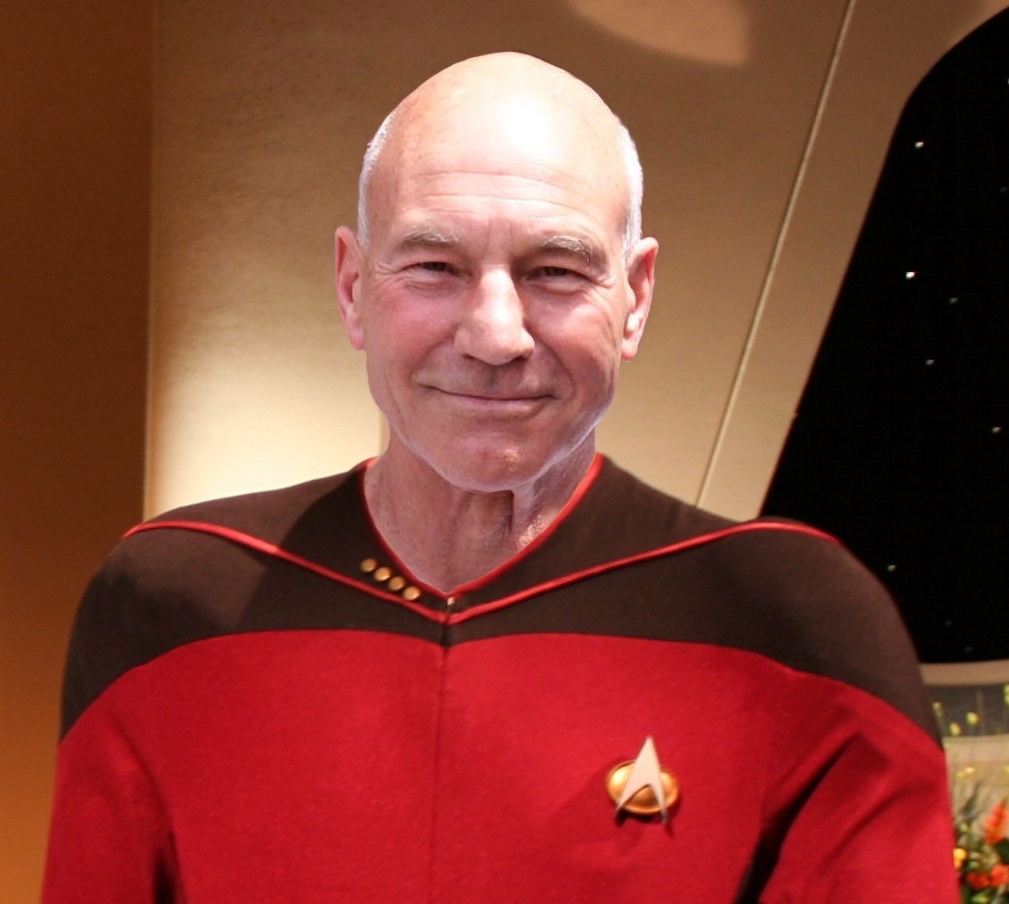
As I’ve said a million times before, William Shatner is actually a great actor. He understood that when you play a Starfleet captain, you’re playing two roles: the captain and the man. Patrick Stewart and Avery Brooks understood this too. When you play the captain, it’s okay to be over the top and hammy; being in command of a ship is a performance in itself. The drama occurs when the captain doesn’t know when to drop the facade.
I don’t think Chris Pine does this with his interpretation of Kirk, but he has a unique charisma of his own. Plus he has the luxury of playing an alternate Kirk. Wesley is playing the OG Kirk. While I understand that he doesn’t want to mimic William Shatner, I’m just suggesting that he probably needs to. Don’t be afraid to speak in Shatner’s unusual cadence. It’s actually a VERY effective way of communicating. It’s theatrical, it’s bold, it’s memorable…just like James T. Kirk!
I was on the edge of my seat throughout Picard Season 3. Not because I found the story itself particularly thrilling, but because I was waiting for the writers and producers to shit the bed at any moment.
But it never happened.
And for that alone, the third and final season of Star Trek: Picard can be deemed a success. Yes, the bar has been set that low.
Actually, I’m going to something that I swore I’d never do: defend Alex Kurtzman. ACTUALLY…fuck that: I’m going to defend the decision to bring back the Borg, which is a decision I presume Alex Kurtzman fully supported.
To be honest, I’m a little disappointed that the Changelings weren’t made the main villain as I was quite excited to see them return. And I agree with most fans that between Voyager and the first couple of seasons of Picard that the Borg are mostly played out. BUT, being as they were the main villains during Berman-era Trek, I feel pretty content with how they were closed out in Picard: in one last standoff with the Enterprise D.
But, I guess they’re gone now (I don’t know for sure because I refuse to watch Picard season 2), so it’s time to push Star Trek forward. The franchise’s new savior is Terry Matalas, who is apparently pushing for Star Trek: Legacy, which if the last episode of Picard is any indication, will star Seven of Nine as captain of the Enterprise G, her former lover Raffi as her first officer, and Jack Crusher…Picard’s son…as a “counselor to the captain” or some shit.
Speaking of Jack Crusher, the writers could’ve done better and the actor kinda overplayed it. Yet somehow I don’t absolutely hate him 👍.
So I guess I’ll continue letting Paramount steal money from my wallet so that I can watch the adventures of Captain Seven (or is it Captain “of Nine”?)
It’s been an emotional week for me. And that could be a part of the problem: Star Trek: Picard season 3 caught me at the right time.
I don’t think I’ve ever properly explained the impact that TNG made on my childhood. Without it, everything might’ve been different. Perhaps I would have been able to able to live out my dream of being a Las Vegas lounge singer in Carson City. Who knows? But alas, I watched it and now nearly 30 years after the show ended, I’m about to initiate mutually assured destruction with my employer. C’est la vie.
Now after the shitshow that was Picard seasons 1 and 2, the question we should ask ourselves is: “what makes us think that season three would be any different?”. And I’m not entirely sure I have a satisfying response. We’re only two episodes in for fuck’s sake.
But I will say this: season three already feels a bit dialed back. This is a good thing. If I’ve said this once, I’ve said it a million times: Star Trek works best on limited budget, reliant on big emotions and intriguing science fiction dilemmas.
NuTrek, however, has basically abandoned the “intriguing science fiction dilemmas” part in favor of intergalactic politics. Which is fine. That could be interesting, but in NuTrek, the United Federation of Planets usually comes across as just another dirty player on the chess board. This unfortunately contradicts everything that made Star Trek appealing to sci-fi fans initially.
Fortunately in the Trek-verse there’s a film called Star Trek II: The Wrath of Khan which is usually considered the franchise’s finest hour. While the plot does involve a science fiction macguffin, the story itself is about aging, friendship, family, loss, and revenge. In short, it’s a space opera.
So if you’re a NuTrek producer and you know that the quality of your product has been shit the past two seasons, what do you do? The answer is you steal from the best. While The Next Generation films are considered a disappointment, we’re finally given a real taste of what that universe would look like had Rick Berman and company handled the movies properly, albeit on Paramount+. And in my view, kudos to Alex Kurtzman and Terry Matalas for unapologetically ripping off Star Trek II.
In fact, they’re not only ripping off Star Trek II, but they’re ripping off the entirety of the TOS movies right down to lines of dialogue and sound effects. And I don’t have a problem with any of it.
This means that someone from the TNG crew…probably Picard…will get a glorious death scene and I am not prepared for it. In fact, I nearly cried when they started using the First Contact theme, which is one of my favorites, for the end credits.
Despite all of my bitching about NuTrek, if producers keep up the quality from the first two episodes, then guys…I’m telling you: I’m just not ready for it to end.
Sybok, played brilliantly by Lawrence Luckinbill (in a role originally intended for Sean Connery) is Spock’s half-brother turned religious charlatan. He amassed a following by tapping into the emotions of a down-trodden people who later helped him gain control of the Enterprise. In this scene, Sybok uses his emotional trickery to tear apart the the Original Series triumvirate…Kirk, Spock, and McCoy…and nearly succeeds: McCoy is forced to relive the pain of euthanizing his father, and Spock is reminded of his half-humanness that caused him to be a pariah in Vulcan society and feel less loved by his father.
Kirk, meanwhile, sees through this bullshit and reject’s Sybok’s offer to be “released from his pain.”
Regardless of how you feel about Kirk’s rationale for clinging on to his pain (to me, Sybok and Kirk seem to have the same philosophy of “deriving strength through pain,” it’s just that Kirk kept his eye on the ball…regaining control of the Enterprise…while everyone else succumbed to Sybok’s charisma) this is actually a very well directed and well written scene. And it just so happens to be in the worst Star Trek movie there is (personally, I think Insurrection, Nemesis, Into Darkness, and Beyond and WAY worse, but whatevs).
This is why I think director William Shatner isn’t to blame for STV. When it comes to the character interactions, this might be the best that Star Trek has to offer. By the time this film was made, the actors had been playing these characters for over 20 years and it certainly shines through in this scene.
Shatner made the right decision to not create an elaborate set design. It’s like an intimate theatrical production and it’s one of the highlights of the franchise.
Star Trek: First Contact- “The Line Must Be Drawn HERE”
The Enterprise follows the Borg back in time to the late 21st Century and it’s up to the TNG crew to save history. Meanwhile, the Borg take over the Enterprise and Picard goes on a warpath.
Now this might be the most famous example of an “emotional climax” moment in Star Trek, but it’s got some problems. While Alfre Woodard delivers an Oscar-worthy performance, as any Star Trek fan could tell you, it should have been Beverly Crusher who confronted Picard. Additionally, Picard is out of character. While Patrick Stewart is an incredible actor, in my opinion, he never quite understood Star Trek OR the appeal of his famous character. And it was Stewart’s push to make Picard more vengeful and heroic in this installment. While that doesn’t make a lick of difference to the average viewer, things like that DO matter to Trek fans, which is why First Contact has fallen out of favor with some.
That being said, everything is well executed. This is also director Jonathan Frakes’ (who plays William Riker) first motion picture and it doesn’t show. Star Trek seems to excel when one of the actors is allowed to direct.
Oddly enough, science fiction is somewhat secondary to Star Trek. First and foremost, the franchise is about HUMAN stories that uses science fiction as a backdrop. That’s why Trek is such fertile ground for actors. And I think the sequence above highlights that point.
While the stuff between Woodard and Stewart is incredible, I also like the mini-arc between Worf and Picard. The Captain’s judgment had clearly been clouded and Worf was absolutely correct in confronting him. Picard was in the wrong, plain and simple. Which is why I love the payoff when Captain Picard makes his apology and states his admiration for his longtime security officer.
It’s a small moment, but for longtime fans, it was an impactful one.
So over the Thanksgiving weekend, I made my family watch arguably the worst Star Trek film, Star Trek V: The Final Frontier. When the Sybok interrogation scene of Kirk, Spock, and McCoy came up, it occurred to me: “Star Trek is REALLY good at doing this.”
Doing what exactly?
They’re good at creating emotional climax scenes where character arcs come full circle. Trek films may not be the flashiest of the science fiction genre, but that’s not really their intention. Star Trek is at its best when it’s theatrical, or allowing the actors to fully explore their characters. Two of the franchise’s most notable faces, William Shatner and Patrick Stewart, are quite effective stage actors and that’s where Star Trek is at its strongest: being character driven.
So you have to let the actors ACT.
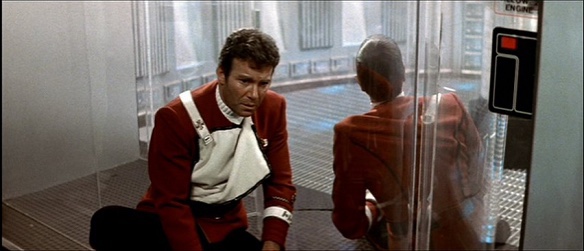
Star Trek II: The Wrath of Khan: Mutara Battle/Death of Spock
This is probably one of the most famous and most parodied death scene in all of film. But this sequence is quite remarkable on multiple levels.
It’s a shame that William Shatner didn’t get any accolades for his performance in Star Trek II. His portrayal of Captain/Admiral Kirk is often viewed as hammy, but in truth, Shatner was quite nuanced in his approach. Director Nicholas Meyer figured out that his leading man was far more effective when doing more takes, which caused the actor to slowly dial back his performance. In short, Meyer wore out Shatner, which perfectly suited a beat down and aging Kirk at the beginning of the film. Obviously, Meyer let Shatner return to form at the end which had a huge emotional payoff.
Not only does the villain Khan get his comeuppance by succumbing to his own wrath but…in pursuit of vengeance…he ends up becoming a force for creation. Spock, of course, delivers the ultimate sacrifice, but Kirk finally faces the very thing he’s cheated his way out of throughout his illustrious career: a no-win scenario.
Thus, everything comes full circle.
Of course, it also helps that there’s exceptional editing and the score that made James Horner a sought after composer is playing in the background.
Star Trek III: The Search for Spock: Stealing the Enterprise
James Horner is typically given credit for the success of this scene. But you have to tip your hat to the editing and, again, the performances.
While we can criticize Shatner’s acting choices all we want, he always makes it perfectly clear what his characters are feeling. And James B Sikking’s arrogant-ass performance almost makes you forget how shitty the Excelsior bridge set is.
It’s a shame that Leonard Nimoy didn’t direct more movies. While he directed some television before, it’s hard to believe that this was his first motion picture because he REALLY elevated this scene. If you pay attention, not much happens here: the Enterprise slowly backs up to the space doors before they magically open and then the Excelsior begins its failed pursuit. But it’s fucking intense! The hairs on my neck always stand when the Enterprise clears space doors and Kirk orders warp speed. That’s a testament to Nimoy’s superb direction of an otherwise ‘meh’ script.
While this isn’t the “emotional climax” to the film, it is an emotional highlight for the Original Series crew; they’re sacrificing EVERYTHING to save Spock. Now Star Trek III isn’t the best Trek film, but the “stealing the Enterprise” scene is one of the best in the franchise.
Sorry, still sick so here’s another phoned in post.
Pierce Brosnan has been blowing up my news feed for whatever reason. I guess he’s playing some superhero or whatever, but I don’t watch that stuff. Unfortunately this has created a lot of (likely clickbait) opinion pieces that reevaluate his James Bond tenure.
I’ve always placed Goldeneye in the top 5 Bond films, which is where most 007 fans have historically placed it. But there’s a massive drop off with Brosnan’s other three films. The consensus is that while Brosnan could have been a great James Bond, his movies were either mediocre or terrible.
Or, I should say, this WAS the consensus during the Daniel Craig era.
Now that Craig’s moody and brooding Bond is dead and gone, perceptions on Brosnan’s portrayal have shifted. Craig’s 007 matched the times while Brosnan’s seemed clownish by comparison.
But after two years of a pandemic, record high inflation, and superhero movies flooding the theaters, audiences seem primed for a more tongue in cheek James Bond. So the Daniel Craig era is looking more passé by the second.
People are looking to return to a simpler time. And the most (relatively) simpler times in recent memory is the 1990s. At least this is my best explanation for why Pierce Brosnan is undergoing a micro-renaissance.
As a side note, the Star Trek: Next Generation films (which were also released in 90s) are being reevaluated. This is probably due to the cast returning for the final season of Picard. So Generations, released in 1994 and which infamously killed the original Captain Kirk, is being discussed again.
Why I bring this up is because a fourth “Kelvin era” Trek film, starring Chris Pine as nu-Captain Kirk, has stalled for probably the 10,000th time (thank god). While that (hopefully) means we won’t ever see Zachary Quinto as Spock and Karl Urban as McCoy again, that does NOT mean we won’t see Pine as Kirk again.
Why?
Because as any Trek fan can tell you, while Shatner’s Kirk was killed in Generations, technically his existence is preserved in some “ribbon” that floats around in space where time doesn’t mean anything blah blah blah. And this “ribbon” hasn’t been mentioned in Star Trek since.
So you can see where I’m going with this: when another Trek film makes it to the streaming services sometime this decade, the original Captain Kirk will be pulled out of this ribbon to be played not by William Shatner but by, you guessed it, Chris Pine.