
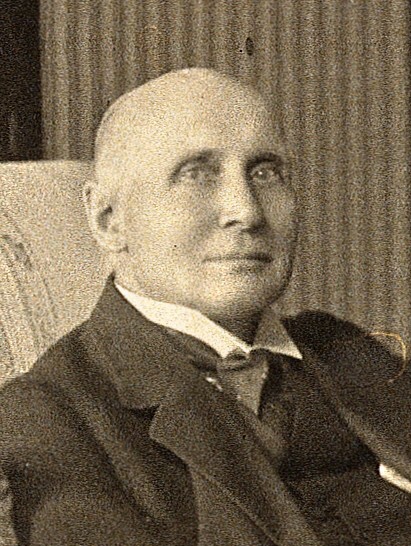
“All of philosophy is merely footnotes to Alfred North Whitehead” -Alfred North Whitehead (1861-1947)
RIP 😭😭😭
“All of philosophy is merely footnotes to Alfred North Whitehead” -Alfred North Whitehead (1861-1947)
RIP 😭😭😭
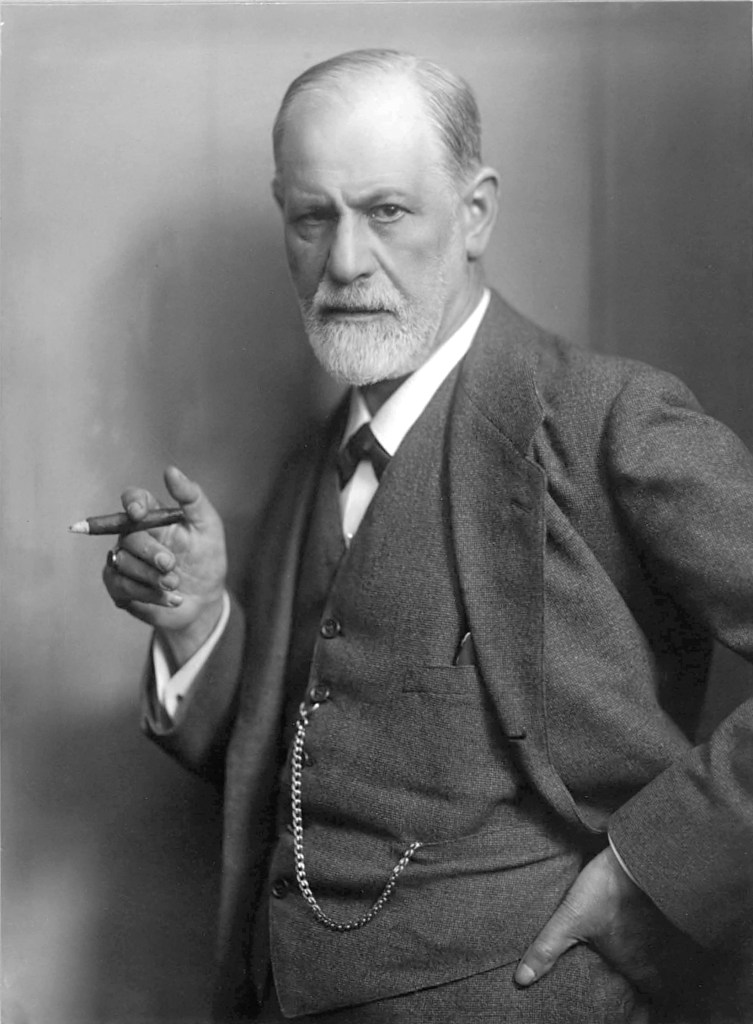
Sorry, I was high on gas fumes and aerosols when I wrote my last post. It kinda went off the rails there towards the end.
So allow me to muddy the waters a bit more.
Fundamentally, I think that “everything is ideology“ (a lot of people have thought about this long before me). And I mean EVERYTHING: objects, sex, relationships, beauty, art…everything. To break these things down to their smaller components would reveal true horror: your food is dead animals and vegetables, sex is exchanging of gross bodily fluids, etc. So we have to sublimate these objects into ideas…hence “everything is ideology”.
Which is perfectly acceptable! Humans are both blessed and cursed by logic and reasoning because these functions often reveal the nothingness behind everything. Thus, REAL truth is terrifying and ultimately meaningless, so the “mask” of ideology is the only “reality” that matters. Sometimes existential dread ensues because of this. Therefore sublimation, in the Freudian sense, is helpful in constructing a healthy view of the world.
Which is why I sometimes praise religion and SOME politics, provided they promote peaceful coexistence and openness. Clearly sublimating into certain ideologies can lead to straight up derangement. So, therefore,“sublimate well”.
poop

It’s interesting to view Jesus scholarship over the last 50 years. Most of it seems to reflect more on the political climate of the era it was written rather than on the actual historical Jesus, i.e. by turning Jesus into “Jesus the Revolutionary”, “Jesus the Mystic”, “Jesus the Philosopher”,etc.
It’s an easy mistake to make. Arguably I make it when I refer to Jesus as a “populist” figure of the time (I don’t mean that as a compliment. I mean that in its most literal sense: Jesus was addressing working class problems in a religious/political context.) It’s very difficult to separate our biases from the subject being analyzed, especially one as controversial as the historicity of Jesus.
I think there’s a (growing) minority consensus that Jesus took some influence from the Cynics. Some quack scholars might even say he was an outright Cynic.
I think this is an interesting question. In my view, the majority of mainstream scholars, both Christian and secular, wish to paint Jesus as a figure that almost emerged from a vacuum. It makes sense actually. All of the earliest, independently attested documents (The hypothetical Q…which survives almost in its entirety between the Gospels of Matthew and Luke…the epistles of Paul, Gospel of Mark, and Josephus) make no mention of Jesus’s origins (Q and Mark both start with the Baptism of Jesus by John the Baptist). So an attempt to say anything about Jesus’s influences, other than that of John the Baptist, would be pure conjecture. But there are some interesting parallels between Jesus and the Cynics: Mark 6:8, the location of Nazareth and its proximity to an apparent hotbed of Cynicism, Jesus’s confrontational style and eschewing of fame and fortune, embracing of poverty, etc. etc.
But read the Cynic texts. To the Cynics, Diogenes was their “Christ figure”. They all tried to emulate him. And to be honest, he was a disgusting asshole. While Diogenes definitely had his influence, I doubt he would have accumulated very many personal followers. I mean, many might have tried to ACT like him, but there’s no way anyone could have spent more than 10 minutes around him. Jesus, meanwhile, was probably trying to do something entirely different and would have certainly disapproved of things like…I dunno…MASTURBATING and SHITTING in public.
In my humble view, the Cynic modus operandi was likely something that was in the air at the time which some itinerant and apocalyptic preachers might have adopted. But just because that aesthetic was in vogue at the moment doesn’t mean that they were practicing Cynics.
While it’s fun to speculate, the simplest explanation is probably the correct one: Jesus was an apocalyptic Jewish preacher preaching to a mostly Jewish audience.

Part of the reason why William Peter Blatty considered The Ninth Configuration as a true sequel to The Exorcist is because they both attempt to address the “mystery of the good.”
Blatty, from my understanding of course, was a devout Catholic so he understood these terms from a very spiritual perspective. While I find the phenomenon of religion fascinating, I don’t view the universe in that particular way. Nevertheless, I think Blatty was attempting to address a very interesting question, particularly with The Ninth Configuration (the film. I haven’t read the novel)
Much ado is made about “the problem of evil”, but that’s only a problem from a religious perspective. If the the universe is indifferent to our plight, and life is inherently selfish, then there is no mystery. Furthermore, there is no good OR evil…it’s merely a projection of human perception.
Many philosophers have attempted to formulate a model for morality, notably Kant’s Categorical Imperative and utilitarianism, with varying degrees of success. I personally tend to favor something that I heard Bart Ehrman say: I just know it when I see it. However I do find it interesting that nearly every religion has some variant of the Golden Rule: do unto others as you’d have them do unto you.
I don’t think that I have many philosophical convictions, but one thing I am certain of is that I am not a “blank slatist”. If we were born as blank slates, then nothing we do would be possible. Language acquisition itself provides some insight into the a priori nature of our being. What language can tell us precisely about our morality is unknown to me, but I think it warrants further investigation as evidenced by the Golden Rule.
The Golden Rule may not be a “philosophically consistent” principle, but I think it’s intuitive enough that there could possibly be something revealing about it. Empathy might be an example. To my understanding, empathy is a phenomenon that’s scientifically falsifiable, but I’m just spitballing here. Maybe “good” and “evil” are a priori categories of human reasoning, I dunno.
Either way, from both a religious and secular perspective, “the problem of good” needs answering.

I swear that I don’t plan what movies I’m gonna watch. I sit on my ass and scroll through some app on my smart TV and find random shit.
Oddly enough, the two movies I watched back to back were Werner Herzog’s Woyzeck and William Peter Blatty’s The Ninth Configuration. Both films are about military personnel dealing with insanity and philosophy….not subjects that you find in most films.
This is probably not one of Herzog’s more appreciated films and I wasn’t entirely certain what to make of it. If you watch it, it probably wouldn’t come as a surprise to you that it was shot in 18 days. For a period piece, it’s very small scale and stage-like. But knowing this might help on a second viewing.
Klaus Kinski plays the titular character Woyzeck. He’s a lowly soldier that’s essentially being gaslit by his commanding officer and a quack doctor. He’s a loving father and husband, but his wife sleeps around with another officer and that officer publicly humiliates Woyzeck. Finally, he murders his wife.
Other reviewers called this an “anti-Enlightenment” film. I think that’s apt. The two men egging on Woyzeck’s decent into madness are obsessed with science and philosophy. The officer even mocks Woyzeck, stating that he lacks “morals” due to his status in society. Woyzeck defends himself, claiming that as a man without money or education, he simply does what’s “natural”. When viewed from this perspective, the Enlightenment ideals espoused by the Officer and Doctor come across as abusive, while Woyzeck is actually the only sane and moral person in the movie. The small scale of the movie contributes to the anti-enlightenment narrative, as it isn’t flashy or self-congratulatory like we’ve come to expect with these kinds of films.
Meanwhile, The Ninth Configuration couldn’t be more different. I could tell you what it’s about, but then I’d be lying. I just know it takes place in a castle acting as a psychiatric ward for Vietnam vets, Stacy Keach is in it, and there’s a bar fight. The movie is totally disorienting. At times it’s a psychological drama, other times it’s a comedy, and at one point it becomes an 80s action flick. The tone is all over the place. Perhaps that’s by design but I’m not totally convinced. Either way, this disorder contributes to the overall mystique of the film.
It should also be noted that The Ninth Configuration apparently exists in The Exorcist expanded universe. Not that it has anything to do with those films, except that one of the characters is in the first one.
To be honest, if I watched these movies in isolation, I wouldn’t be a fan of either. But they work very well in tandem. The military aspect of both films seems trivial, but when we consider the discipline and order that the military provides, it contrasts with the chaos associated with insanity. Additionally both films expose the problem of insanity in different ways. One is very plain and straightforward. The other is a complete fucking mess. Woyzeck proposes that insanity is brought forth by the imposition of morals, logic, possession, and science. Ninth Configuration says that it’s the absence of such ideals…or more precisely, the absence of God… is it’s true driving force. Woyzeck is nihilistic. Ninth Configuration is hopeful. Yet both might agree that insanity arises out of the eternal battle between chaos and order.
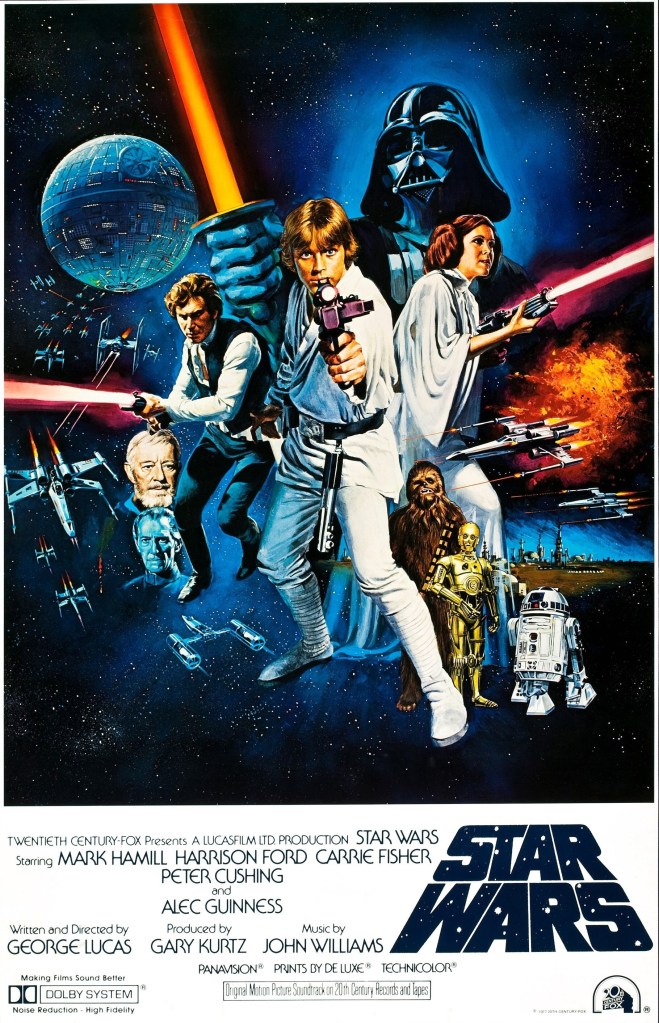
When it comes to the Star Trek vs Star Wars debate, I stand firmly on the Star Trek side (the Gene Roddenberry/Rick Berman era. Not the JJ Abrams/Alex Kurtzman era). I prefer my science fiction to be a bit more grounded. Star Wars, to me, is more Sci-fi/Fantasy.
The success rate of Star Wars, in terms of quality per production, is well below 50% (Star Trek hovers at around 50%). If you think about it, there are really only TWO really good Star Wars films: Star Wars and Empire Strikes Back. The Mandalorian is alright, but it’s a bit too predictable. Nevertheless, I can appreciate George Lucas’ creation. Despite some of the terrible storytelling, when historians reflect on the artful impact of cinema, Star Wars will be to film what William Shakespeare was to the English language or Plato to philosophy.
Star Wars is so ubiquitous in modern culture that people don’t stop to appreciate how it really was a game changer. Watch a Hollywood film before 1977 and watch one after. You’ll see that film and pop culture entertainment was forever changed by it.
To be honest, I don’t think George Lucas’ screenplay (or direction) was that revolutionary. The revolutionary aspect was the production design, music, special effects, and editing (although I’d argue that the James Bond films were far more revolutionary in film editing). In this respect, Lucas was more of a CEO overseeing various departments in creating a lived-in universe. For Star Wars, the stories were always secondary. What grabbed everyone’s attention was the myths and scope: it was like watching an ancient epic being played out on the big screen in a way that films before weren’t able to capture.
So I don’t think that devout fans enjoy Star Wars because of their incredible stories and performances (unless they’re watching because of Harrison Ford). It’s purely an aesthetic experience. Make a Star Wars movie without storm troopers, Star Destroyers, light sabers, Boba Fetts, Jedis, Death Stars, etc. then you probably wouldn’t have a Star Wars movie.
You could make the argument that you can’t make a Star Trek movie/TV show without Starfleet. But fans of Trek have shown to be more open to bending its internal rules to further explore its universe.
But I don’t know dude, you like what you like.
But you know who my favorite Star Wars character is?
Admiral Piett

I hope he gets his own spin-off.

So I was watching Spalding Gray’s Terrors of Pleasure when I thought “I’d probably enjoy this if I was sober.” So then I searched for something on Amazon Prime.
I came across a comedy called Faith Based, about two buddies that try to make a Christian film. It had all the ingredients to make a good film, or at least a movie that I’d enjoy. But it serves as a good reminder of how difficult it is to make a good motion picture.
It’s a story that I’d otherwise enjoy: about mediocre, yet good natured, talent trying to break into the big leagues by making a movie to help save their father’s church. Naturally, they discover the business is populated by cynical assholes.
Some of the jokes land. When the lead characters explain that “no one wants to see a movie where they don’t recognize anybody” and the camera lingers on the two actors you don’t recognize, I chuckled a bit. The film could have used a bit more of that self-awareness.
But I really am like my lead character in A Shot at the Title: I rarely watch a movie that I don’t want to completely rewrite and redirect. I think the film could have been salvaged by jettisoning all the Office inspired interviews and extending the length. The movie couldn’t have been made for very much money, but the production quality is pretty good. Maybe lingering on some of the shots would have extended its impact.
Of course, it’s not my movie, but if I were making it, as the lead characters go through their trials and tribulations, I would have played with audience by getting the movie as close to a shitty Christian film as one could possibly go before pulling the rug out from under them. That would have accentuated one of the film’s themes: that all of our hopes and dreams are actually just a scheme to make some asshole more money.
But if you’re interested, despite its subject matter, it’s not an anti-Christian or anti-religious movie. At its heart, it’s a film about family, community, and belonging. Nothing we haven’t seen a hundred times before.
Anyways, now I’m sober. Back to Spalding Gray.

Before his James Bond got blown to shit on some rooftop on a Japanese island in No Time To Die (sPoIlEr AlErT!), Daniel Craig was in what is perhaps the greatest British film ever made: Layer Cake.
While every actor (except Tom Hardy) acts their ass off and every line of dialogue is an absolute banger, the film is perhaps best known as a turning point in film history: introducing the world to Daniel Craig’s god-like body.

Daniel Craig was blessed with being able to make whatever he’s wearing look like it was tailored specifically for him. He spends much of the film wearing the same plain gray raglan t-shirt with Levi’s…an outfit that probably costs $50 total, but it looks like he’s modeling Brioni.
I couldn’t pull off that look. I tried.
Another thing Craig succeeds at is showing his “sex” gaze:
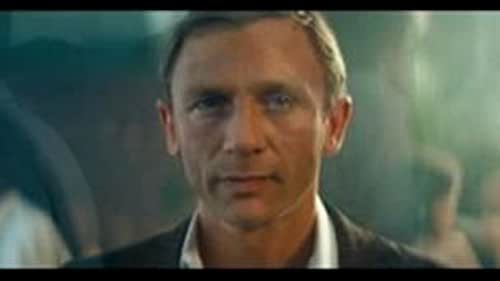
Not to toot my own horn, but I’m happily married now because I mastered that gaze. Now personally, I like to use the Sean Connery method of tilting my head forward, arching an eyebrow, and smiling with my eyes. But every man has to master the “sex” gaze, to knock em dead with one look, if they want to be successful with the ladies (or the fellas).
That haircut is pretty good too. It’s definitely a 60’s style throwback, echoing the aforementioned Sean Connery and his toupee during his James Bond tenure. Unfortunately I’m a balding man, have been since I was 13, so I was never able to pull off that style. But because I’m balding, I’m sort of an expert at spotting hair plugs. And Craig, in my humble opinion, probably has hair plugs. That being said, I’d pay good money to find out who his specialist is.
Another thing on Craig’s style is that pimpin purplish/maroon jacket he wears to start the film:

I’m just gonna go ahead and say it: no man has ever looked as good on film as Daniel Craig did in Layer Cake.
“We get it, you’re in love with Daniel Craig. But what about the film?”
Oh yeah, the film’s good too.

I’m assuming Western history and civilization is defined by the culture of Europe and North America from the time of Alexander the Great onward.
Eastern civilization, I guess, includes India and China.
Meanwhile Ancient Egypt is left in no man’s land, along with the Middle East, Latin America, and Polynesia. And African civilization, history, religion, and philosophy gets neglected entirely.
And somehow, if common logic is to be believed, none of these civilizations interacted and influenced each other. Ever.
Civilization itself is a nebulous term. Same thing with culture (I’m not including “society” here because apparently, as some academic jerk wad told me, “society” doesn’t exist. Whatever that means). Yet somehow, for some reason, we’re supposed to preserve these things because that’s what shaped our perspective on things.
I’m not saying that I disagree, I’m just asking people to interrogate these things a little further. I’ve said before that a sense of belonging is necessary to form an identity. We are who we are by our relationship with others.
But how much is culture and civilization, both ill-defined terms, a part of achieving a sense of fulfillment? I’ve heard people from all different stripes…from Conservatives, Marxists, and even libs….that this is the case, but it’s never been explained. It’s not like we have a choice in the matter, and it operates under the presumption that people are essentially blank slates and are nothing like you and me.
It’s just not true.
We’re still cavemen, meant to dwell in tribes of only a few hundred people, yet we’re faced with a constantly changing world. We have fallen into what Benedict Anderson calls an “imagined community”, where no one knows each other, not even our neighbors, but we’re supposed to believe we form some kind of community. I guess our natural instinct is to preserve what we have.
Anderson was specifically addressing the phenomenon of nationalism and how traditional political philosophy failed to account for its emergence. It’s hard for us to believe, but nationalism is a fairly recent development. It is not intrinsic to our understanding of community. But along with all the political paradigms that came before, the concept of nation state will also go away.
I’ve said it before, and we all know it, but change is the fundamental force in the universe. You can fight that, but it’s futile. Permanence is an illusion. The sense of permanent self is also an illusion: our bodies, minds, memories too, are constantly changing
Being a caveman and defining yourself against the “other” is easy. And maybe I’m wrong. But at least be honest with yourself.
As you know, I have nothing but regrets.
I’m reaching that age where some of my superiors are younger than me. I don’t begrudge them. They all deserves their spots. Some older guys I work with don’t appreciate that they got passed over, but I think it’s our responsibility…as the “elders”…to bestow upon the younger generation what wisdom we have learned (in my case, what little wisdoms I have learned).
I don’t know if this is a regret I have, it’s more like a big “what if”. I spent some time in the military. Even did three years of ROTC in college. It’s laughable to think I could have been an officer now, but it almost happened (before I realized that I loved drinking WAY more than I loved the military). Despite the abysmal failure of that endeavor, a few lessons stuck with me.
“Just make a decision,” I’d always hear, “don’t worry about if it’s the correct one.” I thought that was stupid advice at the time, especially in a military situation where people’s lives might depend on it. But it seems to make a little more sense now.
Who are the three greatest military commanders of all time? It’s obvious: Captain Kirk, Captain Picard, and Captain Sisko.

“But they aren’t real,” you might say.
So? Real life isn’t real.
I remember Mike Stoklasa praising Bill Shatner’s acting capabilities (in a video discussing Shatner’s hatred of Mike Stoklasa). You can laugh all you want, but it’s true: Shatner is an extraordinarily effective actor. And, for better or worse, Captain Kirk is Bill Shatner and Bill Shatner is Captain Kirk.
Kirk understands that he is playing a part as Captain of the Enterprise. He has to project confidence as its leader because the survival of his ship might depend on it. Shatner, I think, understands that Kirk himself is playing a part, which might explain some of the strange speech patterns he exhibits throughout the series and films.
That’s why I think it’s great that the handlers of Star Trek (at least back then) cast classically trained thespians for the role of the Captain. Just the ability to “play the role” is necessary for the crew to rally behind, even when the leader isn’t completely confident in his (or her) decisions.
Obviously Picard is the superior Captain. No disrespect to Shatner, but Patrick Stewart knows when to dial up the acting and when to hold back (even if, in my belief, Stewart didn’t completely understand the appeal of his character or Star Trek). But what Picard does better than anyone is embrace his mission: “explore strange new worlds”. He seeks out moral quandaries and mysteries because he understands that these hold the secrets of the universe. He’s an explorer but not in the usual sense of the term.
I think to be a leader, one has to be open to that sort of exploration.
Of course, Sisko was far more grounded than either Kirk or Picard. He had a life outside of Starfleet and his job was to navigate the political complexities of a particular section of the galaxy. While Kirk and Picard were explorers, Sisko’s mission was different: he was an ambassador attempting to bring together warring factions. But just like everyone else, he had to “play the part.”
“But those were actors that had scripts,” you might say. “Real life doesn’t have a script.”
True that, but if you understand the more technical aspects of your work, in a sense you kinda already do have a script. You can’t just willy nilly your way through a job, you are confined and in many aspects you have direction. It’s just making the best decision with the options you have.
So I think it’s interesting that the three best Captains in Star Trek history each explore the three most important aspects of leadership: confidence (or the projection of), eagerness to accept challenges, and being the middle man between conflicting parties. But most importantly, “just play the part.”
 The Internet Ruined Everything