Flowers in the attic

Apologies to my readers for missing the obvious joke in my last post regarding Bill Moro’s incredible feat on 9/11: “While terrorists were crashing planes into buildings, Bill Moro was crashing a 14 pound ball into bowling pins,” or some variation of that.

I must do better. We all must do better.

But I’ve finally accepted my fate as the Orson Welles of third-rate literature. In other words, much like the auteur’s inability to complete a film, I too cannot complete a short story. For artists like Welles and myself, this is frustrating. But like Citizen Kane, widely regarded as the greatest film of all time and was largely misunderstood in 1941, I’m sure The Detective James Series: Vol. I will find favor with the critics and be hailed as a pioneering piece of literature rivaled only by Hemingway and Melville. But for the time being, I will degrade myself by appearing drunk in wine commercials and bantering with C-list celebrities on Hollywood Squares.

As a result, I regret to inform readers that PEENER and whatever I named that story about people shitting themselves in an auditorium will not be completed anytime soon. That’s the bad news.

Clearly it’s time to hit the reset button. I’ve decided to jettison whatever content I’ve been consuming to find inspiration and start afresh. I’ve now been spending most of my time listening to Hollywood Crime Scene hosted by Rachel Fisher and Desi Jedeikin. Through this podcast, I’ve been introduced to Jennette McCurdy’s memoir I’m Glad My Mom Died which at face value might not seem to be in my wheelhouse. But that’s where you’re wrong. I was shocked to find the book to be very Bukowski-like in it’s almost semi-biographical, self-deprecating style (no shade to McCurdy. One has to take artistic liberties to tell a story, biographical or otherwise, and with the names changed, you can discover their real life counterparts with a 30 second Google search) with individual stories and incidents broken up into numerous short and easily digestible chapters. Reading this book almost, ALMOST, made me start writing again.

Thankfully, through Hollywood Crime Scene, I’ve decided to branch out my reading material. If a writer is to get any better, they must learn from the masters. That’s why I’m reading something completely different: Flowers in the Attic.

Giggle giggle, brother fucks sister, we all know that, but what I didn’t realize how horrifically tragic…and ultimately trashy….the book is. VC Andrews was trying to do the things that I’ve attempted, and failed, to do here.

So we’ll see if this does the trick.

A masterful train wreck

I didn’t know that famed porno director Tinto Brass was still alive. But at 90, he surviving on his pure, unadulterated hatred for Bob Guccione (who died in 2010). According to recent reports, Tinto is still fighting to keep his name off the recent version of Caligula, which, according to Malcolm McDowell, was released at Cannes. Brass argues that editing is an important part of his directing process, and since he wasn’t involved in editing any version of Caligula…including the latest one…it’s not his film.

I’m sort of with Brass on this. Not because I give a shit about the integrity of his “process”, but because producers and Penthouse executives need to leave well enough alone. Caligula is a cult classic. It’s flaws, inexplicable porno shots, and incoherent plot are actually what make that movie memorable. It’s sort of perfect in its own unique, stupid way. Despite the protests of the talent involved, I don’t think there’s any way to cut Caligula into a great, or even good, film.

But I get it. It’s sort of embarrassing to have a film written by Gore Vidal, and starring Malcolm McDowell, Helen Mirren, Peter O’Toole, and John Gielgud get reduced to a hardcore porno. I feel McDowell’s frustrations in his Instagram post. He gave a performance of a lifetime that perhaps doesn’t get recognized due to the film’s controversy.

But I had a similar concern when Peter Bogdanovich announced that he was finishing Orson Welles’ The Other Side of the Wind for Netflix. What was fascinating about The Other Side was that IT WAS unfinished. It fit Welles’ reputation perfectly: he couldn’t finish a film, and The Other Side of the Wind was supposed to be his magnum opus. There was no way that the finished product could have matched our expectations, especially since Welles couldn’t be involved in finishing it (because he died in 1985).

Good for McDowell. He might finally be recognized for his hard work. But Caligula will always be remembered as an expensive, and violent, hardcore porno film starring the best talent that money could buy. Of course it was a train wreck, but it was a beautiful one at that 👍

the “2-film” rule

So I was listening to some podcast while huffing glue and the two hosts introduced an interesting concept: if a film director makes two unquestionably great movies, then they belong in the canon of great directors.

It seemed like a sound enough argument. I’ve said it once and I’ll say it a hundred more times: it is extraordinarily difficult to make ONE good film. If a filmmaker can make one good movie, then replicate that impact in a subsequent film, then it’s obvious that the director knows what he/she is doing.

But the more you think about it, you come across some problems: specifically what it means to be “great”, or even a “Director”. Because if this criterion were true, then we find that a few questionable directors would belong in this canon.

Some examples:

Jonathan Demme (Silence of the Lambs, Philadelphia, Stop Making Sense)

John McTiernan (Predator, Die Hard, Hunt For Red October)

George Lucas (Star Wars, American Graffiti, THX-1138)

Ridley Scott (Alien, Blade Runner, Gladiator)

Robert Aldrich (Kiss Me Deadly, What Ever Happened to Baby Jane?, The Dirty Dozen)

William Friedkin (The French Connection, The Exorcist, Sorcerer)

Etc, etc, etc

While there are a bunch of notable films on those director’s resumes, would any of those directors be considered “great”? (IMHO, I would say “yes” for Friedkin, Aldrich, and McTiernan. “No” for the others.)

A “three film” criteria would fix this: Ford, Hitchcock, Wilder, Lean, Kubrick, Kurosawa, Coppola, Scorsese, Tarantino, and Spielberg would easily hurdle this barrier. But what about directors that made ONE unquestionably great film?

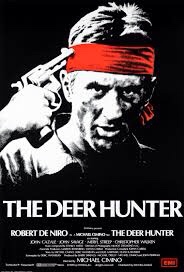
The Deer Hunter is arguably the greatest film ever made. And it was the only great movie that Michael Cimino directed.

But here’s another example: Orson Welles.

Citizen Kane IS unquestionably the greatest movie ever made. Now name another movie he made that had a similar impact? The Magnificent Ambersons? Touch of Evil? The Lady From Shanghai? Sure, they were good to VERY good. But were they Citizen Kane…or even Deer Hunter…great? Yet every cinephile would undoubtedly place Welles as one of the greats in film history.

And what about the niche directors…David Lynch, Paul Verhoeven, John Carpenter, Sergio Leone, and even Paul Schrader, etc etc? I’d argue that it’s these directors that have the greatest influence on younger audiences.

What about the directors that aren’t auteurs? Some operate more as “CEOs” in their craft. George Lucas is one of these guys. Ridley Scott is too (and Spielberg to some extent). My personal fav is John Sturges, who directed such bangers like The Magnificent Seven, The Great Escape, and Bad Day at Black Rock (a forgotten classic).

So I don’t know, the “two film” rule doesn’t seem to work (neither does the idea of a “canon”). It’s all too subjective.

As a side not, I didn’t mention very many European directors or auteurs of other nations. That’s obviously my American bias. Like it or not, cinema is the one (and only) contribution that the US has uniquely made to the arts. Nevertheless, these filmmakers deserve a shoutout. The Japanese, Korean, and Italian directors have a distinctiveness that I greatly appreciate and I regret not mentioning more of them. The Mexican film industry is criminally underrated. British directors, at least with their mainstream work, mimic their American counterparts. Tarkovsky, Costa-Garves, Wim Wenders Fellini, Herzog, and Pasolini are all incredible as well.

But the French New Wave sucked.