Assthetics

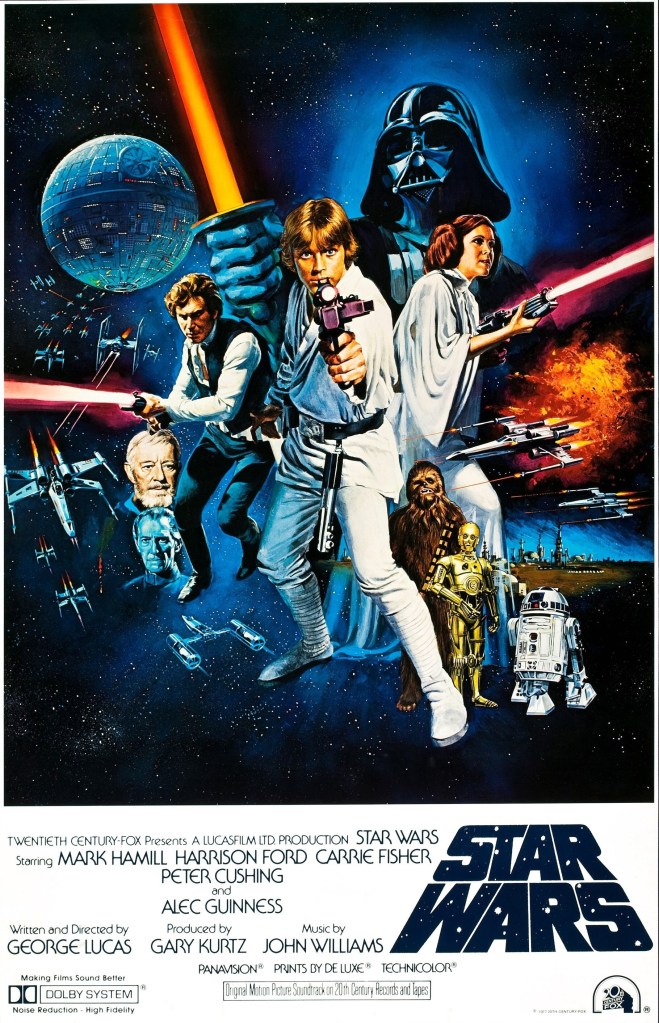
When it comes to the Star Trek vs Star Wars debate, I stand firmly on the Star Trek side (the Gene Roddenberry/Rick Berman era. Not the JJ Abrams/Alex Kurtzman era). I prefer my science fiction to be a bit more grounded. Star Wars, to me, is more Sci-fi/Fantasy.

The success rate of Star Wars, in terms of quality per production, is well below 50% (Star Trek hovers at around 50%). If you think about it, there are really only TWO really good Star Wars films: Star Wars and Empire Strikes Back. The Mandalorian is alright, but it’s a bit too predictable. Nevertheless, I can appreciate George Lucas’ creation. Despite some of the terrible storytelling, when historians reflect on the artful impact of cinema, Star Wars will be to film what William Shakespeare was to the English language or Plato to philosophy.

Star Wars is so ubiquitous in modern culture that people don’t stop to appreciate how it really was a game changer. Watch a Hollywood film before 1977 and watch one after. You’ll see that film and pop culture entertainment was forever changed by it.

To be honest, I don’t think George Lucas’ screenplay (or direction) was that revolutionary. The revolutionary aspect was the production design, music, special effects, and editing (although I’d argue that the James Bond films were far more revolutionary in film editing). In this respect, Lucas was more of a CEO overseeing various departments in creating a lived-in universe. For Star Wars, the stories were always secondary. What grabbed everyone’s attention was the myths and scope: it was like watching an ancient epic being played out on the big screen in a way that films before weren’t able to capture.

So I don’t think that devout fans enjoy Star Wars because of their incredible stories and performances (unless they’re watching because of Harrison Ford). It’s purely an aesthetic experience. Make a Star Wars movie without storm troopers, Star Destroyers, light sabers, Boba Fetts, Jedis, Death Stars, etc. then you probably wouldn’t have a Star Wars movie.

You could make the argument that you can’t make a Star Trek movie/TV show without Starfleet. But fans of Trek have shown to be more open to bending its internal rules to further explore its universe.

But I don’t know dude, you like what you like.

But you know who my favorite Star Wars character is?

Admiral Piett

I hope he gets his own spin-off.

faith based (2020)

So I was watching Spalding Gray’s Terrors of Pleasure when I thought “I’d probably enjoy this if I was sober.” So then I searched for something on Amazon Prime.

I came across a comedy called Faith Based, about two buddies that try to make a Christian film. It had all the ingredients to make a good film, or at least a movie that I’d enjoy. But it serves as a good reminder of how difficult it is to make a good motion picture.

It’s a story that I’d otherwise enjoy: about mediocre, yet good natured, talent trying to break into the big leagues by making a movie to help save their father’s church. Naturally, they discover the business is populated by cynical assholes.

Some of the jokes land. When the lead characters explain that “no one wants to see a movie where they don’t recognize anybody” and the camera lingers on the two actors you don’t recognize, I chuckled a bit. The film could have used a bit more of that self-awareness.

But I really am like my lead character in A Shot at the Title: I rarely watch a movie that I don’t want to completely rewrite and redirect. I think the film could have been salvaged by jettisoning all the Office inspired interviews and extending the length. The movie couldn’t have been made for very much money, but the production quality is pretty good. Maybe lingering on some of the shots would have extended its impact.

Of course, it’s not my movie, but if I were making it, as the lead characters go through their trials and tribulations, I would have played with audience by getting the movie as close to a shitty Christian film as one could possibly go before pulling the rug out from under them. That would have accentuated one of the film’s themes: that all of our hopes and dreams are actually just a scheme to make some asshole more money.

But if you’re interested, despite its subject matter, it’s not an anti-Christian or anti-religious movie. At its heart, it’s a film about family, community, and belonging. Nothing we haven’t seen a hundred times before.

Anyways, now I’m sober. Back to Spalding Gray.

“Layer Cake”: Britain’s finest hour

Before his James Bond got blown to shit on some rooftop on a Japanese island in No Time To Die (sPoIlEr AlErT!), Daniel Craig was in what is perhaps the greatest British film ever made: Layer Cake.

While every actor (except Tom Hardy) acts their ass off and every line of dialogue is an absolute banger, the film is perhaps best known as a turning point in film history: introducing the world to Daniel Craig’s god-like body.

Daniel Craig was blessed with being able to make whatever he’s wearing look like it was tailored specifically for him. He spends much of the film wearing the same plain gray raglan t-shirt with Levi’s…an outfit that probably costs $50 total, but it looks like he’s modeling Brioni.

I couldn’t pull off that look. I tried.

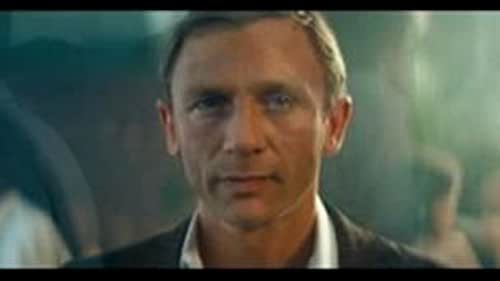
Another thing Craig succeeds at is showing his “sex” gaze:

Sorry, this is the best screenshot I could find.

Not to toot my own horn, but I’m happily married now because I mastered that gaze. Now personally, I like to use the Sean Connery method of tilting my head forward, arching an eyebrow, and smiling with my eyes. But every man has to master the “sex” gaze, to knock em dead with one look, if they want to be successful with the ladies (or the fellas).

That haircut is pretty good too. It’s definitely a 60’s style throwback, echoing the aforementioned Sean Connery and his toupee during his James Bond tenure. Unfortunately I’m a balding man, have been since I was 13, so I was never able to pull off that style. But because I’m balding, I’m sort of an expert at spotting hair plugs. And Craig, in my humble opinion, probably has hair plugs. That being said, I’d pay good money to find out who his specialist is.

Another thing on Craig’s style is that pimpin purplish/maroon jacket he wears to start the film:

I’m just gonna go ahead and say it: no man has ever looked as good on film as Daniel Craig did in Layer Cake.

“We get it, you’re in love with Daniel Craig. But what about the film?”

Oh yeah, the film’s good too.

Another shot at the title (part ii)

Pablo and I made the journey to Trainwreck Studios in Burbank. What a god-forsaken place. I swore to myself that I would never return.

“We’re here to see Kathleen Kennedy,” Pablo told the receptionist.

“And you are?”

“I’m Pablo Dunbar, the agent of James…”

The receptionist’s eyes widened when she saw my face. “You mean, James…”

“Yes, THAT James,” I interjected. “Tell Kat we’re here so that we can get this over with.”

“I thought you were retired…” she began to say as she stumbled through her words. “Anyway, she’s waiting for you. Fourth floor. The only way up there is through the air ducts. Elevator’s broken.”

So we climbed up the ducts into Kathleen’s office. “Damn it Kat,” I said, “when are you going to get that fucking elevator fixed?”

She turned around and was wearing sunglasses. She appeared to be somber over something.

“Hello James,” she said.

“Hello Kat.”

“Can I offer you gentlemen a glass of scotch?”

“I’ll take the bottle please.”

Kat sat down behind her desk and began to shuffle through some paperwork. Pablo and I plopped down in the leather chairs.

“So, what did you think of Antonio’s script?” she asked.

“To be honest Kat,” I said, “it needs some work. Too much talk. Film is a visual medium. ‘Show, don’t tell’ as they say. If I can do a second draft and clean up the dialogue…”

“James,” Kat interrupted, “Fart in a Windstorm is a court drama, there’s going to be a lot of dialogue. Besides, I already promised Antonio that he would get final say in the script.”

“Fine, whatever. But I need to put my stamp on it if this is going to be a film by James…”

“Look, I get what you’re saying,” Kat said. “But in agreement with the writer’s guild, he must get sole screenwriting credit. That’s going to put a limit on what you can do.”

I just stared at her.

“You don’t want to relinquish creative control to me,” I said. Out of my periphery, I could see Pablo getting uncomfortable.

“Don’t be ridiculous,” Kat replied, “the studio is willing to put $1.5 billion into this project ONLY if YOU are signed on to direct. Once when this meeting is made public, Hollywood will be in a tizzy over the return of its most famous director.”

“Kat, you know I can’t make a small scale courtroom drama for anything less than $2 billion.”

She learned forward on her desk as she began rubbing her temples. She appeared as though she was about to be sick. I took a big gulp from the bottle of scotch.

“What’s with the sunglasses?” I asked her. “Did you have eye surgery? Did your husband beat you?”

Kat removed the glasses, revealing her puffy red eyes and makeup smeared from crying.

“Jesus fucking Christ,” I said.

“We haven’t had a hit since This Taste Like Ass,” she said as tears rolled down her face. “The board wants me out. I’ve become the laughingstock of this town.”

“It’s no fun when the rabbit has the gun, eh?”

“James,” Pablo said. “Mrs. Kennedy, James and I are both in agreement that this script is doable. Sure, there are problems that need ironing out, but we are committed to making this work. Right James?”

I just shrugged.

“Really?” Kat said.

“Absolutely, the gang’s back together. Let’s have a drink on it!”

We all stood up and Pablo forced a group hug. Kat’s spirits seemed to have been lifted slightly.

As we were climbing back down the air ducts, I grabbed Pablo by the ankle. “You better not fuck me out of this contract like you did last time!” I told him.

TO BE CONTINUED

Preserve Western Civilizashun!!!!!1

I’m assuming Western history and civilization is defined by the culture of Europe and North America from the time of Alexander the Great onward.

Eastern civilization, I guess, includes India and China.

Meanwhile Ancient Egypt is left in no man’s land, along with the Middle East, Latin America, and Polynesia. And African civilization, history, religion, and philosophy gets neglected entirely.

And somehow, if common logic is to be believed, none of these civilizations interacted and influenced each other. Ever.

Civilization itself is a nebulous term. Same thing with culture (I’m not including “society” here because apparently, as some academic jerk wad told me, “society” doesn’t exist. Whatever that means). Yet somehow, for some reason, we’re supposed to preserve these things because that’s what shaped our perspective on things.

I’m not saying that I disagree, I’m just asking people to interrogate these things a little further. I’ve said before that a sense of belonging is necessary to form an identity. We are who we are by our relationship with others.

But how much is culture and civilization, both ill-defined terms, a part of achieving a sense of fulfillment? I’ve heard people from all different stripes…from Conservatives, Marxists, and even libs….that this is the case, but it’s never been explained. It’s not like we have a choice in the matter, and it operates under the presumption that people are essentially blank slates and are nothing like you and me.

It’s just not true.

We’re still cavemen, meant to dwell in tribes of only a few hundred people, yet we’re faced with a constantly changing world. We have fallen into what Benedict Anderson calls an “imagined community”, where no one knows each other, not even our neighbors, but we’re supposed to believe we form some kind of community. I guess our natural instinct is to preserve what we have.

Anderson was specifically addressing the phenomenon of nationalism and how traditional political philosophy failed to account for its emergence. It’s hard for us to believe, but nationalism is a fairly recent development. It is not intrinsic to our understanding of community. But along with all the political paradigms that came before, the concept of nation state will also go away.

I’ve said it before, and we all know it, but change is the fundamental force in the universe. You can fight that, but it’s futile. Permanence is an illusion. The sense of permanent self is also an illusion: our bodies, minds, memories too, are constantly changing

Being a caveman and defining yourself against the “other” is easy. And maybe I’m wrong. But at least be honest with yourself.

not gonna lie, being in a relationship is great

Sucks for all you single people out there. You should really get in a relationship.

I read a lot of blogs from single folks. I get it, dating sucks. Not that YOU suck, it’s just the whole rigamarole.

I haven’t been single in 10 years. Love my family. Best thing that ever happened to me. Couldn’t recommend it enough.

But I’ve been there. I’ve hopped from one dating site to another, scrolling through countless boring profiles. It’s easy to get resentful, I would know. Outside of relationships, I’m the most resentful person you’ll ever meet. So I’ve seen that side.

I’m average looking, got a small pp, have no money, and I’m a dumbass. So if I can do it, so can you!

Here’s my advice: stop overthinking it.

You either feel it or you don’t. If you keep getting rejected, sorry bud…I’m sure you’ve heard it before, YOU’RE the common denominator. Accept the challenge. We’ve all had to spend our time in the wilderness. Your issues probably stem from problems that are hindering your romantic capabilities. You should probably address those. Just sayin’.

A lot of people want to discuss the differences between men and women, but I’ve learned something: other than our physical differences, men and women are exactly the same, at least in terms of needs and wants. No one likes to hear that because projecting their insecurities on the opposite sex justifies their resentment. But it’s true. Sorry.

If you’re looking for a fuck, that’s easy.

But if you’re looking for love, you got it all wrong. If you have a perfect image of “Eros” that no one can live up to, you don’t deserve love.

Love is built on respect, concern, a desire for another’s wellbeing. It requires you to get out of your own head. To many of you single folks haven’t learned how to check your own selfishness. If you’re only concerned on what your “lover” can give you, you don’t deserve love and I hope you remain single forever.

Good luck! 😀

leadership

As you know, I have nothing but regrets.

I’m reaching that age where some of my superiors are younger than me. I don’t begrudge them. They all deserves their spots. Some older guys I work with don’t appreciate that they got passed over, but I think it’s our responsibility…as the “elders”…to bestow upon the younger generation what wisdom we have learned (in my case, what little wisdoms I have learned).

I don’t know if this is a regret I have, it’s more like a big “what if”. I spent some time in the military. Even did three years of ROTC in college. It’s laughable to think I could have been an officer now, but it almost happened (before I realized that I loved drinking WAY more than I loved the military). Despite the abysmal failure of that endeavor, a few lessons stuck with me.

“Just make a decision,” I’d always hear, “don’t worry about if it’s the correct one.” I thought that was stupid advice at the time, especially in a military situation where people’s lives might depend on it. But it seems to make a little more sense now.

Who are the three greatest military commanders of all time? It’s obvious: Captain Kirk, Captain Picard, and Captain Sisko.

The three guys in the middle

“But they aren’t real,” you might say.

So? Real life isn’t real.

I remember Mike Stoklasa praising Bill Shatner’s acting capabilities (in a video discussing Shatner’s hatred of Mike Stoklasa). You can laugh all you want, but it’s true: Shatner is an extraordinarily effective actor. And, for better or worse, Captain Kirk is Bill Shatner and Bill Shatner is Captain Kirk.

Kirk understands that he is playing a part as Captain of the Enterprise. He has to project confidence as its leader because the survival of his ship might depend on it. Shatner, I think, understands that Kirk himself is playing a part, which might explain some of the strange speech patterns he exhibits throughout the series and films.

That’s why I think it’s great that the handlers of Star Trek (at least back then) cast classically trained thespians for the role of the Captain. Just the ability to “play the role” is necessary for the crew to rally behind, even when the leader isn’t completely confident in his (or her) decisions.

Obviously Picard is the superior Captain. No disrespect to Shatner, but Patrick Stewart knows when to dial up the acting and when to hold back (even if, in my belief, Stewart didn’t completely understand the appeal of his character or Star Trek). But what Picard does better than anyone is embrace his mission: “explore strange new worlds”. He seeks out moral quandaries and mysteries because he understands that these hold the secrets of the universe. He’s an explorer but not in the usual sense of the term.

I think to be a leader, one has to be open to that sort of exploration.

Of course, Sisko was far more grounded than either Kirk or Picard. He had a life outside of Starfleet and his job was to navigate the political complexities of a particular section of the galaxy. While Kirk and Picard were explorers, Sisko’s mission was different: he was an ambassador attempting to bring together warring factions. But just like everyone else, he had to “play the part.”

“But those were actors that had scripts,” you might say. “Real life doesn’t have a script.”

True that, but if you understand the more technical aspects of your work, in a sense you kinda already do have a script. You can’t just willy nilly your way through a job, you are confined and in many aspects you have direction. It’s just making the best decision with the options you have.

So I think it’s interesting that the three best Captains in Star Trek history each explore the three most important aspects of leadership: confidence (or the projection of), eagerness to accept challenges, and being the middle man between conflicting parties. But most importantly, “just play the part.”