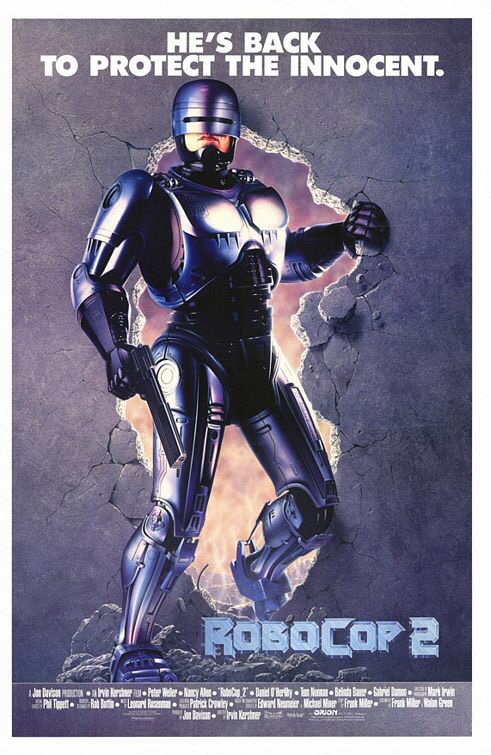
roboCop 2: greatest sequel ever made

First off, thank you to those who continually read this blog. I love all of you like a bastard child I never knew I had. But if we did have a child together, then I don’t know you and please don’t reach out to me.

Now on to the subject at hand:

RoboCop 2

The first RoboCop is one of my favorite movies. Paul Verhoeven really knows how to tell a story from the perspective of the film’s ideology while simultaneously letting you in on the joke.

It’s a tough act to follow, and most claim that RoboCop 2 failed to live up to its predecessor. But I disagree. The reviews on IMDB are all over the place. Many say that it’s not a great movie, but there’s no consensus on why it’s not a great movie.

Yes, certain plot details go nowhere. This is probably the result of studio interference, which is typical for highly anticipated sequels. But my question is: who gives a shit? RoboCop 2 was made in the same vein as another infamous sequel released a week earlier: Gremlins 2: The New Batch and it should be viewed in that light.

Is it a GREAT film? Lol, no. It’s not supposed to be. When you make a sequel, you have two options: do something entirely different or double up on the same shit that was done before. The filmmakers chose the latter (which was the right choice).

Now Verhoeven definitely handled the gratuitous violence much more effectively in the first film, but that’s his specialty. At its heart, RoboCop is a satire on consumerism and corporate culture. The horrific violence and sci-fi aspects, which most people remember it for, was just the vessel to tell the story. RoboCop 2 threw up its arms and said “fuck it, we’re just gonna be satire”.

The villains are much more over-the-top, the commercials are much less subtle, and even RoboCop himself is more exaggerated. Many praised RoboCop for its self-awareness, well the same is true for RoboCop 2. In fact, it’s straight up mocking itself.

I’d say that RoboCop 2, along with Gremlins 2, might be the two most self-aware films ever made.

Does it deserve the 5.8 rating it currently has on IMDB? No.

A 6.8 seems more fitting.
sublimate well

Sorry, I was high on gas fumes and aerosols when I wrote my last post. It kinda went off the rails there towards the end.

So allow me to muddy the waters a bit more.

Fundamentally, I think that “everything is ideology“ (a lot of people have thought about this long before me). And I mean EVERYTHING: objects, sex, relationships, beauty, art…everything. To break these things down to their smaller components would reveal true horror: your food is dead animals and vegetables, sex is exchanging of gross bodily fluids, etc. So we have to sublimate these objects into ideas…hence “everything is ideology”.

Which is perfectly acceptable! Humans are both blessed and cursed by logic and reasoning because these functions often reveal the nothingness behind everything. Thus, REAL truth is terrifying and ultimately meaningless, so the “mask” of ideology is the only “reality” that matters. Sometimes existential dread ensues because of this. Therefore sublimation, in the Freudian sense, is helpful in constructing a healthy view of the world.

Which is why I sometimes praise religion and SOME politics, provided they promote peaceful coexistence and openness. Clearly sublimating into certain ideologies can lead to straight up derangement. So, therefore,“sublimate well”.

poop

😀 Hate mail! 👍

I never thought anyone would take my shit posting seriously enough to write out an entire comment longer than the initial post itself. But I forget, “the internet ruined everything”.

Btw, this comment was made on my “your damn right ignorance is bliss!” post.

I don’t know if this person was real or some bot trying to spread some article around (about COVID, a subject that I don’t recall discussing on this blog), but my response was “the post was a joke”.

But then I got to thinking: was I joking?

Sure, the intent was to post some stupid thought that crossed my mind. But the more I think about it: hell yeah an existence void of desire and knowledge of good and evil sounds pretty damn good!

Of course, that’s not how my hater saw it. He/she thought I was embracing “keeping the masses ignorant”, or “listening to establishment propaganda”, or blah blah blah.

I get it. I got lost down that road of political ideology too. I’ve spent all of 2021 trying to get over it. That’s why I created this blog for fuck’s sake.

But there is no truth in ideology. That’s why it’s ideology. We have to form these ideologies. You know why? Because the truth is too terrifying to handle.

That’s why I always thought that Plato’s Allegory of the Cave, the shit in The Matrix, “the truth shall set you free”, etc. kinda miss the point. To get the gist of what I’m trying to say, Slavoj Zizek, whatever you think about him, once said about the shitty film The Joker (paraphrase): “it’s through the mask that we can be our true selves.”

Because there is nothing underneath the mask.

So you want the truth?

Here it is:

The “establishment”, however you want to define that, doesn’t give a shit about you. They don’t even give enough of a shit to form a conspiracy to fuck with you. They don’t think about you. They don’t fear you.

You are nothing.

You were born from standard biological processes and one day you will return to nothing. Most people you know do not think about you. When you die, only 3 or 4 people will truly mourn for you. After a few weeks, you will be forgotten.

This has been the story of billions of people throughout history. Statistically speaking, you will be totally, utterly forgotten.

Beyond this life lies nothing.

So in this life, there is absolutely nothing stopping you from doing the most heinous crime you can think of. Absolutely nothing. You can do it right now.

So what are you gonna do with that freedom?

You think there’s someone pulling the strings? Well guess what buddy, it’s worse than that: NO ONE’S pulling the strings.

The universe is just there. It’s infinite. YOU’RE NOT. You will never make sense of it.

I hope everyone reading laughs at this, because that’s the only sane response.

So now you can understand why I want to be “ignorant”. We should admire the Christians, Muslims, Jews, Buddhists, Sikhs, Jains, Hindus, etc etc. Hell, I’ll even admire Conservatives, libs, leftists, rightists, libertarians, etc. At least they believe something.

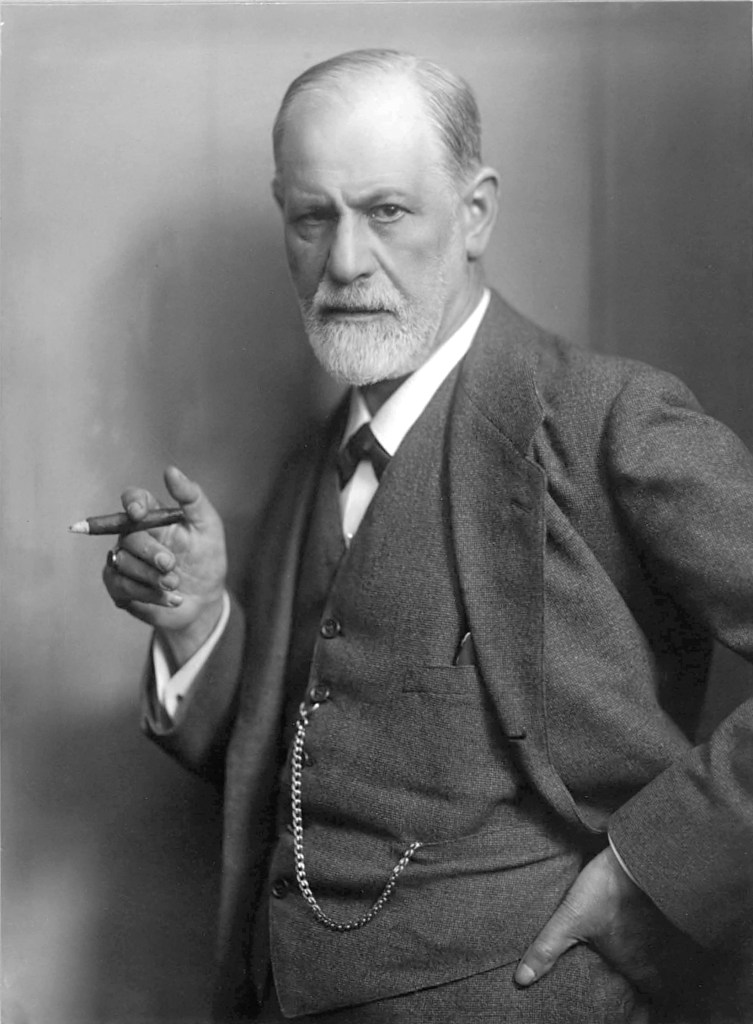
There nothing wrong with sublimating our beliefs and desires into ideologies, but, taking from Sigmund Freud, the aim of this life should be to “sublimate well”.

Anyways, gotta go. Left my wallet at Hardee’s. Bye ✋

jesus the cynic?

It’s interesting to view Jesus scholarship over the last 50 years. Most of it seems to reflect more on the political climate of the era it was written rather than on the actual historical Jesus, i.e. by turning Jesus into “Jesus the Revolutionary”, “Jesus the Mystic”, “Jesus the Philosopher”,etc.

It’s an easy mistake to make. Arguably I make it when I refer to Jesus as a “populist” figure of the time (I don’t mean that as a compliment. I mean that in its most literal sense: Jesus was addressing working class problems in a religious/political context.) It’s very difficult to separate our biases from the subject being analyzed, especially one as controversial as the historicity of Jesus.

I think there’s a (growing) minority consensus that Jesus took some influence from the Cynics. Some quack scholars might even say he was an outright Cynic.

I think this is an interesting question. In my view, the majority of mainstream scholars, both Christian and secular, wish to paint Jesus as a figure that almost emerged from a vacuum. It makes sense actually. All of the earliest, independently attested documents (The hypothetical Q…which survives almost in its entirety between the Gospels of Matthew and Luke…the epistles of Paul, Gospel of Mark, and Josephus) make no mention of Jesus’s origins (Q and Mark both start with the Baptism of Jesus by John the Baptist). So an attempt to say anything about Jesus’s influences, other than that of John the Baptist, would be pure conjecture. But there are some interesting parallels between Jesus and the Cynics: Mark 6:8, the location of Nazareth and its proximity to an apparent hotbed of Cynicism, Jesus’s confrontational style and eschewing of fame and fortune, embracing of poverty, etc. etc.

But read the Cynic texts. To the Cynics, Diogenes was their “Christ figure”. They all tried to emulate him. And to be honest, he was a disgusting asshole. While Diogenes definitely had his influence, I doubt he would have accumulated very many personal followers. I mean, many might have tried to ACT like him, but there’s no way anyone could have spent more than 10 minutes around him. Jesus, meanwhile, was probably trying to do something entirely different and would have certainly disapproved of things like…I dunno…MASTURBATING and SHITTING in public.

In my humble view, the Cynic modus operandi was likely something that was in the air at the time which some itinerant and apocalyptic preachers might have adopted. But just because that aesthetic was in vogue at the moment doesn’t mean that they were practicing Cynics.

While it’s fun to speculate, the simplest explanation is probably the correct one: Jesus was an apocalyptic Jewish preacher preaching to a mostly Jewish audience.

your damn right ignorance is bliss!

Ever wonder how nice it would be to not know how to read?

Or how about being a eunuch? You never have to have sex again. Sounds like a good deal to me.

What about being a monk? You know, never having to talk, being separated from society, and you get to read all day.

Or better yet, how about being a eunuch monk that doesn’t know how to read?

Sounds like my ideal existence.

woyzek and ninth configuration

I swear that I don’t plan what movies I’m gonna watch. I sit on my ass and scroll through some app on my smart TV and find random shit.

Oddly enough, the two movies I watched back to back were Werner Herzog’s Woyzeck and William Peter Blatty’s The Ninth Configuration. Both films are about military personnel dealing with insanity and philosophy….not subjects that you find in most films.

This is probably not one of Herzog’s more appreciated films and I wasn’t entirely certain what to make of it. If you watch it, it probably wouldn’t come as a surprise to you that it was shot in 18 days. For a period piece, it’s very small scale and stage-like. But knowing this might help on a second viewing.

Klaus Kinski plays the titular character Woyzeck. He’s a lowly soldier that’s essentially being gaslit by his commanding officer and a quack doctor. He’s a loving father and husband, but his wife sleeps around with another officer and that officer publicly humiliates Woyzeck. Finally, he murders his wife.

Other reviewers called this an “anti-Enlightenment” film. I think that’s apt. The two men egging on Woyzeck’s decent into madness are obsessed with science and philosophy. The officer even mocks Woyzeck, stating that he lacks “morals” due to his status in society. Woyzeck defends himself, claiming that as a man without money or education, he simply does what’s “natural”. When viewed from this perspective, the Enlightenment ideals espoused by the Officer and Doctor come across as abusive, while Woyzeck is actually the only sane and moral person in the movie. The small scale of the movie contributes to the anti-enlightenment narrative, as it isn’t flashy or self-congratulatory like we’ve come to expect with these kinds of films.

Meanwhile, The Ninth Configuration couldn’t be more different. I could tell you what it’s about, but then I’d be lying. I just know it takes place in a castle acting as a psychiatric ward for Vietnam vets, Stacy Keach is in it, and there’s a bar fight. The movie is totally disorienting. At times it’s a psychological drama, other times it’s a comedy, and at one point it becomes an 80s action flick. The tone is all over the place. Perhaps that’s by design but I’m not totally convinced. Either way, this disorder contributes to the overall mystique of the film.

It should also be noted that The Ninth Configuration apparently exists in The Exorcist expanded universe. Not that it has anything to do with those films, except that one of the characters is in the first one.

To be honest, if I watched these movies in isolation, I wouldn’t be a fan of either. But they work very well in tandem. The military aspect of both films seems trivial, but when we consider the discipline and order that the military provides, it contrasts with the chaos associated with insanity. Additionally both films expose the problem of insanity in different ways. One is very plain and straightforward. The other is a complete fucking mess. Woyzeck proposes that insanity is brought forth by the imposition of morals, logic, possession, and science. Ninth Configuration says that it’s the absence of such ideals…or more precisely, the absence of God… is it’s true driving force. Woyzeck is nihilistic. Ninth Configuration is hopeful. Yet both might agree that insanity arises out of the eternal battle between chaos and order.

nothing ever changes 😀

As 2021 comes to a close, I’d just like to remind everyone that if you think the world is getting worse, you’re dead wrong.

Things have always been shit. Always will be. To be alive means to live in tyranny.

Read ancient texts…Ancient Greece or Rome for example…you’d find the same old complaints: the decadence, the spectacle, the tyranny of the majority, the tyranny of the minority, the anguish of having to live in a society.

We’re in good company.

Maybe 30,000 years from now, humans might achieve a higher state of being…one that currently remains outside the realm of imagination. But none of us will see that day. For the time being, we’re just playing our role.

Sure, there are those that are WAY worse off than you or me. But I’d venture to guess that if you can read this blog, you’re doing alright. So look on the bright side, at least you’re not in the drunk tank, at least you’re not begging for your next meal, at least you’re not slipping some digits into the butthole of a paying john, at least you’re not being trafficked across the Pacific Ocean in a shipping container. Think on those people. Depressing? Yes. But with this despair comes opportunity to give a kind word, a shirt off your back, to be a ray of hope in an otherwise meaningless existence.

Face it, life sucks. Don’t make it harder than it needs to be.

See you in 2022.

..and my dick’s small too

moon raker

Now hear me out:

If you get REALLY high, then Moonraker can become a decent, but not a GREAT film instead of the cocaine-fueled nightmare that is now.

What I love about the James Bond franchise is that it’s pure spectacle. It doesn’t shy away from that. In fact, it full on embraces it…at least during the 60s, 70s, and 80s.

What people don’t realize about the Sean Connery through Timothy Dalton era is that the plot DOES NOT MATTER. At all. Not in the slightest. They’re all screenplays based on story beats: 1) Cold open 2) Titles 3) Moneypenny/Q/M 4)Intro to villain, etc etc. and it always ends with the villain lair exploding and Bond fucking the Bond Girl. The facade of a story is always in service to hitting those beats.

It’s like listening to a Phil Spector produced album where the sheer scale of the production covers up the limitations of the artist.

Now Moonraker crosses the line from being spectacle to straight up insanity. It’s obvious that the producers were just throwing shit up on the screen in a desperate attempt to compete with Star Wars. But underneath all that bullshit, there is a decent James Bond film.

The scene that is often cited as being the moment Bond jumps the shark is the gondola chase. But did you know that that scene is completely useless? It advances the plot in no way. Who’s chasing Bond? Why are they chasing him? It’s assumed to be the villain’s henchmen, but that’s never made clear. As far as Bond knows, it’s just random dudes. There are no consequences for the chase either. You can cut it out completely, and nothing in the story would have been missed. Not even a story beat. The very next scene is a fight with a henchmen where a shit ton of glass gets broken. There is literally no point in the gondola chase.

Honestly, half the shit that takes place in Venice could be cut. Only two important things happen there: you learn that the villain is using a chemical agent in his diabolical plot and the Bond girl is actually a CIA agent. The death of the first henchmen takes place there, which explains the appearance of Jaws later in the film, but I’d argue that this character could be cut completely and nothing would be missed.

Could Jaws be cut out? Probably not. Unlike most things in this film, Jaws actually advances the plot. But his character could be made less ridiculous by introducing him in the Rio Carnival sequence (who cares why he’s there? It should be obvious). Unfortunately that stupid ass love interest ends up becoming useful for Bond at a key point, so that shit has to stay in. BUT all that crap afterwards can be cut out.

Now the film goes completely off the rails after Bond escapes the ambulance, and not much can be done to fix that. 007 has to go into space 🤷‍♂️. But if roughly 1/4 of the movie gets edited out, you’d have a nice little spy film.

I wish someone would make a fan edit of this.

the “2-film” rule

So I was listening to some podcast while huffing glue and the two hosts introduced an interesting concept: if a film director makes two unquestionably great movies, then they belong in the canon of great directors.

It seemed like a sound enough argument. I’ve said it once and I’ll say it a hundred more times: it is extraordinarily difficult to make ONE good film. If a filmmaker can make one good movie, then replicate that impact in a subsequent film, then it’s obvious that the director knows what he/she is doing.

But the more you think about it, you come across some problems: specifically what it means to be “great”, or even a “Director”. Because if this criterion were true, then we find that a few questionable directors would belong in this canon.

Some examples:

Jonathan Demme (Silence of the Lambs, Philadelphia, Stop Making Sense)

John McTiernan (Predator, Die Hard, Hunt For Red October)

George Lucas (Star Wars, American Graffiti, THX-1138)

Ridley Scott (Alien, Blade Runner, Gladiator)

Robert Aldrich (Kiss Me Deadly, What Ever Happened to Baby Jane?, The Dirty Dozen)

William Friedkin (The French Connection, The Exorcist, Sorcerer)

Etc, etc, etc

While there are a bunch of notable films on those director’s resumes, would any of those directors be considered “great”? (IMHO, I would say “yes” for Friedkin, Aldrich, and McTiernan. “No” for the others.)

A “three film” criteria would fix this: Ford, Hitchcock, Wilder, Lean, Kubrick, Kurosawa, Coppola, Scorsese, Tarantino, and Spielberg would easily hurdle this barrier. But what about directors that made ONE unquestionably great film?

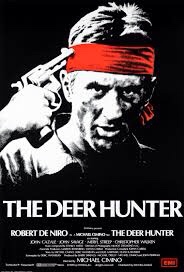
The Deer Hunter is arguably the greatest film ever made. And it was the only great movie that Michael Cimino directed.

But here’s another example: Orson Welles.

Citizen Kane IS unquestionably the greatest movie ever made. Now name another movie he made that had a similar impact? The Magnificent Ambersons? Touch of Evil? The Lady From Shanghai? Sure, they were good to VERY good. But were they Citizen Kane…or even Deer Hunter…great? Yet every cinephile would undoubtedly place Welles as one of the greats in film history.

And what about the niche directors…David Lynch, Paul Verhoeven, John Carpenter, Sergio Leone, and even Paul Schrader, etc etc? I’d argue that it’s these directors that have the greatest influence on younger audiences.

What about the directors that aren’t auteurs? Some operate more as “CEOs” in their craft. George Lucas is one of these guys. Ridley Scott is too (and Spielberg to some extent). My personal fav is John Sturges, who directed such bangers like The Magnificent Seven, The Great Escape, and Bad Day at Black Rock (a forgotten classic).

So I don’t know, the “two film” rule doesn’t seem to work (neither does the idea of a “canon”). It’s all too subjective.

As a side not, I didn’t mention very many European directors or auteurs of other nations. That’s obviously my American bias. Like it or not, cinema is the one (and only) contribution that the US has uniquely made to the arts. Nevertheless, these filmmakers deserve a shoutout. The Japanese, Korean, and Italian directors have a distinctiveness that I greatly appreciate and I regret not mentioning more of them. The Mexican film industry is criminally underrated. British directors, at least with their mainstream work, mimic their American counterparts. Tarkovsky, Costa-Garves, Wim Wenders Fellini, Herzog, and Pasolini are all incredible as well.

But the French New Wave sucked.