James “Big Dick” Sikking

July 13th 2024 is a day that will live in infamy. Not only did we lose Richard Simmons, we also lost one of the most under appreciated thespians of our era: James Sikking. Thank god nothing else bad happened that day.

James Barrie Sikking is best known for his roles in Hill Street Blues and Doogie Howser. But for me his finest hour came in 1984 as Captain Styles in Leonard Nimoy’s Star Trek III: The Search for Spock, a film that is finally getting the recognition it has long deserved. But if there is one criticism I have for the movie, it’s the name “Captain Styles”. Sikking’s scene stealing performance didn’t need a name. He should have simply been referred to as “Excelsior captain”.

From his introduction, with his brief banter with Scotty and wanting “break some of the Enterprise’s speed records,” we immediately understand Sikking’s character. We’ve all worked with a guy like that before; i.e the kind that think they shit don’t stank. And he’s able to convey that INSTANTLY, from his posture to his well trimmed mustache and right down to that seemingly pointless horse whip thing he carries under his arm. Only actors with lethally skilled precision can pull that off.

Later, when the Excelsior captain is rudely interrupted by a yellow alert, he asks “how can there be a yellow alert in space dock?”. The asshole that hailed him replies “sir, someone is stealing the Enterprise!”, the look on his face goes from “what the hell?” to “oh, I know what’s going on here.” So he grabs his fake whip and goes to the bridge where Miguel Ferrer explains all the cool shit that the Excelsior can do. The captain chuckles and mutters “what a wonderful machine” and orders a slow pursuit of the Enterprise. Keep in mine, although no one told him (but he knows damn well) that the most decorated officer in Starfleet history is stealing the most storied ship in the fleet, the Excelsior Captain doesn’t once question his ability to capture Admiral James T. Kirk.

Though the script probably explains that the Captain is only doing his job, Sikking, under the direction of Nimoy, really makes you hate this guy. You can easily imagine his backstory: graduated first in his class at Starfleet Academy, met Kirk once or twice and they hated each other, and unlike many of his peers, he’s managed to maintain a family: a wife and two daughters, both the same age but are not twins. While he’s probably cordial, if not jovial, in social settings, deep down everyone knows that he’s a full blown sociopath. He has no friends, not because he doesn’t welcome them, but because whenever someone comes to his house, he joyfully goes into minute detail on his massive collection of medieval torture devices, meanwhile blissfully unaware of how uncomfortable he’s making his guests. And no one dares to ask him about his eerily quiet wife, who he never talks about, not because he might fly into a rage, but because whatever he tells you you know will be a lie. So all of his underlings steer clear of discussing their captain’s private life, somewhat out of fear, but mostly as a way to assuage their own guilt about knowing of a domestic abuse situation.

James Sikking was able to convey ALL of that with less than three minutes of screen time. And as a result, I say it’s one of the greatest performances in Star Trek history. So RIP to my man.
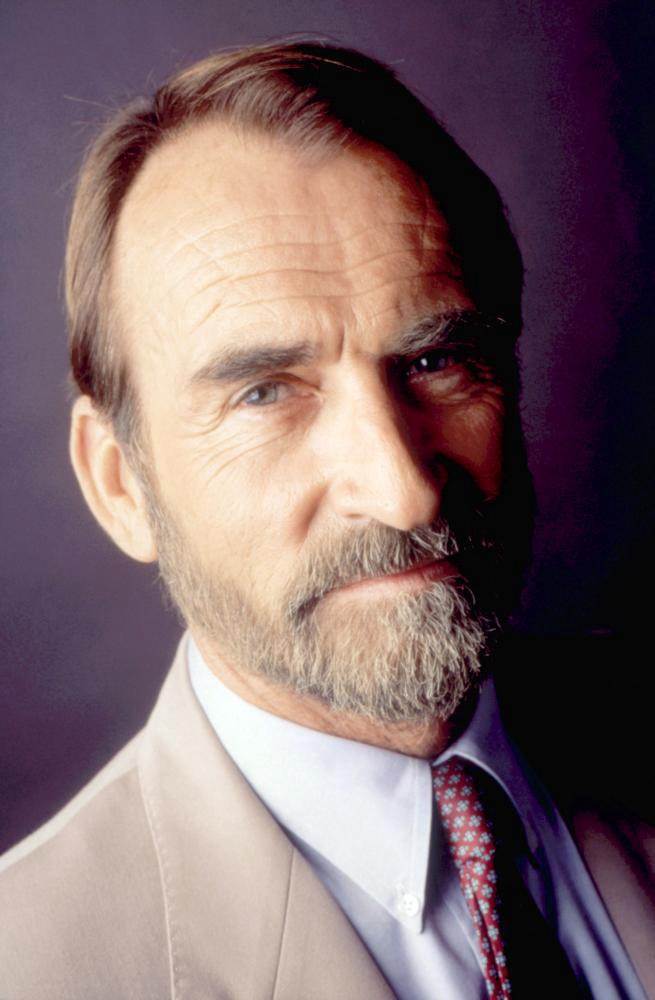
James Barrie Sikking (1934-2024)

I’ve reached a radical conclusion

I often bother people in line at the post office about the complexities and nuances of Star Trek II: The Wrath of Khan. “Won’t any of you listen to reason!” I scream as I’m being dragged out by security. I’ve always said that Star Trek II is the best screenplay in science fiction history.

But after rewatching Star Trek III: The Search for Spock, I’ve reached a startling conclusion: maybe we’ve had it all wrong. Sure Harve Bennett’s screenplay for the third film isn’t as strong as it is in the second. It’s not that it’s bad per se. It’s just too economical. Case in point is the phenomenal “stealing the Enterprise” scene. That sequence is saved by the acting, Leonard Nimoy’s direction, and James Horner’s score. And it’s really a simple scene of the main characters backing up the Enterprise out of space dock and being lightly perused by another ship. If it were written today, it would be far more complex. But what III does better than II is in its staging. Nimoy directs the film like it’s a stage play. When news reaches Kirk that his son has been killed, it is quietly the most tragic moment in Star Trek history. Of course, Nimoy is careful to not let it outshine Spock’s death in II, but the doesn’t minimize how much it stings. Kirk is able to quickly recover because he had a job to do, but you can see that pain linger. And this pain is only made more tragic by the destruction of the Enterprise moments later. In short, in just a matter of a few minutes, Kirk lost his ship and son to save his friend. While the film is about “the search for Spock”, it’s really a character study of Admiral James T. Kirk. Nimoy’s direction expertly balances out the scope that a big screen science fiction film requires and the little moments that make us bond with the characters. So while III might have a relatively weak script, it might be the best directed movie in the Trek franchise. And as I result, I say it’s the best Star Trek movie.

It’s just a shame that Nimoy didn’t direct more pictures 😔

Dissecting A Scene: Emotional Climax Moments in Star Trek Films (Part I)

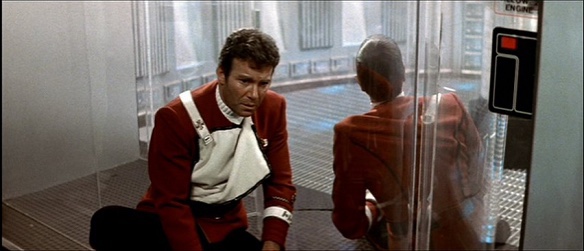
So over the Thanksgiving weekend, I made my family watch arguably the worst Star Trek film, Star Trek V: The Final Frontier. When the Sybok interrogation scene of Kirk, Spock, and McCoy came up, it occurred to me: “Star Trek is REALLY good at doing this.”

Doing what exactly?

They’re good at creating emotional climax scenes where character arcs come full circle. Trek films may not be the flashiest of the science fiction genre, but that’s not really their intention. Star Trek is at its best when it’s theatrical, or allowing the actors to fully explore their characters. Two of the franchise’s most notable faces, William Shatner and Patrick Stewart, are quite effective stage actors and that’s where Star Trek is at its strongest: being character driven.

So you have to let the actors ACT.

Star Trek II: The Wrath of Khan: Mutara Battle/Death of Spock

This is probably one of the most famous and most parodied death scene in all of film. But this sequence is quite remarkable on multiple levels.

It’s a shame that William Shatner didn’t get any accolades for his performance in Star Trek II. His portrayal of Captain/Admiral Kirk is often viewed as hammy, but in truth, Shatner was quite nuanced in his approach. Director Nicholas Meyer figured out that his leading man was far more effective when doing more takes, which caused the actor to slowly dial back his performance. In short, Meyer wore out Shatner, which perfectly suited a beat down and aging Kirk at the beginning of the film. Obviously, Meyer let Shatner return to form at the end which had a huge emotional payoff.

Not only does the villain Khan get his comeuppance by succumbing to his own wrath but…in pursuit of vengeance…he ends up becoming a force for creation. Spock, of course, delivers the ultimate sacrifice, but Kirk finally faces the very thing he’s cheated his way out of throughout his illustrious career: a no-win scenario.

Thus, everything comes full circle.

Of course, it also helps that there’s exceptional editing and the score that made James Horner a sought after composer is playing in the background.

Star Trek III: The Search for Spock: Stealing the Enterprise

James Horner is typically given credit for the success of this scene. But you have to tip your hat to the editing and, again, the performances.

While we can criticize Shatner’s acting choices all we want, he always makes it perfectly clear what his characters are feeling. And James B Sikking’s arrogant-ass performance almost makes you forget how shitty the Excelsior bridge set is.

It’s a shame that Leonard Nimoy didn’t direct more movies. While he directed some television before, it’s hard to believe that this was his first motion picture because he REALLY elevated this scene. If you pay attention, not much happens here: the Enterprise slowly backs up to the space doors before they magically open and then the Excelsior begins its failed pursuit. But it’s fucking intense! The hairs on my neck always stand when the Enterprise clears space doors and Kirk orders warp speed. That’s a testament to Nimoy’s superb direction of an otherwise ‘meh’ script.

While this isn’t the “emotional climax” to the film, it is an emotional highlight for the Original Series crew; they’re sacrificing EVERYTHING to save Spock. Now Star Trek III isn’t the best Trek film, but the “stealing the Enterprise” scene is one of the best in the franchise.

A gene Roddenberry production of a Robert wise film

Because I’m a chump, I finally broke down and paid for Paramount+.

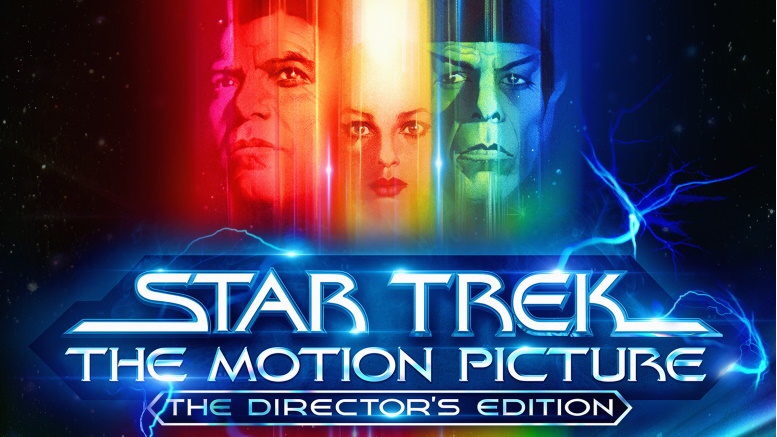
Available on the service is the newly remastered version of Star Trek: The Motion Picture starring William Shatner, Leonard Nimoy, DeForest Kelly, and renowned sex pervert Stephen Collins.

When Robert Wise’s Director’s Cut came out years ago, it greatly improved what was an otherwise interesting but clunky and boring movie. Unfortunately, this version of the film wasn’t updated for high def until recently.

It looks incredible. Douglas Trumbull’s special effects have been vastly improved. Jupiter, V’ger, the Enterprise…it all pops in ways that it didn’t before. That element alone makes the film much more watchable.

However, while some aspects of the film have been improved, it only only highlights its weaker aspects. While the special effects, music, and (most of its) production design are incredible, that only makes the direction, script, editing, and acting look that much more terrible.

It doesn’t matter how hard they try, they can’t disguise the fact that this movie was hastily thrown together. At the time, I think, it was one of the most expensive movies ever made. And to be honest, it doesn’t look it.

Oddly enough, I think fault lies on the shoulders of legendary director Robert Wise and his DP. Much of the film takes place on the bridge of the Enterprise. And the set looks godawful. It’s too claustrophobic, too cheap, too bland. And the editing doesn’t do much to improve it as actors awkwardly wander on and off the set without much of a purpose.

It’s not the best design for the Enterprise bridge. But Nicholas Meyer and Leonard Nimoy…both novice directors at that time…make that same set look like a million dollars in subsequent Trek films. Meyer especially puts the claustrophobic aspect to good use in Star Trek II.

Fortunately, I think most of this could be easily fixed. And that requires jettisoning most of the journey through the V’ger cloud. While visually it’s interesting, it adds absolutely nothing. The immensity of V’ger itself is also established in the next sequence (which also needs to be cleaned up a bit editing wise) therefore making the cloud voyage redundant.

It’s a small change, but it would go a long way in improving the pacing. I’m sure there’s a fan edit floating around the internet somewhere that does this.

The uniforms also look underwhelming. I don’t hate them. Some internet genius explained that these surgeon-like uniforms actually highlight the delicacy of the matter: the characters have to be precise in their decision making. In that light, the uniforms add a nice touch. Nevertheless, the film could have used an updated version of William Theiss’ iconic designs.

Unfortunately nothing will fix the caricature performances and phoned-in script. But that’s okay. This high-def version of the Director’s Cut…which will presumably be the final cut…elevates what was one of the worst Trek films into a pretty solid sci-fi movie.

And that’s good enough 👍