The death of Peter and Paul at the hands of Christians

First off, I just wanna say that I’m glad nothing else bad happened yesterday. So I hope that the world and the internet can resume a place or normality for the next few days 🙏

And look, I know that my biblical “scholarship” comes totally out of left field when compared to the rest of my blog. But I’m just gonna say it: this stuff gets hits. And I’m not claiming to be the next Bart Ehrman. But I’ve always said that at my core I’m a historian. And that’s what this blog is. It’s not never ending shitposting or deranged ramblings. It’s history. And when I die, which I stated yesterday will probably be by firing squad, this is how people will remember me.

So let’s explore the topic at hand: the death of Peter and Paul by the hands of Christians in the first century CE. I’m not saying that that’s what happened. I’m saying that’s a claim. And I’m not saying it’s a good claim, but it does provide a few interesting points.

The passage often pointed to as evidence is in Ist Clement chapter 5. For those who don’t know, 1st Clement is one of the earliest Christian texts not found in the New Testament. It was written in the late first century. Because I’m a proud graduate of Reddit University, I often rely on the scholarly work of my peers. So this excerpt is pulled directly from Reddit in both the original Greek and English translation:

διὰ ζῆλον καὶ φθόνον οἱ μέγιστοι καὶ δικαιότατοι στύλοι ἐδώχθησαν καὶ ἕως θανάτου ἤθλησαν λάβωμεν πρὸ ὀφθαλμῶν ἡμῶν τοὺς ἀγαθοὺς ἀποστόλους· Πέτρον, ὃς διὰ ζῆλον ἄδικον οὐχ ἕνα οὐδὲ δύο ἀλλὰ πλείονας ὑπήνεγκεν πόνους, καὶ οὕτω μαρτυρήσας ἐπορεύθη εἰς τὸν ὀφειλόμενον τόπον τῆς δόξης. διὰ ζῆλον καὶ ἔριν Παῦλος ὑπομονῆς βραβεῖον ὑπέδειξεν, ἑπτάκις δεσμὰ φορέσας, φυγαδευθείς, λιθασθείς, κήρυξ γενόμενος ἔν τε τῇ ἀνατολῇ καὶ ἐν τῇ δύσει, τὸ γενναῖον τῆς πίστεως αὐτοῦ κλέος ἔλαβεν, δικαιοσύνην διδάξας ὅλον τὸν κόσμον καὶ ἐπὶ τὸ τέρμα τῆς δύσεως ἐλθὼν· καὶ μαρτυρήσας ἐπὶ τῶν ἡγουμένων, οὥτως ἀπηλλάγη τοῦ κόσμου καὶ εἰς τὸν ἅγιον τόπον ἀνελήμφθη ὑπομονῆς γενόμενος μέγιστος ὑπογραμμός“.

Because of envy and jealousy, the greatest and most righteous pillars have been persecuted and contended unto death. Let us set the good apostles before our eyes. Peter, who because of unrighteous envy, not once or twice but endured many afflictions and having borne witness went to the due glorious place. Because of envy and rivalries, steadfast Paul pointed to the prize. Seven times chained, exiled, stoned, having become a preacher both in the East and in the West, he received honor fitting of his faith, having taught righteousness to the whole world, unto the boundary on which the sun sets; having testified in the presence of the leaders. Thus he was freed from the world and went to the holy place. He became a great example of steadfastness.”

Agreed that if Peter and Paul’s deaths were a result of state persecution from the Romans, as is often believed, this would be an odd way to describe it. Additionally, you can read a larger explanation of this theory here from Chrissy Hansen and there’s an academic paper floating around from a guy named David Eastman (that I didn’t read).

There’s a few reasons why I find this theory interesting. First off, in my view,, it provides a greater insight into early Christianity as socio/political movement which mainstream scholars often fail to explore. I agree with JD Crossan that the Jesus movement was a response to Roman power and authority. While there was little distinction between religion and politics in the ancient world, I still think when movements spring up against power…and there were many in Judea where the Jesus movement hailed from…that factions come along and turn on themselves, sometimes with violent consequences. That’s the nature of radical politics and I think first century Christianity would have been no different. Secondly, as Hansen pointed out, this solves a great mystery in the New Testament as to why there’s no account of the death of Paul (or Peter) from the author of Luke-Acts, with the implication being that in order to portray Christianity as a unified front, the author omitted the story altogether.

If true, then this puts the nail in the coffin of Jonathon Bernier’s earlier dating of the Gospels. If you recall, I reviewed Bernier’s book Rethinking the Dates of the New Testament a few years ago. I think I was intrigued by his arguments but felt that too much of it hinged on Luke-Acts being completed BEFORE the death of Paul which is Bernier’s explanation for why there’s no account in the New Testament. Today, I think Luke-Acts was certainly aware of Josephus, which would date it post-90CE, presumably well after Paul’s death. BUT, as Bernier’s arguments highlighted, the omission of Paul’s death (as well as the first person passages in Acts) need explanation from scholars, none of which I have found totally convincing.

But before I get on board with the explanation that Peter and Paul were killed by competing Christians, I require more evidence. An opaque passage in Ist Clement and a few omissions only hints at something. It doesn’t explain it. Which leads us to a huge problem in biblical studies particularly regarding the New Testament era: there’s too much we don’t know. The people leading this movement weren’t educated. Outside of Josephus and the NT itself, there’s little chronological account. Regarding the Jesus movement and archeological evidence, there’s been little slam dunk discoveries, if any. And the sad part is that there probably never will be. If any does appear, it would take at least a decade to authenticate and it would still be subject to controversy and debate. In short, none of this will be settled in our lifetimes.

So all of this is open to interpretation and speculation. The possibilities are endless. We know Paul was itinerant. Perhaps his ship sunk and all of his remains have been consumed the Mediterranean Sea. Maybe that’s why there’s no account; because no one knows what the fuck happened to him! Maybe Peter dropped dead of a heart attack in the middle of the desert? We just don’t know folks 🤷‍♂️

Probably never will.
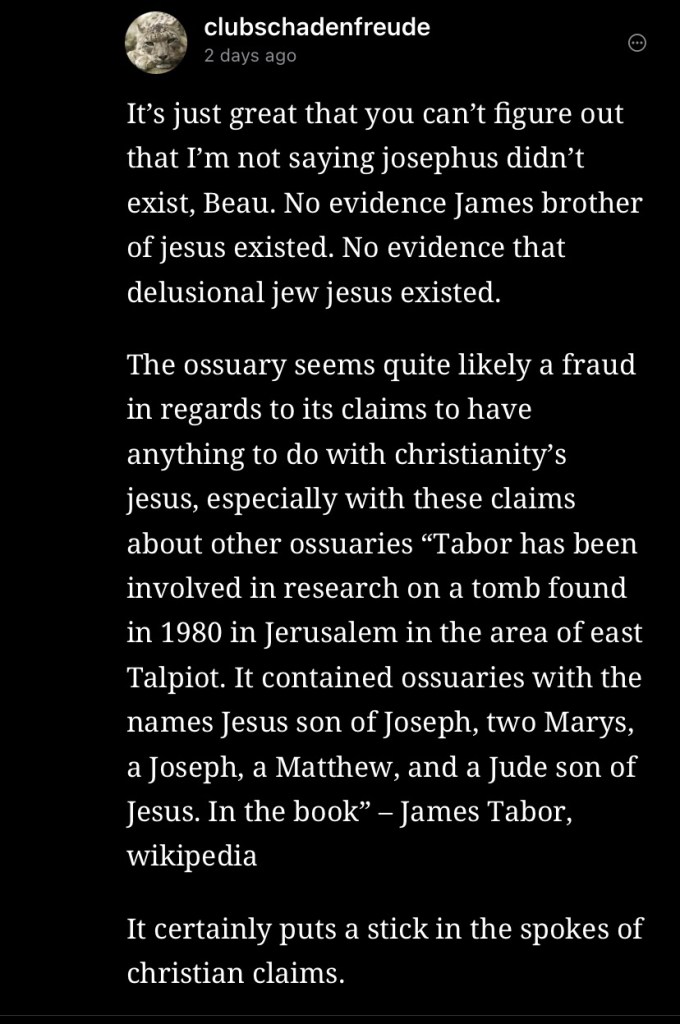
More hate mail 👍

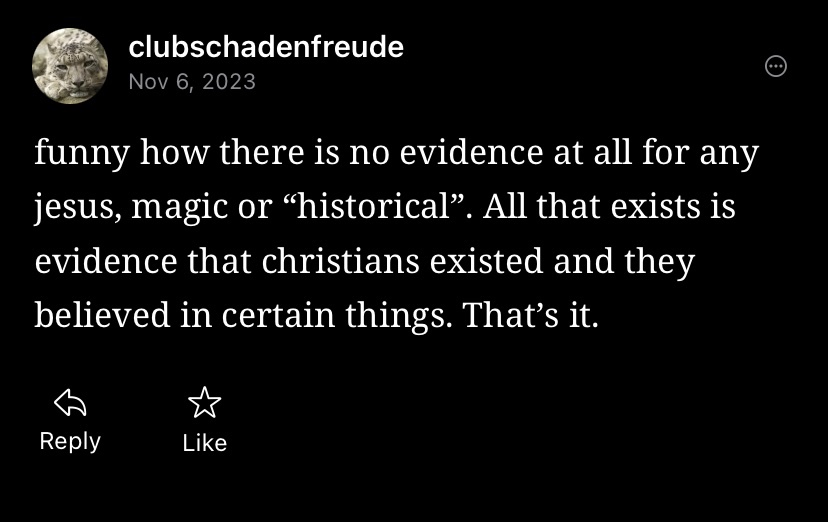
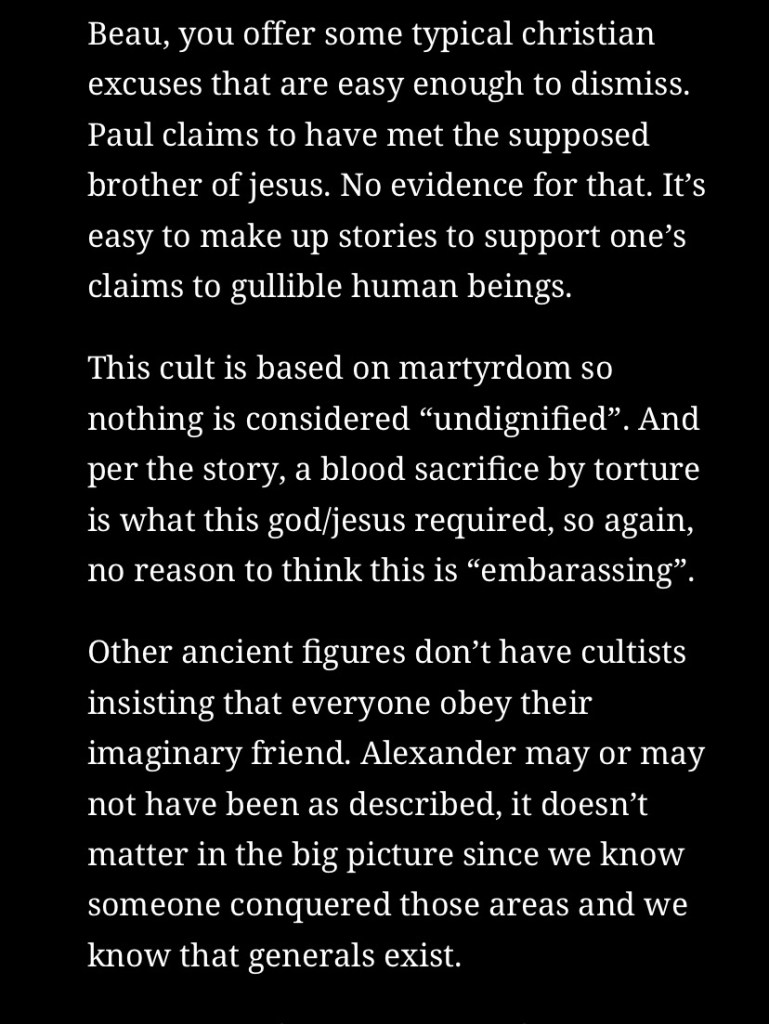
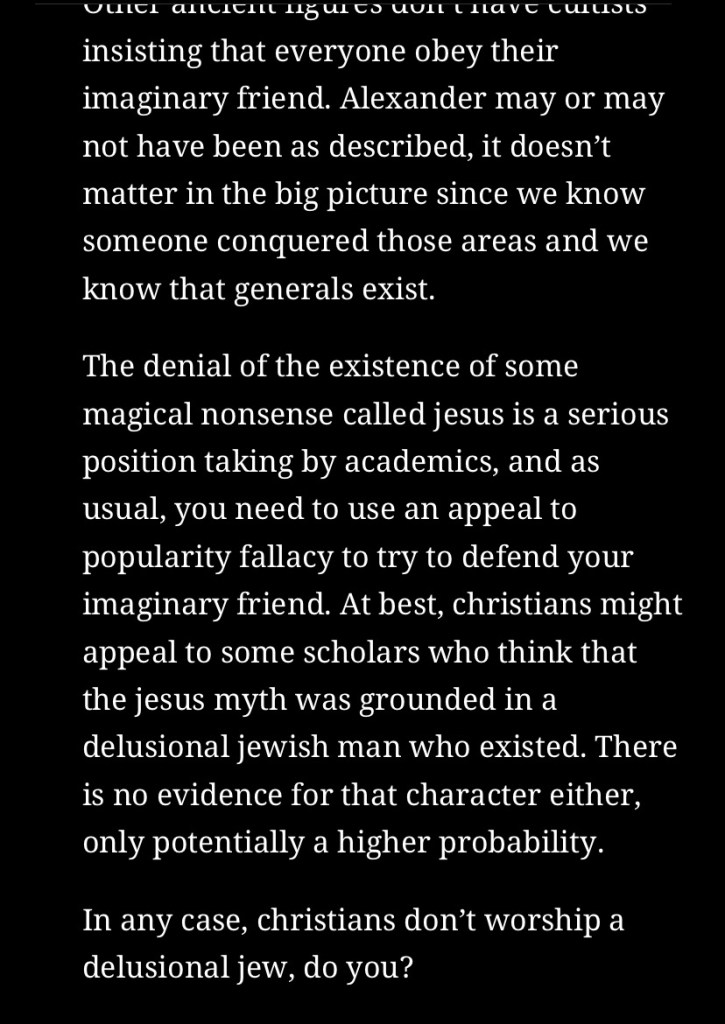
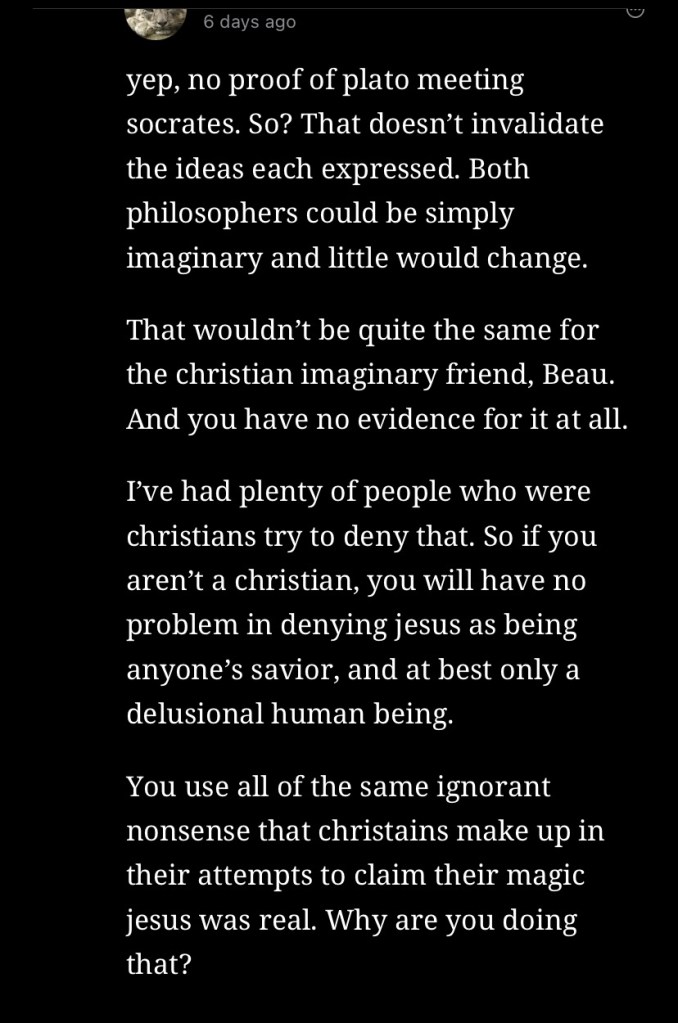
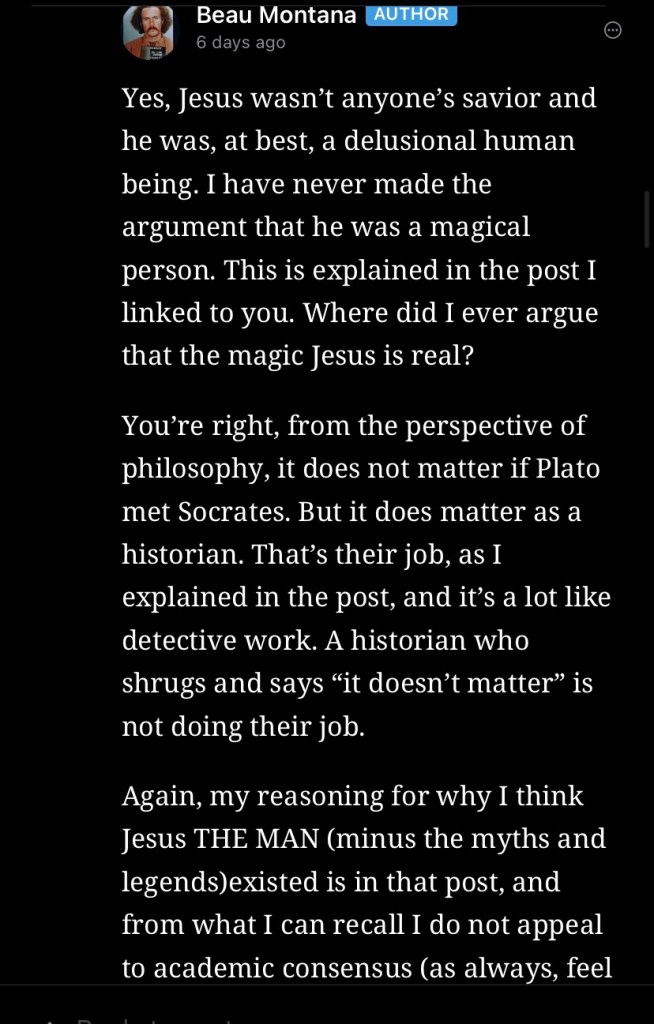
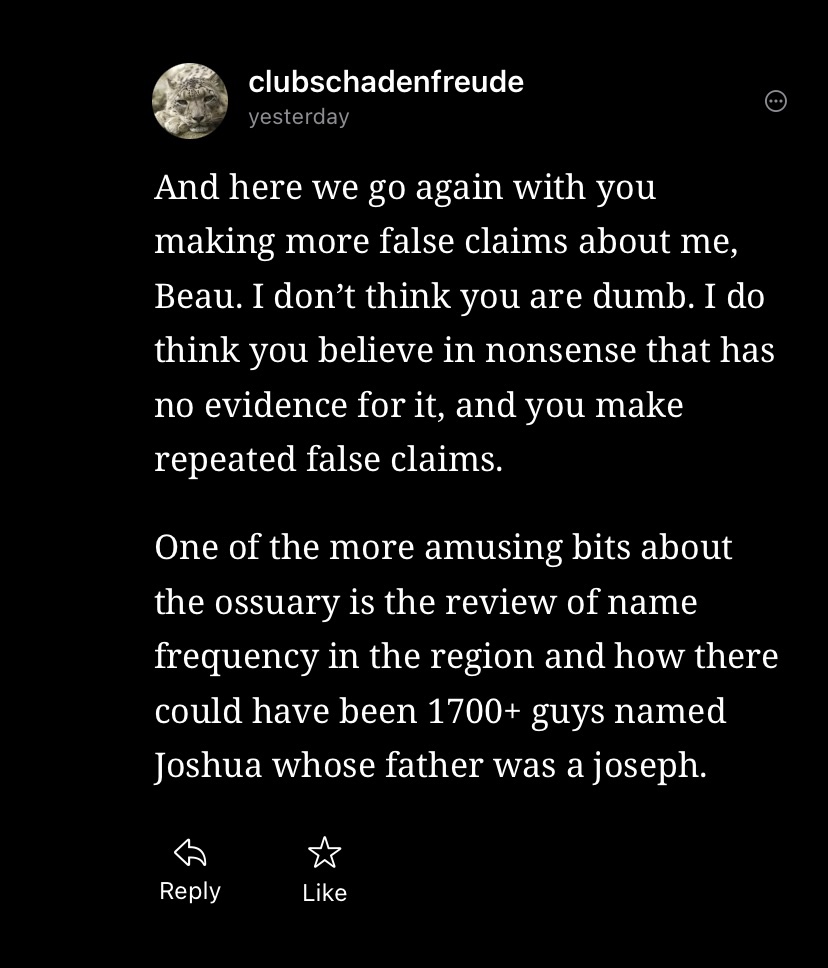
The art of being a good internet troll is playing the part your haters want you to play. So thanks to clubschadenfreude, I am coming out of the closet to admit that yes…I am fully indeed a proud goddamn Christian and that I simultaneously deny the historical existence of our Lord Jesus Christ.

Clubschadenfreude clearly understood all the arguments and the nature of historical investigation. I should state that he/she totally wasn’t drive-by commenting on a post about a subject they had a knee-jerk reaction towards. It was a very enlightening and respectful conversation that you can read below.

And why stop at denying the historical existence of Jesus? Fuck it, I’m doing a step further…Julius Caesar didn’t exist!

Prove me wrong!

As you can tell, this was a meeting of the two minds. Hopefully this serves as an example of true scholarly debate.

Etienne Trocme’s ‘The Formation of the Gospel According to Mark’

“Aren’t you an atheist?”

“Don’t you have anything better to do?”

“Have you considered professional counseling?”

These are just some of the questions I receive when others learn of my obsession with the Gospel According to Mark. Indeed, it’s hard to this passion of mine into words. In short, it’s one of the great mysteries of history. We don’t know who wrote it. And while we have some pretty safe assumptions about why it was written, even that is debated. Hell, we can’t even agree what genre Mark is.

Moreover, there’s an aspect to it that I almost find comical. While Mark clearly has some artistic intentions behind it, it is not particularly well written. Additionally, due to the politics of its era, there is likely a polemical aspect to it that has been largely lost on modern audiences. So I find it funny that one of the most important texts in ancient history was written by some moderately educated dude trying to piss off his opponents over petty theological differences. Because in doing so, the author basically invented the story of Jesus which is the most important story in Western civilization.

While I think the Gospel has kernels of historical truth regarding Jesus the man, it’s almost impossible to tell which one of them are facts which further confounds modern scholars. But honestly, I find the Gospel of Mark to be far more interesting than the historical Jesus due to its impact. So Jesus was an apocalyptic preacher who was nailed to the cross by the Romans. Big whoop. But, according to “Mark”, what if Jesus was the Son of God who died on the cross and rose again to save us from our sins? Now that’s show business!

But regarding the political dimensions of the early Jesus Movement, I find this aspect to be largely ignored by modern scholars. I think Monty Python’s Life of Brian is a bit more accurate than we care to admit. While this analogy is far from perfect, the Jesus Movement…specifically the one prior to Paul’s prevalence…was, in part, a response to the dominant Pax-Romana. In sum, this movement could be deemed a “left-populist” one in modern eyes. And if you’ve spent any amount of time with political radicals, you quickly learn that they HATE each other. While the main thrust behind Mark is to provide an unknown (but likely Greek-influenced) early church a coherent theological message, it’s who it’s aimed against that I find interesting.

This matter caught my attention while reading Etienne Trocme’s The Formation of the Gospel According to Mark. It’s a tough read, largely because it was written in French and doesn’t translate well into English, so I haven’t gotten very far. Additionally, I believe that Trocme’s controversial assertion in the work is that Mark originally ended at chapter 13. I do not accept that conclusion and it has been almost universally rejected by all scholars. Nevertheless, I picked up the book hoping to find some insight into Mark’s intentions.

According to tradition, “Mark” was an interpreter of the Peter, arguably the most important of Jesus’s apostles. But unless you’re a Christian, there’s absolutely no reason to believe this is true. Not only that, but Mark kinda portrays Jesus’s inner-circle as a bunch of idiots that have no understanding what their leader is trying to say and do. Because of this portrayal, preachers today want us to believe that the Apostles were a bunch of well-meaning knuckleheads, but it is possible (in fact, more likely) that Mark had polemical angle here: he was undermining Apostolic authority. In fact, in Mark, the only people that seem to understand Jesus’s mission are just randos. If memory serves, the only person (other than the author and some demons) in the narrative to identify Jesus as “the Son of God” is a Roman centurion after Jesus died on the cross. Additionally, Mark ends at 16:8, when Mary Magdalene, Jesus’s mother Mary (simply referred to as “mother of James”) and Salome find Jesus’s tomb empty with a stranger inside telling them Jesus has risen. Instead of rejoicing at the news, the women fled in terror and told no one.

In short, according to Mark, Jesus’s followers during his time on earth didn’t understand his message and when confronted with the truth, they fled.

As Trocme indicates, Mark doesn’t downplay Peter’s significance to Jesus but his authority is more or less stripped away. And James the brother of Jesus, who along with Paul and Peter was one of the most important figures in early church history, is essentially non-existent in the text.

Using my understanding of radical movements, a different interpretation of Mark comes clear: the author was asserting his own theology (possibly influenced by Paul who had his own run-ins with the Apostles) while simultaneously extending the middle finger to Apostolic authority.

Not another Jesus movie

Martin Scorsese has gone on record saying that he’d like to make (another) film about Jesus Christ. I mean, Jesus Christ! How many movies do we need about this guy?

Actually, I don’t have a problem with it. I just wish someone made a movie that questions the Gospel narrative. That’s why I find Scorsese’s other Jesus flick The Last Temptation of Christ to be an interesting (but not great) film.

This is probably the only instance where filmmakers should actually follow real history to provide a dramatic narrative. In filmmaking, or storytelling in general, sometimes it helps to deviate from history to provide a more engaging story. Not that we know a lot about Jesus’s life anyway, but what we DO know about life in first century Judea would provide a fascinating backdrop. If a writer used this knowledge and took creative liberties with the Gospels, they’d have a unique – and violent – story about Jesus of Nazareth.

This is why Paul Verhoeven needs needs to make his Jesus movie while he still can. According to my research (that I will not cite), Verhoeven was the only atheist admitted to the controversial Jesus Seminar back in the day. He’s also written his own biography on Jesus, simply called Jesus of Nazareth. So needless to say, he’s a scholar on the subject.

But Verhoeven is one of the great unsung directors of our time. He’s not afraid of…nay, he INVITES…controversy. And he’s 84 years old. So if Mel Gibson gets to make an unnecessary sequel to his Jesus film, Verhoeven deserves to get his shot.

Yeshua ben Pantera

It’s been a minute since I’ve discussed the historical Jesus. It’s not that I’ve lost interest, it’s that I feel like I’ve hit a ceiling with that research. New evidence is hard to come by, and quite frankly, I doubt that anything of significance will ever turn up.

For armchair historians like myself, that’s a hard pill to swallow but those are the facts. Any new developments will be derived from a reinterpretation of the available archeological and historical data.

But every now and then, a REAL historian will present a compelling argument based on nonfalsified archaeological evidence that fits the historical record. Enter James Tabor and his argument for a certain Roman soldier being Jesus’s real father.

Clearly this is not a new argument. Even the ancients probably joked about Jesus’s virgin birth being a cover up for Mary’s alleged infidelity. What I didn’t realize though is that there is traces of this tradition very early, notably in Jewish texts. But according to Tabor, these texts aren’t mocking the fact that “Pantera” (and not Joseph) is Jesus’s real father.

I do find it interesting (if Tabor is correct) that this would survive in Jewish tradition and not in Christian tradition. We know that redaction was going on all the time with early Christian texts…especially the ones that survived into the New Testament…so it makes sense why these early followers would try to cover up this uncomfortable fact (and why Jewish sources wouldn’t bother doing so).

Still, I’d be cautious in embracing this theory. While I find Tabor to be a compelling speaker and historian, I feel like he might be a little too gullible. In the video, he also defends Morton Smith and his “Mar Saba letter” which discusses the “Secret Gospel of Mark.” If memory serves, I mentioned elsewhere on this blog that that letter is almost certainly a forgery. That might not sound like a big deal, especially considering that Tabor knew Smith, but it raises a few red flags for me.

But you be the judge.

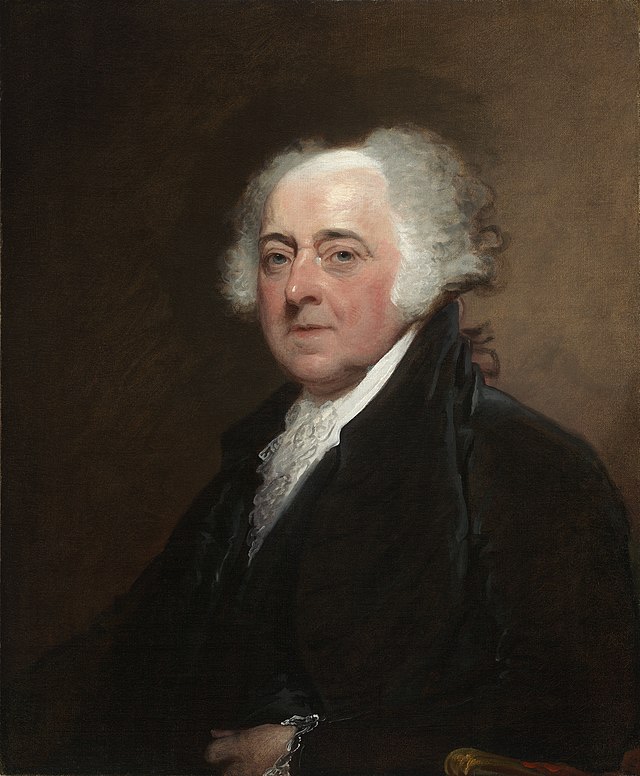
John adams

After watching nonstop Paul Giamatti commercials on Tubi I’ve realized two things: I don’t like Paul Giamatti and I hated the miniseries John Adams.

I read the popular biography by David McCullough on the first US Vice-President and influential Founding Father back in high school. It was fine. I don’t remember much about it to be honest, but that’s what prompted me to watch the miniseries.

The problem with the show is the same problem every dramatized account of a real historical event faces: there’s no surprises and every character is one dimensional. Unfortunately American history is largely mythologized. We all know it’s bullshit but we fall for it anyway.

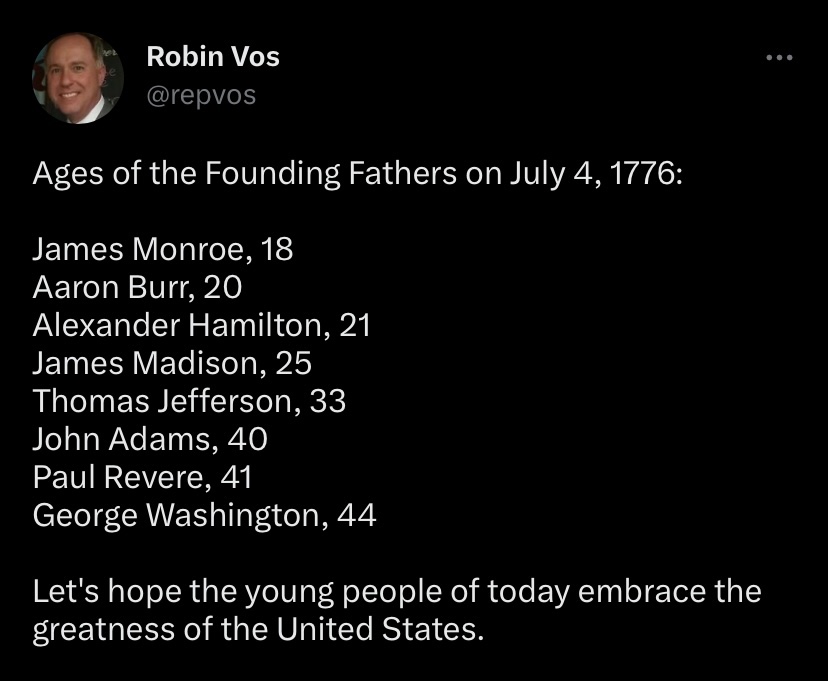
None of these guys knew what they were doing. But the Founding Fathers are always portrayed as paragons of virtue and certain in their destiny. I especially hated when John Adams meets George Washington. Why couldn’t Washington had been portrayed as an idiot who’s unfortunately the only man qualified to lead an army? That’s probably closer to the truth. But another thing that’s rarely discussed is how young these guys were:

No, I will not fact check Robin Vos’ claims

While Washington and Adams were what we could consider “middle aged”, a lot of these guys were far from it. That’s an aspect that’s rarely explored and it would undermine the audience’s expectations; the “Founding Fathers” weren’t enlightened old men…they were young, dumb rich kids (and apparently the Revolution wasn’t all that popular with the working class, but that’s a story for a different day).

I also have a theory that if you travel back in time, understand the language and customs of the era, and observe a famous historical event as an invisible fly on the wall, you would have no idea what’s going on or what’s about to happen. This is especially true for ancient times.

I tried exploring this idea last year with the story According to Simon (which I never finished). Much like the Founding Fathers, this story also centered around a (probably) real historical event that has been heavily mythologized: the death of Jesus Christ and the founding of Christianity told through the “Apostle” Peter. To go back to the AD 30s Jerusalem and watch these events unfold, they would look nothing like they are portrayed in the Gospels or Book of Acts: Jesus is called Yeshua (in fact, Peter had no idea what the Greeks were talking about when they referred to him as “Jesus”) , the Apostles are a bunch of stupid young kids, Judas steals and returns Jesus’s body to Nazareth, and Paul is a lunatic who confuses Jesus’s missing body with a real resurrection. And in the midst of this madness, confusion, and political strife, a new religion is born.

Do I think events actually happened that way? No. But I do think my interpretation is far more historically accurate…and therefore more engaging…than the mythologies that have been handed down to us. Because every historical figure is a living, breathing, shitting, human being , storytellers should approach the subject from that perspective rather than regurgitate the same old myths that we all know to be untrue (and are largely stale).

Whatnot n’ what-have-you

My obsession with the Gospel of Mark might seem odd at first glance. But consider this: it’s the most basic of the four canonical gospels, no one knows who wrote it, we don’t know why it was written, it is the oldest known narrative of Jesus, all other Gospels are based on it or are in some ways responding to it. Therefore, this Gospel essentially invented the story of Jesus, making it one of the most important documents of all time, literarily and/or historically.

This document is a mystery; a mystery that will almost certainly never be solved. But that doesn’t mean certain quack scholars like myself won’t give it a shot.

Unfortunately, when you spend an inordinate amount of time researching a specific topic, people tend to read more into it than what’s actually there. I try to keep that in mind while reading Mark. I don’t find this gospel to be a particularly brilliant document and whatever “themes” are there, I think, is just a reflection on the reader.

Case in point is the abrupt ending at 16:8 (the original ending, after Jesus’s death, when the women enter his tomb only to find a man in there telling them to go to Galilee):

Trembling and bewildered, the women went out and fled from the tomb. They said nothing to anyone, because they were afraid.”
‭‭Mark‬ ‭16‬:‭8‬ ‭NIV‬‬

What a weird way to end a story eh?

And maybe the author of Mark did have an “artistic” purpose for ending his or her story in that way. I just think he (or she) ended it there because why the hell not? I’m not saying it was a GOOD decision, just A decision.

So never read more into Mark than what’s actually there. But there does seem to be a growing consensus amongst scholars regarding its genre: it’s a Greco-Roman biography.

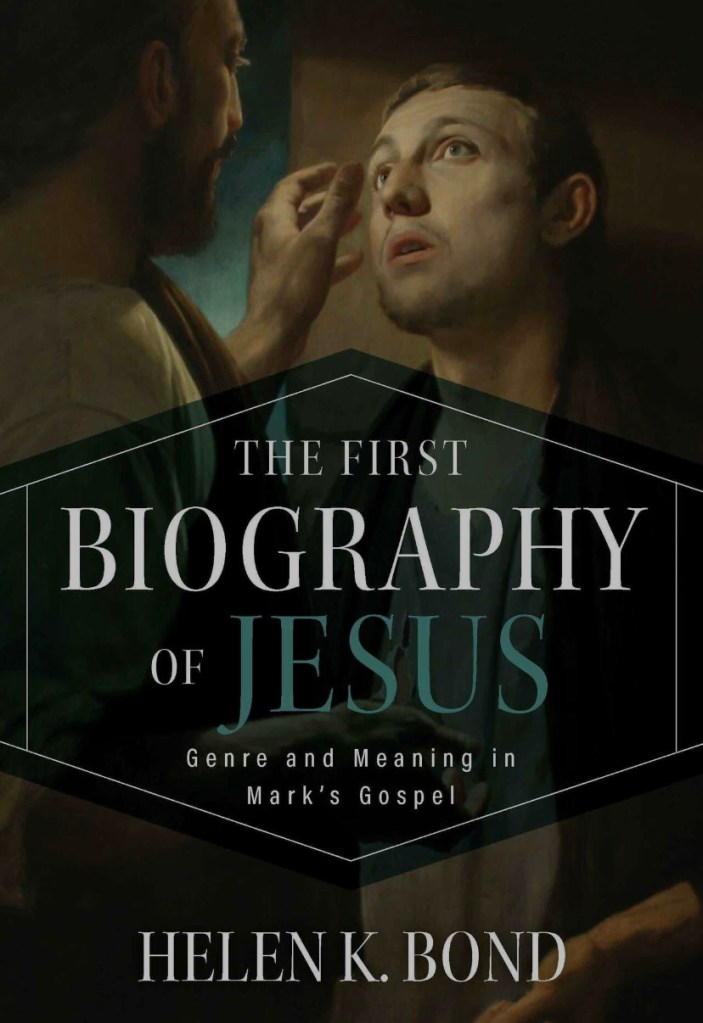
I think Helen K. Bond, in her book The First Biography of Jesus, makes a pretty good case for this. While Mark doesn’t fit perfectly with the biographical genre, it does share enough of its characteristics to possibly shed some light on the meaning behind this strange document.

But whatever Mark’s intention was, as Bond summarizes in her book, the story of Jesus IS, essentially, the Gospel of Mark. So whatever your beliefs are, there is a great deal of historical worth in that.

***

Personal update: my career at the toilet factory might be coming to a close. New management is taking over and, although they can’t fire me, they can make my life difficult which is how they treat veterans whenever they want a clean slate.

I don’t understand why new managers feel the need to do this, but so it goes.

So again, might be extremely busy for the next month while I find a new career. I may be writing A LOT or writing very little. Sucks, but life goes on.

life ain’t fair

Yeah I hate living. It’s a cursed gift from the universe. And I think life sucks because everyone before you and me didn’t do shit to make the world a place worth living in. So sure, enjoy life because it’s the only one we’ll get. But also, it’s a responsibility.

So if your approach to living is to get what you can out of it then die: fuck you. If that’s the case, life really does lack meaning. But to bring purpose to our meaningless existence, then we gotta recognize our responsibilities to others and this planet.

Unfortunately I’m lazy. So this responsibility to do good is my burden to carry. If you think about it, I’m much like Jesus Christ: every good deed is like a nail in the flesh. And also like Our Lord and Savior, there WILL be a second coming.

Cuz I always come TWICE. And when I don’t, it’s cuz of the meds.

Anyways, it sucks to hear about Dwayne Haskins. I enjoyed his season as a starter for Ohio State…I mean, THE Ohio State University. It’s a shame his NFL career didn’t go as planned. Many blamed him personally for his failure in Washington. But then again, he was drafted by WASHINGTON, aka the Biggest Dumpster Fire in Sports. I’m convinced no one can succeed there.

Unfortunately, another young life senselessly taken 😞

😐

What happened to the days on TV when a man could walk into a grocery store Benny Hill-style, hand in pocket, and he’s just YANKING his crank furiously underneath his sweatpants? Meanwhile he thinks he’s being so cool about it but everyone refuses to make eye contact with him.

Why can’t we make TV like that anymore?

That’s the worst thing about politics becoming serious entertainment: nothing’s funny anymore.

Every joke is the same tired crap: shitting on transgenderism, “cancel culture” ruining everything, conservatives are brainwashed, blah blah blah….

Remember that terrible painting of Jesus guiding the pen of Donald Trump? Chuckle all you want, but that painting best represents the absurdity of our times and it will almost certainly be in a prestigious museum 500 years from now where smart people will dispassionately evaluate its historical significance.

Nothing can be stupid and pointless for the sake of being stupid and pointless anymore.

Thanks anyway jackass forever, but too little too late.

jesus the cynic?

It’s interesting to view Jesus scholarship over the last 50 years. Most of it seems to reflect more on the political climate of the era it was written rather than on the actual historical Jesus, i.e. by turning Jesus into “Jesus the Revolutionary”, “Jesus the Mystic”, “Jesus the Philosopher”,etc.

It’s an easy mistake to make. Arguably I make it when I refer to Jesus as a “populist” figure of the time (I don’t mean that as a compliment. I mean that in its most literal sense: Jesus was addressing working class problems in a religious/political context.) It’s very difficult to separate our biases from the subject being analyzed, especially one as controversial as the historicity of Jesus.

I think there’s a (growing) minority consensus that Jesus took some influence from the Cynics. Some quack scholars might even say he was an outright Cynic.

I think this is an interesting question. In my view, the majority of mainstream scholars, both Christian and secular, wish to paint Jesus as a figure that almost emerged from a vacuum. It makes sense actually. All of the earliest, independently attested documents (The hypothetical Q…which survives almost in its entirety between the Gospels of Matthew and Luke…the epistles of Paul, Gospel of Mark, and Josephus) make no mention of Jesus’s origins (Q and Mark both start with the Baptism of Jesus by John the Baptist). So an attempt to say anything about Jesus’s influences, other than that of John the Baptist, would be pure conjecture. But there are some interesting parallels between Jesus and the Cynics: Mark 6:8, the location of Nazareth and its proximity to an apparent hotbed of Cynicism, Jesus’s confrontational style and eschewing of fame and fortune, embracing of poverty, etc. etc.

But read the Cynic texts. To the Cynics, Diogenes was their “Christ figure”. They all tried to emulate him. And to be honest, he was a disgusting asshole. While Diogenes definitely had his influence, I doubt he would have accumulated very many personal followers. I mean, many might have tried to ACT like him, but there’s no way anyone could have spent more than 10 minutes around him. Jesus, meanwhile, was probably trying to do something entirely different and would have certainly disapproved of things like…I dunno…MASTURBATING and SHITTING in public.

In my humble view, the Cynic modus operandi was likely something that was in the air at the time which some itinerant and apocalyptic preachers might have adopted. But just because that aesthetic was in vogue at the moment doesn’t mean that they were practicing Cynics.

While it’s fun to speculate, the simplest explanation is probably the correct one: Jesus was an apocalyptic Jewish preacher preaching to a mostly Jewish audience.