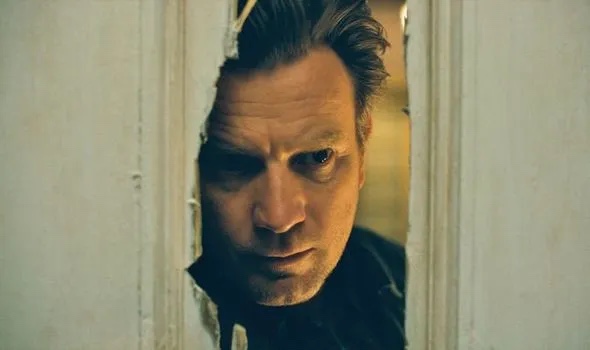
Doctor Sleep

So I broke my own rule of not watching movies that are less than 20 years old. Unfortunately, the “Sight and Sound” poll, the same one that caused a shitstorm by listing some movie called “Jeanne Dielman” as the greatest film ever made, also listed The Shining in its top movies.

As a Stanley Kubrick fan, I honestly think that The Shining is one the auteur’s weakest films. But for whatever reasons, it’s gained a massive following. I think it’s a visually interesting film. It also features stunning performances from Jack Nicholson and Shelly Duvall. But those are only facades. It’s a fundamentally empty and, frankly, aimless film. I can almost see why Stephen King was upset with it.

Yet, strangely, $tephen King agreed to have his novel adapted into a direct sequel to Kubrick’s film.

Does it work?

Mostly, I’d say. I’ve never read Doctor Sleep, but it’s quite apparent where King’s novel ends and where the adaptation to match Kubrick begins. Not that it’s distracting. Director Mike Flanagan makes a pretty seamless transition. BUT, the climax…naturally taking place at the Overlook Hotel…is pretty hit and miss.

The interaction between Danny Torrance and his father could have been A LOT worse, yet it wasn’t entirely successful either. Additionally, I could have done without some of the visual Easter eggs. Despite this, there is some emotional payoff when, as the Overlook is burning down, Danny is “reunited” with his mother.

But the superior parts of the movie were clearly King-inspired. I’m glad Flanagan took his time building up this story by (presumably) trying to be more faithful to the novel. It makes me think that it’s a shame that a more faithful adaptation wasn’t made of The Shining (the problem is that the styles and interests of Kubrick and King couldn’t have been farther apart). Many would probably disagree, but I think Doctor Sleep makes The Shining a better…and more emotionally compelling…movie.
mr. bright side

As we settle into the Cold War II and the ever present threat of nuclear war, it’s time to look at the silver lining: we might get better movies.

One thing I miss from the first Cold War is character study films of the 1970s. They should make more movies that look into the depraved lives of ordinary people in an uncritical manner. I’m sure they still make em but they’re probably shit.

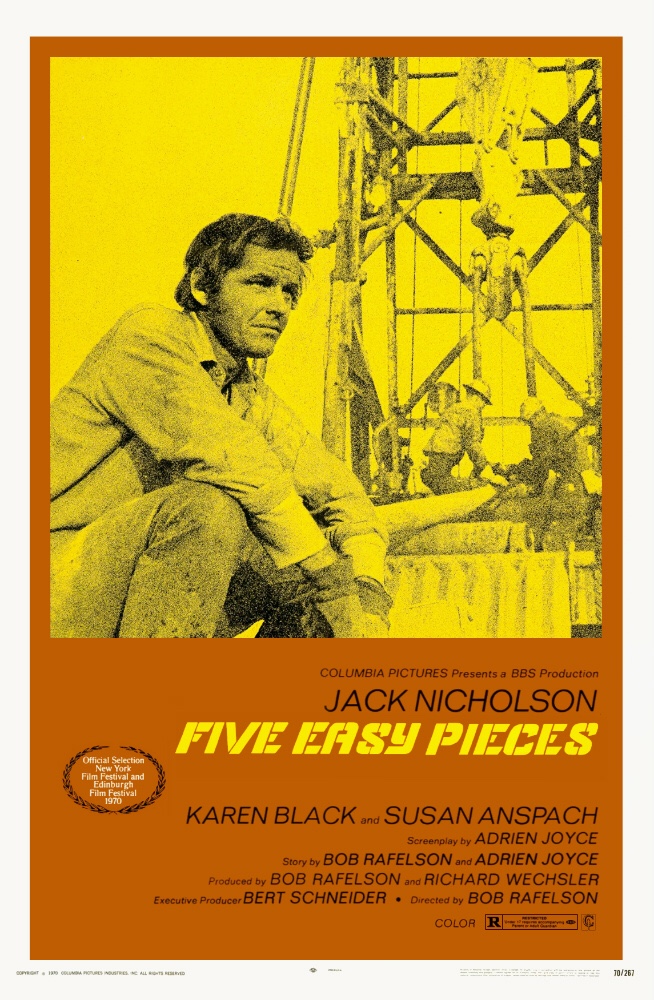
Jack Nicholson was the king of these movies back in the day. Perhaps the best example being Five Easy Pieces.

I’ve decided to get back to my roots and start building up my Criterion Collection. So I recently purchased Five Easy Pieces along with Paris, Texas (The only time I saw Paris, Texas when I stayed up late and watched HBO when I was 10 years old. It blew me the fuck away. I had a weird childhood).

When you have a toddler running around that gets PISSED if you watch anything other than Blippi, it’s hard to find time to watch these movies. But I got far enough into Five Easy Pieces to watch one of my favorite scenes in film history: Sally Strothers’ random heartbreaking monologue on being forsaken by God.

The essay pamphlet that accompanies the Five Easy Pieces blu ray is pretty good. Apparently this early 70s state of being, where everyone’s fucked-upness was a given…and people talked while others listened…is an existence that’s no longer.

So it’s refreshing to look back at a time that was no less deranged, but far less judgmental.

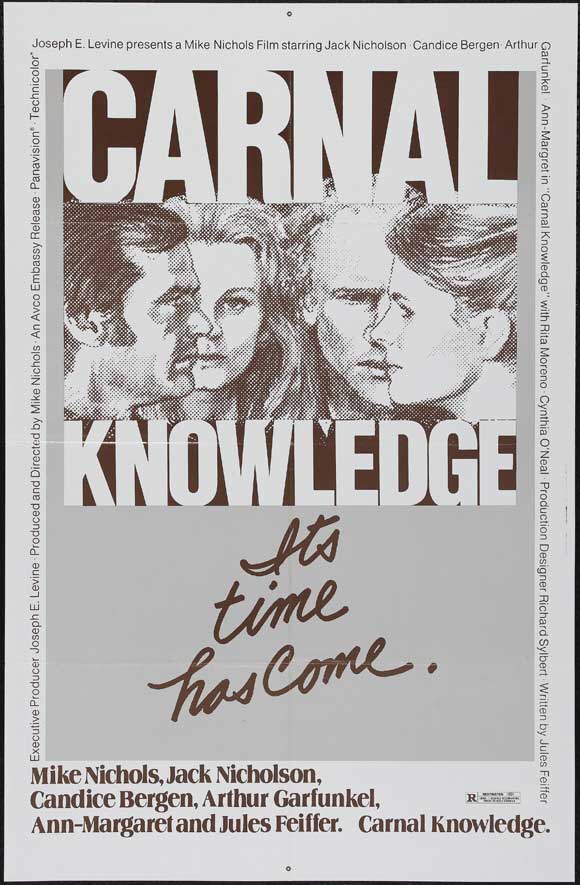
carnal Knowledge (1971)

I normally watch 42,000 movies a week. Few of them stick with me.

Carnal Knowledge, directed by Mike Nichols and starring Jack Nicholson and Art Garfunkel’s pubic hair, has.

It’s a movie I could’ve written back in my college days. Particularly the first act, about two college guys that know next to nothing about women who try to score with Candice Bergen. Of course, Mike Nichols aces the direction by presenting the two characters in all their pathetic glory. Bergen is also handled nicely as she plays a confused girl torn between these two dorks. Imagine watching a dramatized version of Beavis and Butthead in college, that’s the first act of the film.

Naturally, this romantic interaction has long term consequences, especially for Nicholson’s character. The second half explores his inability to connect with and emotionally abuse Ann-Margret.

Carnal Knowledge really makes you wonder why women love men at all.

Before Jack Nicholson became the Jack Nicholson we know and love today, he specialized in these character studies. Other notable examples are his collaborations with Bob Rafelson (Five Easy Pieces and The King of Marvin Gardens) and The Passenger. He was (is) truly an unusual leading man.

Is Carnal Knowledge a great film? Not particularly. In it’s simplicity, it would probably work better on the stage than on the screen. But it is the highlight of Nicholson’s career from 1969 to 1974, a brief window from when he was still an actor, before he became better known as Jack Nicholson the film star.