Sorry, I was high on gas fumes and aerosols when I wrote my last post. It kinda went off the rails there towards the end.
So allow me to muddy the waters a bit more.
Fundamentally, I think that “everything is ideology“ (a lot of people have thought about this long before me). And I mean EVERYTHING: objects, sex, relationships, beauty, art…everything. To break these things down to their smaller components would reveal true horror: your food is dead animals and vegetables, sex is exchanging of gross bodily fluids, etc. So we have to sublimate these objects into ideas…hence “everything is ideology”.
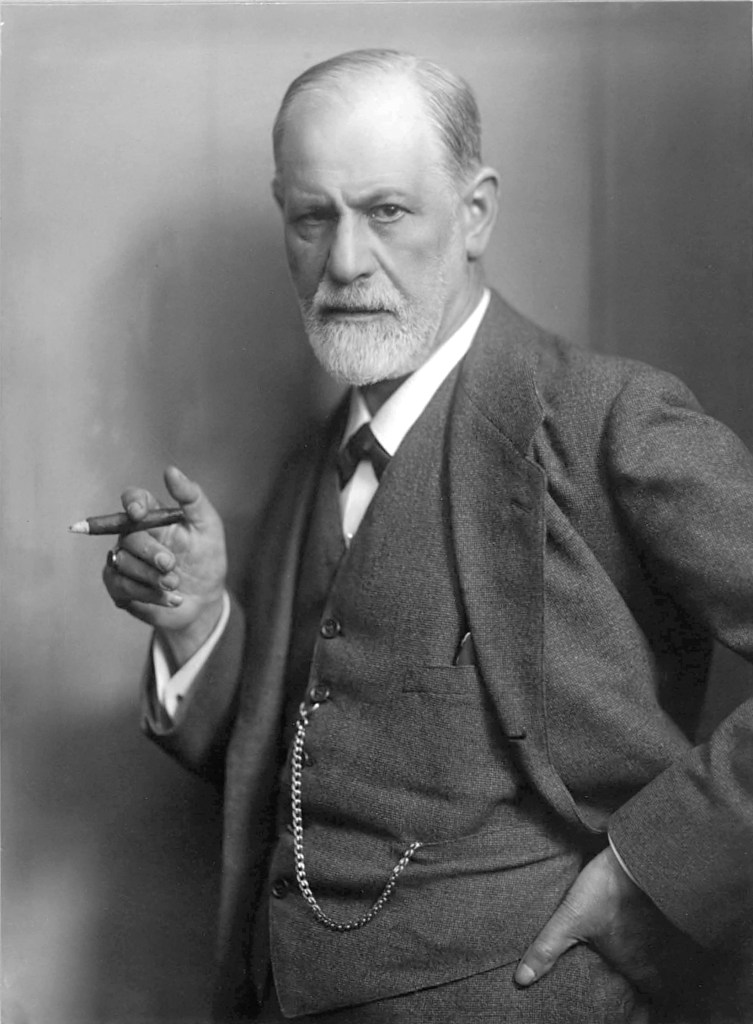
Which is perfectly acceptable! Humans are both blessed and cursed by logic and reasoning because these functions often reveal the nothingness behind everything. Thus, REAL truth is terrifying and ultimately meaningless, so the “mask” of ideology is the only “reality” that matters. Sometimes existential dread ensues because of this. Therefore sublimation, in the Freudian sense, is helpful in constructing a healthy view of the world.
Which is why I sometimes praise religion and SOME politics, provided they promote peaceful coexistence and openness. Clearly sublimating into certain ideologies can lead to straight up derangement. So, therefore,“sublimate well”.
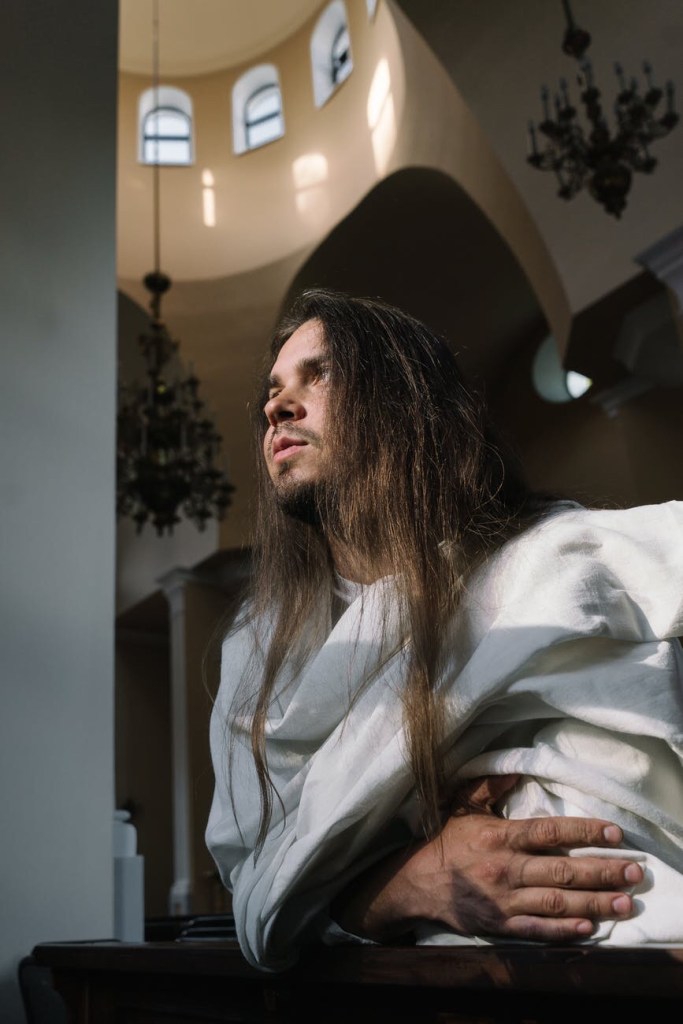
It’s interesting to view Jesus scholarship over the last 50 years. Most of it seems to reflect more on the political climate of the era it was written rather than on the actual historical Jesus, i.e. by turning Jesus into “Jesus the Revolutionary”, “Jesus the Mystic”, “Jesus the Philosopher”,etc.
It’s an easy mistake to make. Arguably I make it when I refer to Jesus as a “populist” figure of the time (I don’t mean that as a compliment. I mean that in its most literal sense: Jesus was addressing working class problems in a religious/political context.) It’s very difficult to separate our biases from the subject being analyzed, especially one as controversial as the historicity of Jesus.
I think there’s a (growing) minority consensus that Jesus took some influence from the Cynics. Some quack scholars might even say he was an outright Cynic.
I think this is an interesting question. In my view, the majority of mainstream scholars, both Christian and secular, wish to paint Jesus as a figure that almost emerged from a vacuum. It makes sense actually. All of the earliest, independently attested documents (The hypothetical Q…which survives almost in its entirety between the Gospels of Matthew and Luke…the epistles of Paul, Gospel of Mark, and Josephus) make no mention of Jesus’s origins (Q and Mark both start with the Baptism of Jesus by John the Baptist). So an attempt to say anything about Jesus’s influences, other than that of John the Baptist, would be pure conjecture. But there are some interesting parallels between Jesus and the Cynics: Mark 6:8, the location of Nazareth and its proximity to an apparent hotbed of Cynicism, Jesus’s confrontational style and eschewing of fame and fortune, embracing of poverty, etc. etc.
But read the Cynic texts. To the Cynics, Diogenes was their “Christ figure”. They all tried to emulate him. And to be honest, he was a disgusting asshole. While Diogenes definitely had his influence, I doubt he would have accumulated very many personal followers. I mean, many might have tried to ACT like him, but there’s no way anyone could have spent more than 10 minutes around him. Jesus, meanwhile, was probably trying to do something entirely different and would have certainly disapproved of things like…I dunno…MASTURBATING and SHITTING in public.
In my humble view, the Cynic modus operandi was likely something that was in the air at the time which some itinerant and apocalyptic preachers might have adopted. But just because that aesthetic was in vogue at the moment doesn’t mean that they were practicing Cynics.
While it’s fun to speculate, the simplest explanation is probably the correct one: Jesus was an apocalyptic Jewish preacher preaching to a mostly Jewish audience.
Part of the reason why William Peter Blatty considered The Ninth Configuration as a true sequel to The Exorcist is because they both attempt to address the “mystery of the good.”
Blatty, from my understanding of course, was a devout Catholic so he understood these terms from a very spiritual perspective. While I find the phenomenon of religion fascinating, I don’t view the universe in that particular way. Nevertheless, I think Blatty was attempting to address a very interesting question, particularly with The Ninth Configuration (the film. I haven’t read the novel)
Much ado is made about “the problem of evil”, but that’s only a problem from a religious perspective. If the the universe is indifferent to our plight, and life is inherently selfish, then there is no mystery. Furthermore, there is no good OR evil…it’s merely a projection of human perception.
Many philosophers have attempted to formulate a model for morality, notably Kant’s Categorical Imperative and utilitarianism, with varying degrees of success. I personally tend to favor something that I heard Bart Ehrman say: I just know it when I see it. However I do find it interesting that nearly every religion has some variant of the Golden Rule: do unto others as you’d have them do unto you.
I don’t think that I have many philosophical convictions, but one thing I am certain of is that I am not a “blank slatist”. If we were born as blank slates, then nothing we do would be possible. Language acquisition itself provides some insight into the a priori nature of our being. What language can tell us precisely about our morality is unknown to me, but I think it warrants further investigation as evidenced by the Golden Rule.
The Golden Rule may not be a “philosophically consistent” principle, but I think it’s intuitive enough that there could possibly be something revealing about it. Empathy might be an example. To my understanding, empathy is a phenomenon that’s scientifically falsifiable, but I’m just spitballing here. Maybe “good” and “evil” are a priori categories of human reasoning, I dunno.
Either way, from both a religious and secular perspective, “the problem of good” needs answering.
“This proceeding has been a disgrace to the Los Angeles Superior Court, to the State of California, and to the justice system as a whole,” the judge ruled. “I have no choice but to rule in favor of the plaintiff. James ACHOO 🤧…excuse me, I sneezed…will get full credit for directing AND writing Like A Fart in the Wind. But do not count this as a victory James. With your reputation for belittling and suppressing governments and various newspapers around the globe, I deem you to be a menace to society. Unfortunately, this is a civil case and not a criminal one. But I have seen the final cut of this film. I am doing Dallas Howard Austin Antonio and Pee-Wee Weepee a favor for not giving them credit for this picture. I can’t think of anything worse than giving you, James, sole credit for this disaster.”
“Thank you for your ruling,” I said to the Judge. “But with all due respect, I believe you to be a bitch that wouldn’t know art if it bit her in the cunt. I believe this picture to be my finest work….far exceeding This Tastes Like Ass. Court stenographer, take note: Like a Fart in the Wind will be the greatest motion picture ever made. Thank you and good day.”
I walked outside the courtroom where Pablo greeted me with a cigar and bottle of brandy. “You were brilliant,” Pablo said. “With the attention that the case brought to the project, this movie is on pace for being the highest grossing film ever made.”
“Any publicity is good publicity,” I replied.
I lit up the cigar. “You know Pablo,” I continued, “I just want to thank you for bringing me back into the game. If I went on with retirement, I would have been dead in a year. Now I feel more alive than ever.”
Pablo cracked open the brandy and we began drinking at the courthouse. “James, you’re a rare talent,” he said. “After this film succeeds at the box office, I have the feeling that this will be the beginning of a beautiful partnership.”
We both patted each other on the back and shared a few laughs as we walked down the courthouse steps and into the beautiful California sunset.
****
From the Idaho Statesman
“He Will Never Work in This Town Again“ says Steven Spielberg
By Dick Shaftsburg
“Hollywood is in a panic over the abysmal opening weekend of Like A Fart in a Windstorm. It grossed $1,500 against a $10 Billion budget.
Produced by Kathleen Kennedy of Trainwreck Productions, and directed by (name redacted due to ongoing legal disputes between the individual and the Idaho Statement. Henceforth, he will be referred to as the “Director”), the project was fraught with problems from the beginning…from various court cases to the death of its leading actor, Christian Bale.
Critics panned Like a Fart in a Windstorm from the beginning. Leonard Maltin stated that, “I’d rather have tweezers shoved up my pee hole than watch this shit again. Christian Bale deserved better.” Even Roger Ebert came back from the dead to ask, “Who was the leading character? Was it Christian Bale? Or was it his disgusting ass cheeks?”
After her firing from Trainwreck Productions, Kathleen Kennedy has become the first woman to have been exiled from the United States to Saskatchewan, Canada, often called the “hairy taint of North America.”
Meanwhile, the Director has gone missing. Given his obscene wealth, he’s likely in Namibia where Prime Minister Wesley Snipes has named him Finance and Defense Minister, as well as Attorney General.
Given the poor box office performance of Like a Fart in the Wind, it is unlikely the Director will return to Hollywood. In addition to his professional troubles, he is also under investigation by the EU, UN, and FBI for allegations regarding human trafficking, racketeering, and bribery of numerous foreign governments.
“If I had known that I was going to be in the same profession as him (the Director),” explained acclaimed Hollywood legend David Lynch, “I would have prostituted my asshole years ago.”
“He’s a disgrace,” said Martin Scorsese. “Just a total disaster, just like Shutter Island.”
After Christian (Bale’s) funeral, I began lamenting some of my decisions at the production studio. “Maybe I shouldn’t have asked him to gain 150lbs,” I said.
“You’re one arrogant son of a bitch,” Jeffery Greco said.
“Don’t blame me for his death!” I replied. “Chris could’ve turned down the role!”
Kat was two sheets in the wind when she spoke up. “I’m finished in this town,” she said. “Because of you, I’ll never work again.”
“Lay off the sauce, Kat,” I said. “Now pour me a drink.”
“There’s no way we can release the film now,” Kat continued. “$7 billion down the toilet!”
“Now calm down!” I interrupted. “We’ll just have to do some reshoots. I’ll step in for Chris’s role. I’m an Academy Award-winning actor too, ya know?”
“Hold on there bucko,” Greco said. “There ain’t no way the studio will let you back on the set. Not after the lawsuit with Dallas and killing your leading man. That’s to say nothing about the numerous investigations into your international holdings!”
“If the film’s gonna be completed,” Kat said, “then your assistant, Pee-Wee, will finish production.”
“Well that Machiavellian son of a bitch,” I said. “I knew he had an ulterior motive.”
“Since we are 90% finished with filming, we’ll use CGI to complete Chris’s scenes,” explained Kat. “That will considerably jack up the budget, but we have no other choice.”
“Then I guess I’m fired,” I said as I stood up. “But I still want full credit for directing this picture.”
“Not happening,” Kat replied.
“Kat, you’ve crossed me for the last time,” I said. “I’m going to the Director’s Guild. If you want a court battle, you’ve got one sister!”
Nothing can, nothing will, wake me up. Construction, gun shots, home invasions, house fires, nuclear holocausts…nothing.
So I get to have incredible dreams. Last night, for example, I dreamt that I was a football player buried deep down the depth chart. The team boarded a plane en route to a game with the pilot both coked up and drunk. The pilot thought it would be cool to do a barrel roll in a passenger plane which caused some concern. I brushed it off and took a nap. When I awoke, the plane had to make an emergency landing onto a road but ended up crashing into an apartment building. No one was killed,miraculously, and the people in the building didn’t think anything unusual about it because it was in Mississippi and apparently things like that happen all the time. Nevertheless, one player thought this was the perfect opportunity to exact revenge…for whatever reasons…on the head coach and a few other players. So it was up to me, some nobody, to save the team.
Once when that was done, I had to book a flight home but chose to fly to London, England instead. The price came to $20,000 and I didn’t have the money. Then the dream ended.
There were dreams on the periphery, one which includes me fighting a rabbit in Monument Valley and sending it to a highly mechanized version of hell.
I guess dreams are just a hodgepodge of shit stored in our heads and when we sleep, our brains randomly throw things together which we later attempt to make sense of (or in my case, project a story onto). Does it ever mean anything? Probably not.
At least not most of the time.
But I do have recurring dreams. Not dreams where the exact same things happen, but they share similar themes, people, places, etc. I suppose that there are shreds of truth in these kinds of dreams: a revelation of regret, dread, loss, and so on.
I find the subject of dreams fascinating. It reveals the chaos that exists in our own minds. Even the purest of people will experience a gruesome nightmare. Despite their outward practices in real life, even in their minds they will produce true horror. That emanates completely from them. We try to project some sense onto our dreams, but the fact is that there isn’t any whatsoever.
Obviously I’m going through a Bart D Ehrman phase. It’s not because I agree with him most of the time or that I find him a master debater (sorry, had to say it). It’s because he’s the only public intellectual that I can think of at the top of my head that has a genuine passion for teaching.
Because Ehrman’s area of expertise is the Bible, specifically the New Testament and early Christianity, people naturally have strong opinions about the subject. Some people, specifically atheists but a few Christians aren’t exempt, like to use this subject as a way to “trigger” their opponents.
This is a fad on YouTube. The “Intellectual Dark Web” (IDW), or guys that found fame on the internet during the “alt-Right” hay day (people like Sam Harris, Jordan Peterson, Ben Shapiro, etc.) perfected the science of “triggering” (also known as “owning the libs”) and many online personalities have attempted to emulate it, including leftists with varying degrees of success. It’s a way of weaponizing information.
This phenomenon is not exclusive to discussions on the Bible, religion, and politics, but even movies and fucking geography!
Because “owning the line” is currency on YouTube, this has led to many quaks pretending to be experts littering the platform and distracting us away from those trying to present information in good faith.
Just because an opinion triggers someone, that doesn’t give it more credence. But that appears to be sound logic in some circles. Even if the opinion is true, if presented in a way that’s designed to give offense, that doesn’t make the one with the opinion more noble or virtuous…it makes you an asshole.
I’ll say this though: Jesus at least dabbled in asceticism. Any hard evidence for this? No. And none will ever turn up. BUT the two earliest accounts of Jesus’s life, the Gospel of Mark and the hypothetical “Q source” (which survives in the Gospels of Luke and Matthew) mention Jesus turning to the wilderness after his baptism from John the Baptist.
John the Baptist’s existence can be independently confirmed by Josephus, a first century Jewish historian. This is partly why it is universally agreed upon that the baptism of Jesus by John is a real historical event. The other reason why historians believe this is due to the criterion of embarrassment, which simply means that Jesus’s associations with John the Baptist would have been well known enough that it had to of been accounted for by early Christian writers, despite Jesus’s superiority to John.
It’s difficult to establish any degree of certainty from this period. Was John the Baptist an ascetic? It certainly appears that he had those tendencies from the surviving texts. It’s has even been suggested that he was an Essene, a “semi-ascetic” Jewish sect from the first century. Could Jesus have been a follower of John? We know that they met at least once, and the Gospels (whatever their historical worth) say that Jesus immediately did something ascetic-like after that meeting.
I like questions like these because it helps contextualize this era. I personally think that Jesus did ascetic-like things and might’ve ran with a few ascetic groups. But I don’t think he thought of himself ascetic or even monastic. Like I said, the historical information contained in the Gospels are dubious and hard facts will likely never appear, but I think it’s important to look at the language of the Gospels.
Mark and the “Q” source (or possible sources) seem to address a rural audience, meaning that Jesus likely focused his mission on the poor or “working class”. There are obvious problems with this assumption, the main one being that the entire New Testament is written in Koine Greek while the poor in Galilee and Judea, including Jesus, spoke Aramaic (plus the Gospels are written 40 years after the crucifixion of Jesus). How much of Jesus’s message was changed between his death and the written accounts is impossible to determine. Despite these problems though, I do think that Mark and Q are more than likely correct in Jesus’s focus.
So as I’ve said before, I think that Jesus was a religious-populist figure, and as we often find in populist movements, leaders often take a “postmodern” turn by becoming (as Apostle Paul later found out) “all things to all people”. This is why so many people can have so many different interpretations on what happened.
He’s an excellent biblical scholar, but a little too conservative for my tastes as a historian. This occurred to me while I was watching him get ambushed by both Christians and atheists during a Zoom call.
If I’m correct in my understanding…and remember I’m a dumbass…then Ehrman’s argument regarding our access to the original intentions of the New Testament texts are completely lost. We cannot know what “Mark”, for example, originally wrote. Not only would this be true for all biblical texts, but virtually ALL ancient texts as well.
In my view, this is an extreme form of skepticism which throws our understanding of history out the window. The entire historical record would be in jeopardy, a point which Ehrman himself seemingly concedes (unless, of course, the record can be confirmed by other sources i.e. archeological, DNA, etc.)
I guess this sounds extreme-having to take the accuracy of ancient historical accounts basically on faith (especially when they sound plausible, but lack supporting evidence)-but what other option do we have until the facts prove otherwise?
I suppose this line of reasoning is how Ehrman can reconcile his certainty that Jesus existed with his extreme skepticism of the historical accuracy of the Gospels.










 The Internet Ruined Everything