jesus the cynic?

It’s interesting to view Jesus scholarship over the last 50 years. Most of it seems to reflect more on the political climate of the era it was written rather than on the actual historical Jesus, i.e. by turning Jesus into “Jesus the Revolutionary”, “Jesus the Mystic”, “Jesus the Philosopher”,etc.

It’s an easy mistake to make. Arguably I make it when I refer to Jesus as a “populist” figure of the time (I don’t mean that as a compliment. I mean that in its most literal sense: Jesus was addressing working class problems in a religious/political context.) It’s very difficult to separate our biases from the subject being analyzed, especially one as controversial as the historicity of Jesus.

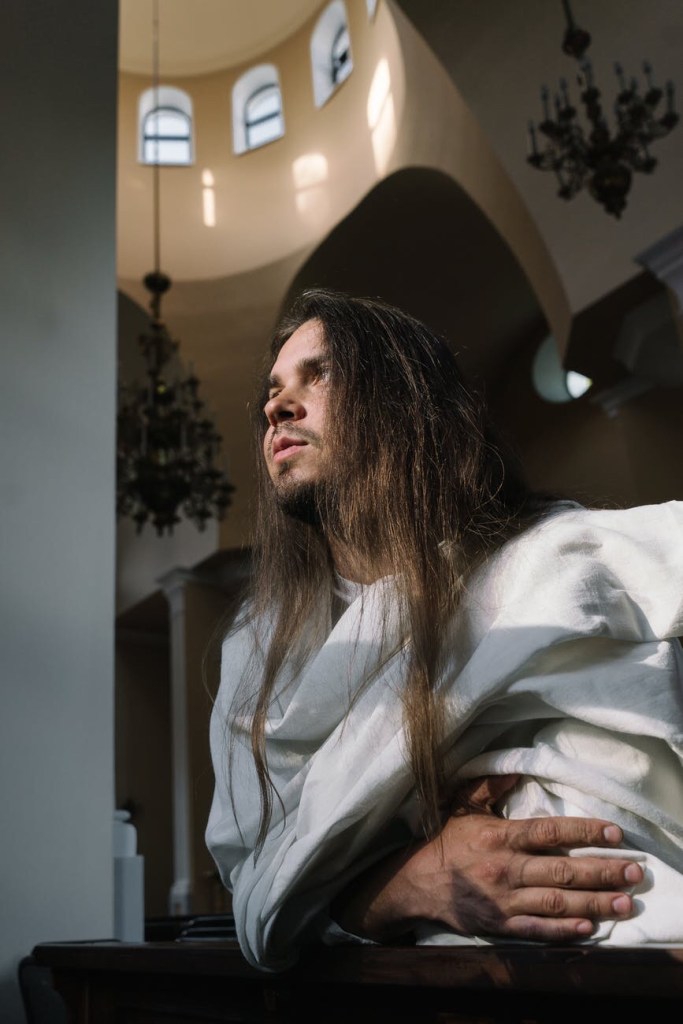
I think there’s a (growing) minority consensus that Jesus took some influence from the Cynics. Some quack scholars might even say he was an outright Cynic.

I think this is an interesting question. In my view, the majority of mainstream scholars, both Christian and secular, wish to paint Jesus as a figure that almost emerged from a vacuum. It makes sense actually. All of the earliest, independently attested documents (The hypothetical Q…which survives almost in its entirety between the Gospels of Matthew and Luke…the epistles of Paul, Gospel of Mark, and Josephus) make no mention of Jesus’s origins (Q and Mark both start with the Baptism of Jesus by John the Baptist). So an attempt to say anything about Jesus’s influences, other than that of John the Baptist, would be pure conjecture. But there are some interesting parallels between Jesus and the Cynics: Mark 6:8, the location of Nazareth and its proximity to an apparent hotbed of Cynicism, Jesus’s confrontational style and eschewing of fame and fortune, embracing of poverty, etc. etc.

But read the Cynic texts. To the Cynics, Diogenes was their “Christ figure”. They all tried to emulate him. And to be honest, he was a disgusting asshole. While Diogenes definitely had his influence, I doubt he would have accumulated very many personal followers. I mean, many might have tried to ACT like him, but there’s no way anyone could have spent more than 10 minutes around him. Jesus, meanwhile, was probably trying to do something entirely different and would have certainly disapproved of things like…I dunno…MASTURBATING and SHITTING in public.

In my humble view, the Cynic modus operandi was likely something that was in the air at the time which some itinerant and apocalyptic preachers might have adopted. But just because that aesthetic was in vogue at the moment doesn’t mean that they were practicing Cynics.

While it’s fun to speculate, the simplest explanation is probably the correct one: Jesus was an apocalyptic Jewish preacher preaching to a mostly Jewish audience.

the problem of good

Part of the reason why William Peter Blatty considered The Ninth Configuration as a true sequel to The Exorcist is because they both attempt to address the “mystery of the good.”

Blatty, from my understanding of course, was a devout Catholic so he understood these terms from a very spiritual perspective. While I find the phenomenon of religion fascinating, I don’t view the universe in that particular way. Nevertheless, I think Blatty was attempting to address a very interesting question, particularly with The Ninth Configuration (the film. I haven’t read the novel)

Much ado is made about “the problem of evil”, but that’s only a problem from a religious perspective. If the the universe is indifferent to our plight, and life is inherently selfish, then there is no mystery. Furthermore, there is no good OR evil…it’s merely a projection of human perception.

Many philosophers have attempted to formulate a model for morality, notably Kant’s Categorical Imperative and utilitarianism, with varying degrees of success. I personally tend to favor something that I heard Bart Ehrman say: I just know it when I see it. However I do find it interesting that nearly every religion has some variant of the Golden Rule: do unto others as you’d have them do unto you.

I don’t think that I have many philosophical convictions, but one thing I am certain of is that I am not a “blank slatist”. If we were born as blank slates, then nothing we do would be possible. Language acquisition itself provides some insight into the a priori nature of our being. What language can tell us precisely about our morality is unknown to me, but I think it warrants further investigation as evidenced by the Golden Rule.

The Golden Rule may not be a “philosophically consistent” principle, but I think it’s intuitive enough that there could possibly be something revealing about it. Empathy might be an example. To my understanding, empathy is a phenomenon that’s scientifically falsifiable, but I’m just spitballing here. Maybe “good” and “evil” are a priori categories of human reasoning, I dunno.

Either way, from both a religious and secular perspective, “the problem of good” needs answering.

woyzek and ninth configuration

I swear that I don’t plan what movies I’m gonna watch. I sit on my ass and scroll through some app on my smart TV and find random shit.

Oddly enough, the two movies I watched back to back were Werner Herzog’s Woyzeck and William Peter Blatty’s The Ninth Configuration. Both films are about military personnel dealing with insanity and philosophy….not subjects that you find in most films.

This is probably not one of Herzog’s more appreciated films and I wasn’t entirely certain what to make of it. If you watch it, it probably wouldn’t come as a surprise to you that it was shot in 18 days. For a period piece, it’s very small scale and stage-like. But knowing this might help on a second viewing.

Klaus Kinski plays the titular character Woyzeck. He’s a lowly soldier that’s essentially being gaslit by his commanding officer and a quack doctor. He’s a loving father and husband, but his wife sleeps around with another officer and that officer publicly humiliates Woyzeck. Finally, he murders his wife.

Other reviewers called this an “anti-Enlightenment” film. I think that’s apt. The two men egging on Woyzeck’s decent into madness are obsessed with science and philosophy. The officer even mocks Woyzeck, stating that he lacks “morals” due to his status in society. Woyzeck defends himself, claiming that as a man without money or education, he simply does what’s “natural”. When viewed from this perspective, the Enlightenment ideals espoused by the Officer and Doctor come across as abusive, while Woyzeck is actually the only sane and moral person in the movie. The small scale of the movie contributes to the anti-enlightenment narrative, as it isn’t flashy or self-congratulatory like we’ve come to expect with these kinds of films.

Meanwhile, The Ninth Configuration couldn’t be more different. I could tell you what it’s about, but then I’d be lying. I just know it takes place in a castle acting as a psychiatric ward for Vietnam vets, Stacy Keach is in it, and there’s a bar fight. The movie is totally disorienting. At times it’s a psychological drama, other times it’s a comedy, and at one point it becomes an 80s action flick. The tone is all over the place. Perhaps that’s by design but I’m not totally convinced. Either way, this disorder contributes to the overall mystique of the film.

It should also be noted that The Ninth Configuration apparently exists in The Exorcist expanded universe. Not that it has anything to do with those films, except that one of the characters is in the first one.

To be honest, if I watched these movies in isolation, I wouldn’t be a fan of either. But they work very well in tandem. The military aspect of both films seems trivial, but when we consider the discipline and order that the military provides, it contrasts with the chaos associated with insanity. Additionally both films expose the problem of insanity in different ways. One is very plain and straightforward. The other is a complete fucking mess. Woyzeck proposes that insanity is brought forth by the imposition of morals, logic, possession, and science. Ninth Configuration says that it’s the absence of such ideals…or more precisely, the absence of God… is it’s true driving force. Woyzeck is nihilistic. Ninth Configuration is hopeful. Yet both might agree that insanity arises out of the eternal battle between chaos and order.

nothing ever changes 😀

As 2021 comes to a close, I’d just like to remind everyone that if you think the world is getting worse, you’re dead wrong.

Things have always been shit. Always will be. To be alive means to live in tyranny.

Read ancient texts…Ancient Greece or Rome for example…you’d find the same old complaints: the decadence, the spectacle, the tyranny of the majority, the tyranny of the minority, the anguish of having to live in a society.

We’re in good company.

Maybe 30,000 years from now, humans might achieve a higher state of being…one that currently remains outside the realm of imagination. But none of us will see that day. For the time being, we’re just playing our role.

Sure, there are those that are WAY worse off than you or me. But I’d venture to guess that if you can read this blog, you’re doing alright. So look on the bright side, at least you’re not in the drunk tank, at least you’re not begging for your next meal, at least you’re not slipping some digits into the butthole of a paying john, at least you’re not being trafficked across the Pacific Ocean in a shipping container. Think on those people. Depressing? Yes. But with this despair comes opportunity to give a kind word, a shirt off your back, to be a ray of hope in an otherwise meaningless existence.

Face it, life sucks. Don’t make it harder than it needs to be.

See you in 2022.

..and my dick’s small too

moon raker

Now hear me out:

If you get REALLY high, then Moonraker can become a decent, but not a GREAT film instead of the cocaine-fueled nightmare that is now.

What I love about the James Bond franchise is that it’s pure spectacle. It doesn’t shy away from that. In fact, it full on embraces it…at least during the 60s, 70s, and 80s.

What people don’t realize about the Sean Connery through Timothy Dalton era is that the plot DOES NOT MATTER. At all. Not in the slightest. They’re all screenplays based on story beats: 1) Cold open 2) Titles 3) Moneypenny/Q/M 4)Intro to villain, etc etc. and it always ends with the villain lair exploding and Bond fucking the Bond Girl. The facade of a story is always in service to hitting those beats.

It’s like listening to a Phil Spector produced album where the sheer scale of the production covers up the limitations of the artist.

Now Moonraker crosses the line from being spectacle to straight up insanity. It’s obvious that the producers were just throwing shit up on the screen in a desperate attempt to compete with Star Wars. But underneath all that bullshit, there is a decent James Bond film.

The scene that is often cited as being the moment Bond jumps the shark is the gondola chase. But did you know that that scene is completely useless? It advances the plot in no way. Who’s chasing Bond? Why are they chasing him? It’s assumed to be the villain’s henchmen, but that’s never made clear. As far as Bond knows, it’s just random dudes. There are no consequences for the chase either. You can cut it out completely, and nothing in the story would have been missed. Not even a story beat. The very next scene is a fight with a henchmen where a shit ton of glass gets broken. There is literally no point in the gondola chase.

Honestly, half the shit that takes place in Venice could be cut. Only two important things happen there: you learn that the villain is using a chemical agent in his diabolical plot and the Bond girl is actually a CIA agent. The death of the first henchmen takes place there, which explains the appearance of Jaws later in the film, but I’d argue that this character could be cut completely and nothing would be missed.

Could Jaws be cut out? Probably not. Unlike most things in this film, Jaws actually advances the plot. But his character could be made less ridiculous by introducing him in the Rio Carnival sequence (who cares why he’s there? It should be obvious). Unfortunately that stupid ass love interest ends up becoming useful for Bond at a key point, so that shit has to stay in. BUT all that crap afterwards can be cut out.

Now the film goes completely off the rails after Bond escapes the ambulance, and not much can be done to fix that. 007 has to go into space 🤷‍♂️. But if roughly 1/4 of the movie gets edited out, you’d have a nice little spy film.

I wish someone would make a fan edit of this.

the “2-film” rule

So I was listening to some podcast while huffing glue and the two hosts introduced an interesting concept: if a film director makes two unquestionably great movies, then they belong in the canon of great directors.

It seemed like a sound enough argument. I’ve said it once and I’ll say it a hundred more times: it is extraordinarily difficult to make ONE good film. If a filmmaker can make one good movie, then replicate that impact in a subsequent film, then it’s obvious that the director knows what he/she is doing.

But the more you think about it, you come across some problems: specifically what it means to be “great”, or even a “Director”. Because if this criterion were true, then we find that a few questionable directors would belong in this canon.

Some examples:

Jonathan Demme (Silence of the Lambs, Philadelphia, Stop Making Sense)

John McTiernan (Predator, Die Hard, Hunt For Red October)

George Lucas (Star Wars, American Graffiti, THX-1138)

Ridley Scott (Alien, Blade Runner, Gladiator)

Robert Aldrich (Kiss Me Deadly, What Ever Happened to Baby Jane?, The Dirty Dozen)

William Friedkin (The French Connection, The Exorcist, Sorcerer)

Etc, etc, etc

While there are a bunch of notable films on those director’s resumes, would any of those directors be considered “great”? (IMHO, I would say “yes” for Friedkin, Aldrich, and McTiernan. “No” for the others.)

A “three film” criteria would fix this: Ford, Hitchcock, Wilder, Lean, Kubrick, Kurosawa, Coppola, Scorsese, Tarantino, and Spielberg would easily hurdle this barrier. But what about directors that made ONE unquestionably great film?

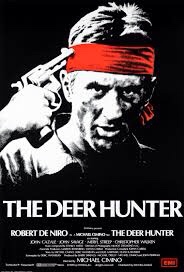
The Deer Hunter is arguably the greatest film ever made. And it was the only great movie that Michael Cimino directed.

But here’s another example: Orson Welles.

Citizen Kane IS unquestionably the greatest movie ever made. Now name another movie he made that had a similar impact? The Magnificent Ambersons? Touch of Evil? The Lady From Shanghai? Sure, they were good to VERY good. But were they Citizen Kane…or even Deer Hunter…great? Yet every cinephile would undoubtedly place Welles as one of the greats in film history.

And what about the niche directors…David Lynch, Paul Verhoeven, John Carpenter, Sergio Leone, and even Paul Schrader, etc etc? I’d argue that it’s these directors that have the greatest influence on younger audiences.

What about the directors that aren’t auteurs? Some operate more as “CEOs” in their craft. George Lucas is one of these guys. Ridley Scott is too (and Spielberg to some extent). My personal fav is John Sturges, who directed such bangers like The Magnificent Seven, The Great Escape, and Bad Day at Black Rock (a forgotten classic).

So I don’t know, the “two film” rule doesn’t seem to work (neither does the idea of a “canon”). It’s all too subjective.

As a side not, I didn’t mention very many European directors or auteurs of other nations. That’s obviously my American bias. Like it or not, cinema is the one (and only) contribution that the US has uniquely made to the arts. Nevertheless, these filmmakers deserve a shoutout. The Japanese, Korean, and Italian directors have a distinctiveness that I greatly appreciate and I regret not mentioning more of them. The Mexican film industry is criminally underrated. British directors, at least with their mainstream work, mimic their American counterparts. Tarkovsky, Costa-Garves, Wim Wenders Fellini, Herzog, and Pasolini are all incredible as well.

But the French New Wave sucked.

Assthetics

When it comes to the Star Trek vs Star Wars debate, I stand firmly on the Star Trek side (the Gene Roddenberry/Rick Berman era. Not the JJ Abrams/Alex Kurtzman era). I prefer my science fiction to be a bit more grounded. Star Wars, to me, is more Sci-fi/Fantasy.

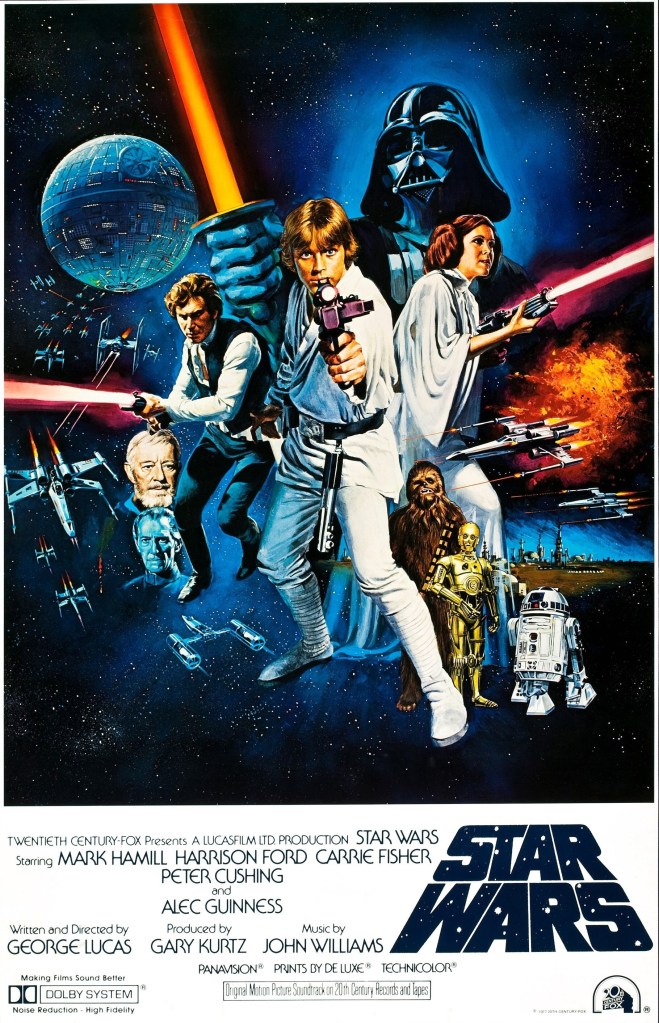
The success rate of Star Wars, in terms of quality per production, is well below 50% (Star Trek hovers at around 50%). If you think about it, there are really only TWO really good Star Wars films: Star Wars and Empire Strikes Back. The Mandalorian is alright, but it’s a bit too predictable. Nevertheless, I can appreciate George Lucas’ creation. Despite some of the terrible storytelling, when historians reflect on the artful impact of cinema, Star Wars will be to film what William Shakespeare was to the English language or Plato to philosophy.

Star Wars is so ubiquitous in modern culture that people don’t stop to appreciate how it really was a game changer. Watch a Hollywood film before 1977 and watch one after. You’ll see that film and pop culture entertainment was forever changed by it.

To be honest, I don’t think George Lucas’ screenplay (or direction) was that revolutionary. The revolutionary aspect was the production design, music, special effects, and editing (although I’d argue that the James Bond films were far more revolutionary in film editing). In this respect, Lucas was more of a CEO overseeing various departments in creating a lived-in universe. For Star Wars, the stories were always secondary. What grabbed everyone’s attention was the myths and scope: it was like watching an ancient epic being played out on the big screen in a way that films before weren’t able to capture.

So I don’t think that devout fans enjoy Star Wars because of their incredible stories and performances (unless they’re watching because of Harrison Ford). It’s purely an aesthetic experience. Make a Star Wars movie without storm troopers, Star Destroyers, light sabers, Boba Fetts, Jedis, Death Stars, etc. then you probably wouldn’t have a Star Wars movie.

You could make the argument that you can’t make a Star Trek movie/TV show without Starfleet. But fans of Trek have shown to be more open to bending its internal rules to further explore its universe.

But I don’t know dude, you like what you like.

But you know who my favorite Star Wars character is?

Admiral Piett

I hope he gets his own spin-off.

another shot @ the title (part vi)

“This proceeding has been a disgrace to the Los Angeles Superior Court, to the State of California, and to the justice system as a whole,” the judge ruled. “I have no choice but to rule in favor of the plaintiff. James ACHOO 🤧…excuse me, I sneezed…will get full credit for directing AND writing Like A Fart in the Wind. But do not count this as a victory James. With your reputation for belittling and suppressing governments and various newspapers around the globe, I deem you to be a menace to society. Unfortunately, this is a civil case and not a criminal one. But I have seen the final cut of this film. I am doing Dallas Howard Austin Antonio and Pee-Wee Weepee a favor for not giving them credit for this picture. I can’t think of anything worse than giving you, James, sole credit for this disaster.”

“Thank you for your ruling,” I said to the Judge. “But with all due respect, I believe you to be a bitch that wouldn’t know art if it bit her in the cunt. I believe this picture to be my finest work….far exceeding This Tastes Like Ass. Court stenographer, take note: Like a Fart in the Wind will be the greatest motion picture ever made. Thank you and good day.”

I walked outside the courtroom where Pablo greeted me with a cigar and bottle of brandy. “You were brilliant,” Pablo said. “With the attention that the case brought to the project, this movie is on pace for being the highest grossing film ever made.”

“Any publicity is good publicity,” I replied.

I lit up the cigar. “You know Pablo,” I continued, “I just want to thank you for bringing me back into the game. If I went on with retirement, I would have been dead in a year. Now I feel more alive than ever.”

Pablo cracked open the brandy and we began drinking at the courthouse. “James, you’re a rare talent,” he said. “After this film succeeds at the box office, I have the feeling that this will be the beginning of a beautiful partnership.”

We both patted each other on the back and shared a few laughs as we walked down the courthouse steps and into the beautiful California sunset.

****

From the Idaho Statesman

He Will Never Work in This Town Again“ says Steven Spielberg

By Dick Shaftsburg

“Hollywood is in a panic over the abysmal opening weekend of Like A Fart in a Windstorm. It grossed $1,500 against a $10 Billion budget.

Produced by Kathleen Kennedy of Trainwreck Productions, and directed by (name redacted due to ongoing legal disputes between the individual and the Idaho Statement. Henceforth, he will be referred to as the “Director”), the project was fraught with problems from the beginning…from various court cases to the death of its leading actor, Christian Bale.

Critics panned Like a Fart in a Windstorm from the beginning. Leonard Maltin stated that, “I’d rather have tweezers shoved up my pee hole than watch this shit again. Christian Bale deserved better.” Even Roger Ebert came back from the dead to ask, “Who was the leading character? Was it Christian Bale? Or was it his disgusting ass cheeks?”

After her firing from Trainwreck Productions, Kathleen Kennedy has become the first woman to have been exiled from the United States to Saskatchewan, Canada, often called the “hairy taint of North America.”

Meanwhile, the Director has gone missing. Given his obscene wealth, he’s likely in Namibia where Prime Minister Wesley Snipes has named him Finance and Defense Minister, as well as Attorney General.

Given the poor box office performance of Like a Fart in the Wind, it is unlikely the Director will return to Hollywood. In addition to his professional troubles, he is also under investigation by the EU, UN, and FBI for allegations regarding human trafficking, racketeering, and bribery of numerous foreign governments.

“If I had known that I was going to be in the same profession as him (the Director),” explained acclaimed Hollywood legend David Lynch, “I would have prostituted my asshole years ago.”

“He’s a disgrace,” said Martin Scorsese. “Just a total disaster, just like Shutter Island.”

THE END

another Shot at the Title (part v)

After Christian (Bale’s) funeral, I began lamenting some of my decisions at the production studio. “Maybe I shouldn’t have asked him to gain 150lbs,” I said.

“You’re one arrogant son of a bitch,” Jeffery Greco said.

“Don’t blame me for his death!” I replied. “Chris could’ve turned down the role!”

Kat was two sheets in the wind when she spoke up. “I’m finished in this town,” she said. “Because of you, I’ll never work again.”

“Lay off the sauce, Kat,” I said. “Now pour me a drink.”

“There’s no way we can release the film now,” Kat continued. “$7 billion down the toilet!”

“Now calm down!” I interrupted. “We’ll just have to do some reshoots. I’ll step in for Chris’s role. I’m an Academy Award-winning actor too, ya know?”

“Hold on there bucko,” Greco said. “There ain’t no way the studio will let you back on the set. Not after the lawsuit with Dallas and killing your leading man. That’s to say nothing about the numerous investigations into your international holdings!”

“If the film’s gonna be completed,” Kat said, “then your assistant, Pee-Wee, will finish production.”

“Well that Machiavellian son of a bitch,” I said. “I knew he had an ulterior motive.”

“Since we are 90% finished with filming, we’ll use CGI to complete Chris’s scenes,” explained Kat. “That will considerably jack up the budget, but we have no other choice.”

“Then I guess I’m fired,” I said as I stood up. “But I still want full credit for directing this picture.”

“Not happening,” Kat replied.

“Kat, you’ve crossed me for the last time,” I said. “I’m going to the Director’s Guild. If you want a court battle, you’ve got one sister!”

TO BE CONTINUED

Christian Bale (1974-2021) 😞

another shot at the title (part iiI)

This Tastes Like Ass is obviously a modern classic,” said Bryce Howard Dallas Antonio, the screenwriter, “but I think it lacks the nuances of some of the earlier postmodern classics from David Lynch and Martin Scorsese.”

Dallas showed up to the pre-production meetings wearing a tweed jacket, a derby, and a walking cane. I wanted to smash that cane right onto his dick.

Sets were going up. I had enough on my plate. But Dallas insisted on following me around.

“Do you like David Lean?” he asked.

“Yeah, he was hott.”

“What’s your biggest influence?”

“I don’t know. Alcohol?”

I was signing papers left and right. I was too busy to listen to this shit. After Dallas called Smokey and the Bandit the most overrated movie of the 70s, I grabbed him by the jacket.

“Listen here shitwad,” I said, “you’re right out of film school. You know who I am? Google my name. I may have diabetes, cirrhosis of the liver, and a venereal disease that doesn’t have a name, but I can still kick your ass. So listen to my advice grasshopper, watch your ass!”

The executive in charge of production, Jimmy Greco, saw what was happening and rushed out of his office. He waddled his fat, Jerry Stiller-lookin ass right up to my face. “You can’t touch the screenwriter!” he screamed. “That’s against WGA rules!”

He then straightened out Dallas’ jacket and ran a hand through his hair. Afterwards, he pointed his finger at me. “Listen here buster,” Jimmy said, “if you pull a stunt like that again, I’ll have your ass!”

“Oh you want my ass?” I replied. I dropped my pants. “You want my cock too?” I turned around and started twirling my penis.

“You’re a fool,” Jimmy said.

“I’M the fool? The only fool here is that idiot screenwriter!”

Jimmy escorted Dallas away. The cast and crew stood around gawking.

“Everyone back to work!” I yelled and pulled up my pants.

I took out a cigarette and walked up to Pablo. “Take it easy, James,” he said.

I lit up the cigarette. “How did the contract negotiations go?” I asked.

“Great!” Pablo replied. “You’ll be pleased to know that you’ll move up the billionaire’s list.”

“I’m a billionaire?”

“James, you’re one of the richest men in the world. You have real estate holdings all across the globe. You even own the deed to the Kremlin for fuck’s sake!”

“Isn’t that a bar in Tallahassee?”

***

I was having brunch with Brett Ratner when Kat slapped down a newspaper. The article read “NOTORIOUS FILM DIRECTOR EXPOSES PENIS…AND ASS…TO CAST AND CREW.”

I looked up to Kat and she began speaking in a monotonous, scripted voice. “The board wanted me to tell you that if you do that again, they will remove you from the project. Please be more considerate of the crew,” she said.

She never made eye contact.

“Kat,” I replied, “as you know, I run my sets a little differently. Besides, per our agreement, I was allowed to change the script so that the entire jury would be nude throughout production. Bare cock will be all over the set. What difference does one more make?”

“This is the position of the board and the production team,” she said, still refusing to make eye contact.

I shrugged. “Very well, will that be all?”

“That is all,” Kat replied and began walking away. Then she stopped. “There is one other thing…”

She turned around and looked me in the eye.

“We are already running over budget,” she continued. “We are having trouble securing funds from the European market. Would you be considerate enough to loan $900,000,000 to help cover pre-production costs?”

I thought for a moment.

“Sure I’d be happy to give you nearly a billion dollars,” I said. “But in return, I want to make more changes to the script.”

TO BE CONTINUED