
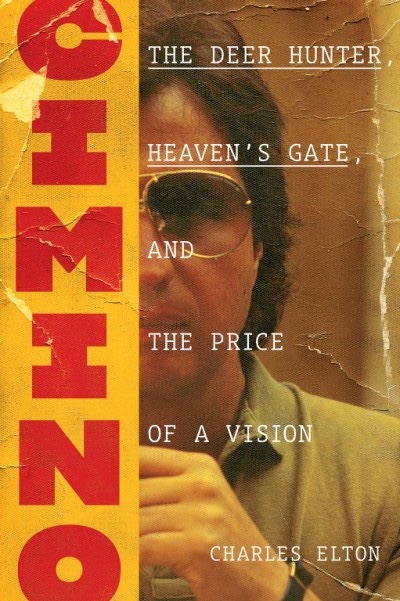
I finally found something that sheds some light on the screenplay The Man Who Came to Play, which was later repurposed into The Deer Hunter. Apparently it was a light-hearted buddy comedy, according to Charles Elton, author of Cimino: The Deer Hunter, Heaven’s Gate, and the Price of a Vision. Can you imagine if THAT movie got made? I’ve always thought that Russian Roulette was a barrel full of laughs. Fortunately the only thing from that script that made into The Deer Hunter was the element of Russian Roulette. The entire thing was re-written by Cimino and Deric Washburn because Cimino never saw a screenplay that he didn’t want to completely rewrite. This was partially the reason why he was later fired from Footloose.
I respect the hell out of Cimino. He was certifiably insane and one of the greatest bullshit artists to have ever lived. After watching him address the crowd at Locarno Film Festival, I suddenly had the courage to go with my instincts and never apologize. It was the most insane appearance I have ever seen. Charles Elton obviously felt the same way. In his biography of Cimino, Elton was a frequent apologist for the director’s genius and often blamed studio producers for his failures, including Steven Bach, one of the many studio executives for Heaven’s Gate who later wrote The Final Cut which has, more or less, become the official history for the making of that movie.
In defense of Elton, he is partially correct. Heaven’s Gate wasn’t the only big budget auteur-driven film to have bombed around that time. William Friedkin’s Sorcerer and Francis Ford Coppola’s One From the Heart are two notable examples. The film industry was changing towards the direction of crowd-friendly features, probably thanks to the success of Star Wars and Jaws, and Cimino was the scapegoat for why creative control was wrestled away from directors.
But Cimino didn’t help himself. At no point while reading Elton’s book did I feel sorry for the auteur. My admiration for Cimino never diminished, but…at least according to Elton’s telling…he was so shut off from reality that he was only able to come to his senses after it was too late. Cimino even admitted that he simply couldn’t get along with middle management, which is a sentiment that I can relate to, but in the case of Heaven’s Gate, perhaps he needed to dial it back a bit. The picture simply isn’t good, regardless of what contemporary European critics might argue. It is bloated and self-indulgent and probably could have benefited from studio interference…during production, at least…to tighten it up. But as it stands today, Heaven’s Gate stands as the most notorious reminder of unbridled artistic genius run amok, even though Cimino wasn’t the first (or last) to be guilty of this crime.



 The Internet Ruined Everything