the “2-film” rule

So I was listening to some podcast while huffing glue and the two hosts introduced an interesting concept: if a film director makes two unquestionably great movies, then they belong in the canon of great directors.

It seemed like a sound enough argument. I’ve said it once and I’ll say it a hundred more times: it is extraordinarily difficult to make ONE good film. If a filmmaker can make one good movie, then replicate that impact in a subsequent film, then it’s obvious that the director knows what he/she is doing.

But the more you think about it, you come across some problems: specifically what it means to be “great”, or even a “Director”. Because if this criterion were true, then we find that a few questionable directors would belong in this canon.

Some examples:

Jonathan Demme (Silence of the Lambs, Philadelphia, Stop Making Sense)

John McTiernan (Predator, Die Hard, Hunt For Red October)

George Lucas (Star Wars, American Graffiti, THX-1138)

Ridley Scott (Alien, Blade Runner, Gladiator)

Robert Aldrich (Kiss Me Deadly, What Ever Happened to Baby Jane?, The Dirty Dozen)

William Friedkin (The French Connection, The Exorcist, Sorcerer)

Etc, etc, etc

While there are a bunch of notable films on those director’s resumes, would any of those directors be considered “great”? (IMHO, I would say “yes” for Friedkin, Aldrich, and McTiernan. “No” for the others.)

A “three film” criteria would fix this: Ford, Hitchcock, Wilder, Lean, Kubrick, Kurosawa, Coppola, Scorsese, Tarantino, and Spielberg would easily hurdle this barrier. But what about directors that made ONE unquestionably great film?

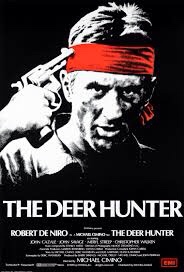
The Deer Hunter is arguably the greatest film ever made. And it was the only great movie that Michael Cimino directed.

But here’s another example: Orson Welles.

Citizen Kane IS unquestionably the greatest movie ever made. Now name another movie he made that had a similar impact? The Magnificent Ambersons? Touch of Evil? The Lady From Shanghai? Sure, they were good to VERY good. But were they Citizen Kane…or even Deer Hunter…great? Yet every cinephile would undoubtedly place Welles as one of the greats in film history.

And what about the niche directors…David Lynch, Paul Verhoeven, John Carpenter, Sergio Leone, and even Paul Schrader, etc etc? I’d argue that it’s these directors that have the greatest influence on younger audiences.

What about the directors that aren’t auteurs? Some operate more as “CEOs” in their craft. George Lucas is one of these guys. Ridley Scott is too (and Spielberg to some extent). My personal fav is John Sturges, who directed such bangers like The Magnificent Seven, The Great Escape, and Bad Day at Black Rock (a forgotten classic).

So I don’t know, the “two film” rule doesn’t seem to work (neither does the idea of a “canon”). It’s all too subjective.

As a side not, I didn’t mention very many European directors or auteurs of other nations. That’s obviously my American bias. Like it or not, cinema is the one (and only) contribution that the US has uniquely made to the arts. Nevertheless, these filmmakers deserve a shoutout. The Japanese, Korean, and Italian directors have a distinctiveness that I greatly appreciate and I regret not mentioning more of them. The Mexican film industry is criminally underrated. British directors, at least with their mainstream work, mimic their American counterparts. Tarkovsky, Costa-Garves, Wim Wenders Fellini, Herzog, and Pasolini are all incredible as well.

But the French New Wave sucked.

“Layer Cake”: Britain’s finest hour

Before his James Bond got blown to shit on some rooftop on a Japanese island in No Time To Die (sPoIlEr AlErT!), Daniel Craig was in what is perhaps the greatest British film ever made: Layer Cake.

While every actor (except Tom Hardy) acts their ass off and every line of dialogue is an absolute banger, the film is perhaps best known as a turning point in film history: introducing the world to Daniel Craig’s god-like body.

Daniel Craig was blessed with being able to make whatever he’s wearing look like it was tailored specifically for him. He spends much of the film wearing the same plain gray raglan t-shirt with Levi’s…an outfit that probably costs $50 total, but it looks like he’s modeling Brioni.

I couldn’t pull off that look. I tried.

Another thing Craig succeeds at is showing his “sex” gaze:

Sorry, this is the best screenshot I could find.

Not to toot my own horn, but I’m happily married now because I mastered that gaze. Now personally, I like to use the Sean Connery method of tilting my head forward, arching an eyebrow, and smiling with my eyes. But every man has to master the “sex” gaze, to knock em dead with one look, if they want to be successful with the ladies (or the fellas).

That haircut is pretty good too. It’s definitely a 60’s style throwback, echoing the aforementioned Sean Connery and his toupee during his James Bond tenure. Unfortunately I’m a balding man, have been since I was 13, so I was never able to pull off that style. But because I’m balding, I’m sort of an expert at spotting hair plugs. And Craig, in my humble opinion, probably has hair plugs. That being said, I’d pay good money to find out who his specialist is.

Another thing on Craig’s style is that pimpin purplish/maroon jacket he wears to start the film:

I’m just gonna go ahead and say it: no man has ever looked as good on film as Daniel Craig did in Layer Cake.

“We get it, you’re in love with Daniel Craig. But what about the film?”

Oh yeah, the film’s good too.

Another shot at the title (part I)

“Get the fuck out of my house,” I told Pablo.

“At least read the script!” he replied.

“Pablo, I have everything I want. I’m happily married to a Vietnamese hooker I met in Van Nuys. I’ve got a son and a house in the hills. I’ve got more money than god thanks to This Taste Like Ass. I’m done with Hollywood. Fuck Kathleen, fuck the studios. I’m retired.”

Pablo shook his head and looked down at his beer. “You know what they say about you?” he asked. “They say you’re a one-hit wonder. That you got lucky with This Tastes Like Ass, and lightening doesn’t strike twice.”

“And they’re right!” I replied.

“I can’t believe I’m hearing this,” Pablo said. “I remember when I first read your script years ago. I said ‘this guy is going places’ and I thought it was a privilege to represent you.”

He stood up and looked at my three Oscars mounted proudly behind a glass case. “When we first met, you told me that the worst fate someone could have in this town is to have a career like Michael Cimino,” Pablo continued. Then he turned around and looked me in the eye. “Do what Cimino couldn’t do. Prove Hollywood wrong: make another great film.”

I looked away. “Like I said: I’m retired,” I replied.

Pablo stood up straight and laid the script down on the coffee table. “I’ll leave this here with you,” he said then showed himself out the door.

I picked up the script.

Like a Fart in a Windstorm by Dallas Austin Antonio,” it read.

***

Later that night, my son put on a film streaming on Amazonian Prime. I don’t remember what it was called. “Big Gay Ted’s Excellent Adventure,” or something. I was too drunk to care.

But my blood began to boil during the sex scenes. The action was not much better. Finally I had enough and in a drunken rage, I slammed my foot into the TV.

“What the fuck is this shit?!” I yelled.

“Dad you’re drunk! Go to bed!” my son, Slick Rick, said.

“Fuck you asshole! My creativity built this house! I own Hollywood! Back in my day, we showed rock hard cock, full frontal nudity, and absurdly graphic violence! Not this pussy shit! No tits, no penis? Why is there a plot? We never cared about that crap! What happened to kids these days!?Hollywood just ain’t the same anymore Slick Rick, I’m tellin ya.”

“Dad, you need to get a hobby,” he replied.

I sat down next to Rick and patted him on the knee. “You’re a good son,” I said. “Now go help your mother.”

I then wrapped my bottle of Evan Williams in a paper bag and began wondering the streets Laurel Canyon.

The next morning, when I woke up in my neighbor’s backyard, I began to ponder Pablo’s words. I took out my cellphone and called him up.

“James, where the hell have you been?” he said. “Your wife’s been frantically calling me, wondering if I knew where you were!”

“Nevermind that,” I replied. “Get me a meeting with Kathleen Kennedy (not THAT Kathleen Kennedy, the other one).”

“So you read the script?” Pablo asked.

“Yes, I took your advice. We’re back in business.”

TO BE CONTINUED

leadership

As you know, I have nothing but regrets.

I’m reaching that age where some of my superiors are younger than me. I don’t begrudge them. They all deserves their spots. Some older guys I work with don’t appreciate that they got passed over, but I think it’s our responsibility…as the “elders”…to bestow upon the younger generation what wisdom we have learned (in my case, what little wisdoms I have learned).

I don’t know if this is a regret I have, it’s more like a big “what if”. I spent some time in the military. Even did three years of ROTC in college. It’s laughable to think I could have been an officer now, but it almost happened (before I realized that I loved drinking WAY more than I loved the military). Despite the abysmal failure of that endeavor, a few lessons stuck with me.

“Just make a decision,” I’d always hear, “don’t worry about if it’s the correct one.” I thought that was stupid advice at the time, especially in a military situation where people’s lives might depend on it. But it seems to make a little more sense now.

Who are the three greatest military commanders of all time? It’s obvious: Captain Kirk, Captain Picard, and Captain Sisko.

The three guys in the middle

“But they aren’t real,” you might say.

So? Real life isn’t real.

I remember Mike Stoklasa praising Bill Shatner’s acting capabilities (in a video discussing Shatner’s hatred of Mike Stoklasa). You can laugh all you want, but it’s true: Shatner is an extraordinarily effective actor. And, for better or worse, Captain Kirk is Bill Shatner and Bill Shatner is Captain Kirk.

Kirk understands that he is playing a part as Captain of the Enterprise. He has to project confidence as its leader because the survival of his ship might depend on it. Shatner, I think, understands that Kirk himself is playing a part, which might explain some of the strange speech patterns he exhibits throughout the series and films.

That’s why I think it’s great that the handlers of Star Trek (at least back then) cast classically trained thespians for the role of the Captain. Just the ability to “play the role” is necessary for the crew to rally behind, even when the leader isn’t completely confident in his (or her) decisions.

Obviously Picard is the superior Captain. No disrespect to Shatner, but Patrick Stewart knows when to dial up the acting and when to hold back (even if, in my belief, Stewart didn’t completely understand the appeal of his character or Star Trek). But what Picard does better than anyone is embrace his mission: “explore strange new worlds”. He seeks out moral quandaries and mysteries because he understands that these hold the secrets of the universe. He’s an explorer but not in the usual sense of the term.

I think to be a leader, one has to be open to that sort of exploration.

Of course, Sisko was far more grounded than either Kirk or Picard. He had a life outside of Starfleet and his job was to navigate the political complexities of a particular section of the galaxy. While Kirk and Picard were explorers, Sisko’s mission was different: he was an ambassador attempting to bring together warring factions. But just like everyone else, he had to “play the part.”

“But those were actors that had scripts,” you might say. “Real life doesn’t have a script.”

True that, but if you understand the more technical aspects of your work, in a sense you kinda already do have a script. You can’t just willy nilly your way through a job, you are confined and in many aspects you have direction. It’s just making the best decision with the options you have.

So I think it’s interesting that the three best Captains in Star Trek history each explore the three most important aspects of leadership: confidence (or the projection of), eagerness to accept challenges, and being the middle man between conflicting parties. But most importantly, “just play the part.”

hire me plz

I’ve always said that my dream job is to be a television writer for some dumb, formulaic show on basic cable.

This is because I’m not only lazy, but I’m also intrigued by entertainment that wants to have it both ways: it wants to display violence in a gritty, realistic manner while simultaneously ignoring the consequences. An example is SEAL Team and SWAT.

I find these shows delightful: many people die, friends get killed or mangled, yet every episode ends with the cast laughing over drinks or in despair over a romantic relationship. It’s completely hypocritical, it wants to show real violence while also numbing us from the true horror of it all.

It’s hilarious.

But all of these programs have identical story beats: the team (SEAL or SWAT) causes disruption, a male lead is banging a female superior, the superior’s superior rips into her, the team is given an imperative to fix the issue, moral quandary ensues, some people die, the day is saved, the team slaps each other on the back, the female superior informs the male lead that their relationship can’t continue, male lead is sad, executive producer credit is shown. (Sometimes there’s a “B” story featuring a secondary character, but no one gives a shit)

These stories can be written sitting on the toilet. And I spend A LOT of time on the toilet.

So CBS, give me a call.

😎Midsommar 😎

I like to talk about movies that people usually know but have somewhat forgotten about.

That being said, Midsommar is relatively recent and probably still discussed.

Oh well 🤷‍♂️

I’m not really a horror fan, so I haven’t seen Hereditary, Ari Aster’s other film. But Midsommar caught my attention because someone mentioned that it was a horror film that lacked any of the tropes found in such movies.

People aren’t as big of a fan of Midsommar as they are of Hereditary. Was Hereditary really that good?

Many have said that the subtext of this movie is dissolution of the relationship between the two leads. If that was the case, then I hardly noticed (or cared). For me, what was terrifying about the movie was how it kinda reminded me of Salo: Or the 120 Days of Sodom, albeit far more emotionally engaging. In fact, if Midsommer is a “horror” film, then Salo is as well.

But Aster uses the “horror” elements wisely. Much of the film is actually pleasant to look at: pleasant locations, pleasant faces. Naturally, this pleasantness is used to lower your guard.

Except for one dream sequence, all of the horror takes place during the day. The most noted example is the suicide scene with the two elderly people. If you watch a lot of movies, you’ve definitely seen gorier shit, but this one hits different. It’s a beautiful scene juxtaposed against two old people getting their faces smashed in. Additionally, for the two groups present for this ritual, one finds the scene beautiful while the other is utterly horrified.

And it happens relatively late in the film, long after you get adapted to the tone. Usually horror films do something like that early, just to tell the audience what it’s capable of.

Many have discussed why this movie is terrifying, and none of it works as an explanation for me. The most common is “it’s an American perspective on a foreign culture and how we find them terrifying “ blah blah blah. That never once occurred to me. What I found terrifying is the passiveness of the characters and the bullshit myths that the cult had to justify itself.

And the film does call bullshit on it (some guy argued that the film has a neutral take on the cult, which is partly why some find it scary. But that’s definitely not true).

Case in point is in the euthanasia scene, after the old man jumps off the cliff, breaks his leg, and lays there in pain. After the scene, the male lead tries to justify it by saying something like the “community might find our methods of elderly care barbaric”, but that old man met a truly barbaric end (his face later gets smashed in). I’d take a nursing home any day of the week.

The other example is at the end when the temple gets set on fire. Two members of the cult volunteer for the burning and are given a drug so that they won’t feel the pain of burning. However, one guy watches his friend, the last image he’ll ever see, scream in horror as he burns alive! All the drugs and nonsense clearly did him no good.

So to me, this film was kinda a commentary on the cult mindset and how people can be persuaded to do unusual things in the name of nonsense (and a lot of drugs). OR how people use these rituals to mask truly horrific things. That explains Florence Pugh’s smile at the end: she was an emotionally unbalanced person that’s suddenly found her place.

To me, the most terrifying thing was the brief moment when the male lead opens his eyes and sees a smiling face telling him that he is drugged, can’t move, can’t talk, and that’s that. Bye!

But what this film also does effectively is give you a solid sense of geography. You get used to the nice setting and that’s when bad things start happening. It plays out like a dream that suddenly turns into a helpless nightmare. Just as in a dream, the actors don’t know what’s going on but they play along nonetheless.

Ideology works the same way.

bill friedkin

The career of William Friedkin is a reminder of how hard it is to make a good film.

He hit two films out of the fuckin park with The French Connection and The Exorcist then kinda floundered from there (he did have a few notable films afterwards, namely Sorcerer and To Live and Die in LA, the latter of which I haven’t seen).

Sure Friedkin won his accolades here and there, but he is truly the maestro of one specific thing: directing car chases.

Everyone remembers Gene Hackman just plowing through cars and walls while Friedkin neglected to obtain permits to film such a thing in the French Connection (and apparently there’s a good chase sequence in To Live and Die in LA), but Friedkin’s crowning achievement, in my view, is in Jade.

Before David Caruso was spitting out one liners while rocking a pair of sunglasses in CSI: Miami, he tried his hand at being a film star. Jade was the absolute highlight of this period.

In the film, after Angie Everhart gets totally destroyed by a Ford Thunderbird, Caruso pursuits the vehicle in his POS Ford during a delightful chase where vehicles fly through the air down the streets of San Francisco (and Caruso does his best Gene Hackman impersonation).

The best part is when the chase goes through some parade and pedestrians attack the vehicles using martial arts. I guess that would make sense if you learn about other cultures while binging on cocaine.

Take a look:

light sleeper

On the Mount Rushmore of cokeheads, Paul Schrader is between Dennis Hopper and Phil Specter (along with Stevie Nicks of course). Which is why I was excited to see Light Sleeper available to watch on Amazon Prime.

It’s definitely not a perfect film. Willem Dafoe plays an aging drug delivery boy employed by Susan Sarandon who runs into an ex flame which leads him to shoot up a hotel room (we’ve all been there). It’s a movie that should have been fleshed out more. The climax (the shooting up of a hotel room) didn’t quite pay off, and the sudden romantic interest between Sarandon and Dafoe in the end was odd, but there’s a lot of other things going for the film.

The sanitation strike, which played in the background and was often juxtaposed against the high class NYC lifestyle, was a nice touch. But the desperation of Dafoe’s character is absolutely heartbreaking.

I get what that’s about.

Dafoe is aimless. He wanted to be an actor, model, musician, and writer. His best years were spent strung out on drugs. Now he’s 40 and lacks focus.

Subtlety, Sarandon is in a similar position. She plays the boss but she knows the gravy train is about to leave the station. She thinks she’s some NYC hotshot, but by looking at her shitty apartment, she’s probably on the outside looking in.

Now that I type that out, suddenly Dafoe and Sarandon’s abrupt romantic interest becomes apparent: they’re both losers and now they have to settle for each other.

The soundtrack is incredible, for both good and bad reasons. The music itself is great. Where it goes off the rails is the damn singing. The visuals are powerful enough that you don’t need to be told how Dafoe’s character is feeling. Anybody could have written those lyrics. For example (in the style mimicking Bruce Springsteen):

I am walking down the street at night

I run into my ex girlfriend

We get into a little fight

I feel so sad that I just might

Stalk her at her mom’s funeral

Then she gets sad as well

Then we reconnect and start to kiss

She complements my erection

Then she tells me that she’s sopping wet

So we fuck all night then tells me to leave

Then I find out she’s back on drugs

Then she jumps out a window to her death

So I buy a gun from Puerto Rican man

Then I ride in limo with Susan Sarandon

Then I shoot up a hotel room

(Lyrics by Michael Been)

Despite all of that, this is a nice forgotten gem from the mind of Paul Schrader.

earthquake with charlton Heston

Los Angeles in the 1970s was a magical time. Actors quit caring about their physique. Producers were blasting cocaine into their brains. George Kennedy was a star. It’s a time that’s never been topped and it never will be.

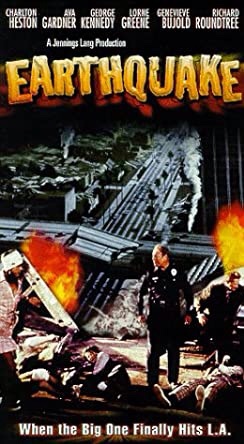
Out of this era came Earthquake (1974) starring Charlton Heston and a bunch of actors in need of a paycheck (and co-written by Mario Puzo).

As disaster films go, there’s a long buildup to the “disaster”: Heston is bangin Genevieve Bujold, George Kennedy is an absolute asshole, Walter Matthau is a pimp drunk, and so on. It’s all standard stuff. Then comes the 4 hour earthquake where cardboard houses crumble and the people of LA forget how to handle such an event as they fall several stories out of high rises to their violent deaths. It’s delightful.

My only complaint about this sequence is that they didn’t do enough with Richard Roundtree’s part as a daredevil. It would have been pimp if he CRUSHED that obstacle course on his motorbike while buildings crumbled and people died all around him. Oh well.

Honestly, there’s a few good matte paintings here and there. But the standout is Marjoe Gortner’s performance as the sexually confused grocer/wannabe karate instructor/National Guardsman. It’s a performance that was ahead of its time.

The ending is good too: the city is in ruins and none of the personal drama gets resolved (of course, I was barely paying attention at this point).

I think this film provides a good insight into an era where Hollywood quit giving a shit, just as long as everyone made a fuck ton of money.