Diamonds r 4eva commentary (part XII)

There comes a point in every Bond movie where one tends to forget the plot and just sits back and enjoys the action. For me, and perhaps for many others, that moment comes at the arrival in Los Angeles. But if it doesn’t come there then it DEFINITELY comes during the Circus Circus sequence. And as a result, to my knowledge, I don’t think anyone has ever questioned the logic of this scene.

To set it up, after Plenty O’Toole is dispensed with, Tiffany seduces Bond into giving up the diamonds by convincing him that she’ll run off with him to Hong Kong. Bond plays along with this deception by instructing her to pick up the diamonds at Circus Circus, a major hotel and casino. To make any sort of sense in what follows, here’s what I think the plan was (which is never explicitly stated): Bond, a British Intelligence agent, was operating on US soil. For a foreign agent to legally do that, they must do so under the supervision of American intelligence which, in the case here, is the CIA and Felix Leiter. The rendezvous at Circus Circus was the contact point where Bond was to turn over the operation to Felix with Bond acting as a fail safe option should the CIA lose track of Tiffany Case by meeting her at the car rental agency. But Bond plainly stated that this is a 50/50 shot which explains why he was on Felix’s ass; if the CIA lost track of her, there was no guarantee that Bond would catch up with her. So when the inevitable happened and the Felix lost track of her and she subsequently failed to show up at the car rental agency, Bond took a blind guess and found her at her house.

If this is the case then the CIA did a piss poor job. Why would they make it painfully obvious to Tiffany Case that she was being followed? Was the plan to follow her or apprehend her? To my reasoning, it had to of been the latter in order to get her to cooperate with Bond in the British intelligence investigation. In that case, why not apprehended her immediately after she collected the diamonds? Did the CIA not want to make a scene?

I know what Cubby Broccoli’s response is: who gives a shit?

This is what they call in the biz “movie magic” where we don’t have to worry about things like “realism” or “plot”. We just have to shut our brains off and enjoy the spectacle.

And what a spectacle it is! Within the stretch of just over four minutes, we’re exposed to trapeze artists, elephants playing slot machines, human women transforming into gorillas, and even a cameo by the owner of Circus Circus himself as a mad scientist. It’s no wonder we lose track of the plot! This scene isn’t so much a part of a movie as it is an advertisement for the Circus Circus Hotel and Casino.

But there’s two moments I’d like to highlight. First is the moment where Tiffany collects the diamonds hidden in a stuffed animal. While at the blackjack table, she’s instructed to play the water balloons. She wins the “prize” (the diamonds) and a kid correctly calls out that the game was rigged. Tiffany tells the kid to “blow up his pants”, which is a line that could have only been written by Mankiewicz. To be honest, I’ve seen this movie more times than I care to admit but each time I think she’s gonna say “fart out your ass kid!”.

That’s all I got to say about that.

The second moment is when Tiffany realizes she’s being followed and enters the “Zambora” exhibit to elude her pursuers. An announcer explains “Zambora” as the “strangest woman ever born to live” which seems like a redundant statement.

But anyway! Back to the plot…

TO BE CONTINUED…
Diamonds r 4eva (part XI)

Perhaps you wouldn’t believe me if I told you, but Diamonds Are Forever is one of the few movies where James Bond shags ONE woman only. It’s true. I’ve done the math. After years of research, I’ve concluded that Bond has bedded with absolute unambiguity 56 women across 25 films. This comes to exactly 2.24 women per film, meaning that DAF is well below the average. In fact, we don’t see these low of numbers again until Casino Royale and Quantum of Solace. Did you know THAT? Yes, in CR, Bond only has coitus with Vesper. He came close with Solange, but if you recall, that attempt was cut short by a trip to Miami. And in QoS, Bond only sleeps with Strawberry Fields and NOT the female lead Camille. Again, Diamonds Are Forever was ahead of its time. People THINK that prior to Daniel Craig, Timothy Dalton was the first to only sleep with one woman in The Living Daylights in 1987 (as a way to put a cap on 007’s promiscuity in a response to the AIDS epidemic). But this is a false assumption: in TLD, Bond DEFINITELY has sex with a bikini-clad woman on a yacht in the cold open IN ADDITION to sleeping with Maryam d’Abo’s Kara, meaning that Bond slept with TWO women in TLD which puts that film only slightly below the average.

The numbers don’t lie, folks.

Yet it seems like Bond is just as promiscuous as we have come to expect in Diamonds Are Forever. Why is that?

I think it’s for a few reasons: 1) it’s clearly the 1970s, the most disgusting and shameless decade in human history. 2) Bond interacts with a total of four bikini-clad women throughout the film, two of which kick the shit out of him. 3) Plenty O’Toole. 4) Bond is shown rolling around and implied naked TWICE in bed with a woman.

On the first point, there’s something scummy about the 1970s that give the impression that Bond is out raw-dogging every woman he comes across in Las Vegas (and perhaps he is, but it’s never shown on film). On the second point, while I haven’t ran the numbers on the amount of bikini clad women per film (if I had to guess, YOLT blows this average out of the water), it seems like DAF is a bit above the average. Astute observers of the third point will recall that Bond doesn’t actually sleep with Plenty O’Toole. And on the final point, while showing Bond shirtless and in bed with a woman TWICE is actually slightly above average for a Bond film, in DAF, both times it is with Tiffany Case.

Now let me drop another truth bomb: since we’re at the point in the story where Bond links back up with Tiffany in Las Vegas, he is seen briefly holding his signature Walther PPK. It’s one of the few moments in DAF where he does so. And throughout the film, Bond NEVER kills someone by firing a bullet and, indeed, never fires a bullet at all. I will admit my research may be a little fuzzy, but I will assert that this is the only film where this occurs.

Don’t believe me? Let’s break down the numbers shall we. According to my estimation, James Bond kills 8 people in DAF. Their methods of death are as follows:

2 by drowning. 1 by repeated stabbing. 1 by thrown off balcony. 1 shot in the head by grappling hook. 1 by aquatic vehicle bodily trauma (presumably). 1 by fire. 1 by explosion.

Total: 8 deaths.

If you will note, one individual is shot in the head. HOWEVER, Bond does not do this using a traditional gun but a GRAPPLING gun. That’s a huge distinction. It should also be noted that Blofeld’s final death could be disputed. We don’t actually see him perish and if you recall the cold open to For Your Eyes Only, Blofeld reappears badly injured only to meet his actual death by falling into a smokestack (is FYEO the direct sequel to DAF? You be the judge). This would be James Bond’s actual death toll in DAF down to 7.

For as much flack as DAF receives, it could be argued that this is where James Bond is at his most humane.

TO BE CONTINUED…

Diamonds r 4eva (part x)

I wish the bathtub scene was cut. It would have been far more effective had James Bond waltzed out of the funeral home announcing he would be at the hotel Tropicana, Mr. Slumber slamming the coffin cover closed, THEN cut to that glorious matte painting of the Whyte House elevated by John Barry’s bombastic score. That would have been amazing. Instead we’re saddled with a brief exposition scene of Bond explaining to Leiter that he needs the real diamonds. Something about this scene seems superfluous. It’s already established that the smuggled diamonds are fake and it would be obvious that the bad guys would be after the real ones. Were they trying to establish who had the real diamonds at this point of the story? Who gives a shit? That would have been established minutes later anyway in the Circus Circus sequence.

Nevertheless Bond visits the Whyte House, a fictional hotel and casino owned by Willard Whyte. He walks past the comedian who saved him from a fiery death and he’s giving a show. The comedian’s name is Shady Tree and he’s flanked on both sides by scantily clad women played by Cassandra Peterson (of Elvira fame) and Academy Award nominated actress Valerie Perrine. Also in attendance is Mr. Wint and Mr. Kidd. The jokes are godawful.

After the performance, Mr. Wint and Mr. Kidd visit Shady Tree in his dressing room and kill him (off screen). Afterwards, the casino manager Bert Saxby informs the two henchmen that they need to keep Shady Tree alive much to their chagrin. Bond ventures backstage to find the comedian’s lifeless body on the floor.

Unbothered by this, Bond decides to shoot some craps. The mumbling dealer objects to Bond raising the table limit and calls over Bert Saxby. 007 flashes an envelope from Morton Slumber’s Funeral Home, indicating that he’s the man with the real diamonds. Saxby agrees to raise the limit and a woman thrusts herself onto James Bond. Her name is Plenty O’Toole (“named after your father perhaps?”) and she’s played by Natalie Wood’s sister, Lana. The two naturally go back to his room for a boink fest (as the actors did in real life) but it is interrupted by the mobsters we met in LA. It is here where we’re exposed to the best double entendre in the entire series: a mostly naked Plenty steps away to the bathroom, Bond picks up her dress, flicks on a light and is greeted by a mobster with a gun. Bond responds with “It seems you caught me with more than my hands up.” Whatever Tom Mankiewicz got paid for this picture, it wasn’t enough.

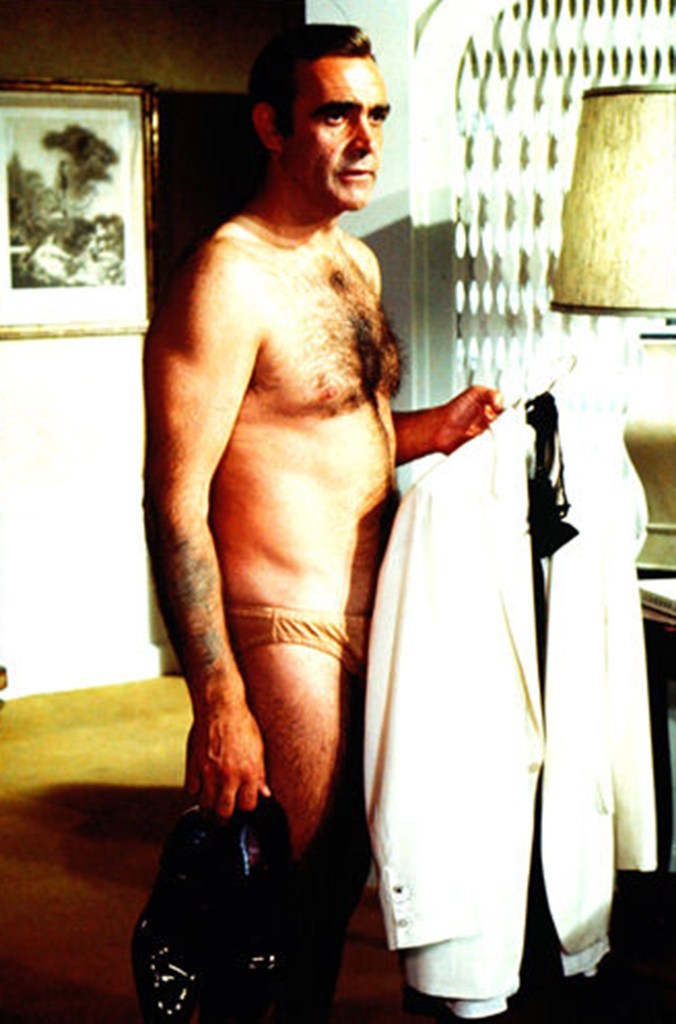
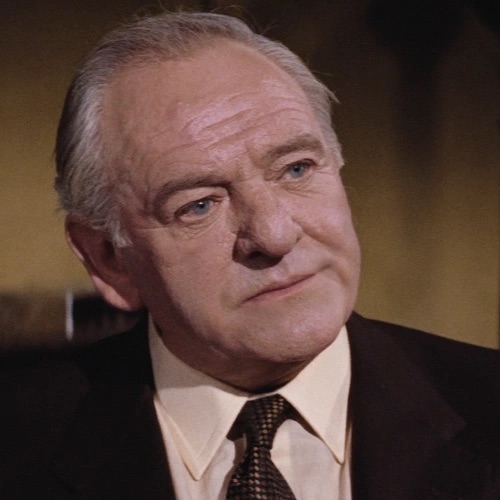
Plenty, only in her underwear, gets dumped out a window and into a pool. Bond attacks a mobster but quickly realizes they’re not there to fight. They meekly retreat from the hotel room and Bond finds Tiffany Case in his bed. Naturally she’s there for the real diamonds, a fact she doesn’t deny, but to make it worth his while he begins undressing. I’ve said time and time again that while I immensely enjoy watching Daniel Craig’s ripped body, I wish that they would go back to the dad bod era of James Bond best exhibited here:

TO BE CONTINUED…

Diamonds r 4ev a: written commentary (part ix)

What happens next, Guy Hamilton calls a “snake pit” situation (or some shit like that): Bond finds himself in inescapable position and has to use his wits to get out of it. The most notable example of this is the “laser” situation in Goldfinger, also directed by Hamilton. I suppose that the “alligator jumping” sequence in Live And Let Die also counts. In Diamonds Are Forever, the snake pit situation is being burned alive in a coffin.

Arguably this is the most pants-shitting position anyone could find themselves in: after Bond deposits the diamonds in the mausoleum, he is knocked out cold and placed into a coffin to be incinerated. All things considered, Bond responds to this predicament fairly cooly. He doesn’t panic; his only move is an attempt to open the coffin. But right when you think it’s the end, Bond is rescued by Mr. Slumber and a pissed off comedian. “You dirty double-crossing limey fink!” the aged comedian yells, “your goddamn diamonds are phonies!”

Bond responds in the only sensible manner: “let me guess. You’re St. Peter?”

It’s a good exchange. To paraphrase Guy Hamilton, it’s a lovely bit of nonsense. But Bond gets out of this predicament by a switcheroo that wasn’t established to the audience: the diamonds that were shoved up Peter Franks’ ass were fake. We’re not told that until AFTER Bond escapes a fiery death. The more you think about it, it’s only by luck that Bond gets out of this alive, therefore making this the weakest of the “snake pit” situations directed by Guy Hamilton.

In the other two examples, Bond had to outthink his situation. In Goldfinger, he had to bluff. In Live And Let Die, 007 had to do one of the coolest stunts ever. In Diamonds Are Forever, it is by luck that Morton Slumber and the comedian discover that the diamonds are fake in time to stop the burning. Though he escaped by the skin of his teeth, Bond thinks on his feet: with thousands of dollars in his pocket, he knows they wouldn’t burn him up if the money was real. “Bring me the real money, I’ll bring you the real diamonds,” he tells them. Then he hops out of the coffin and strolls on over to Las Vegas.

TO BE CONTINUED…

Diamonds r 4eva: written commentary (part viii)

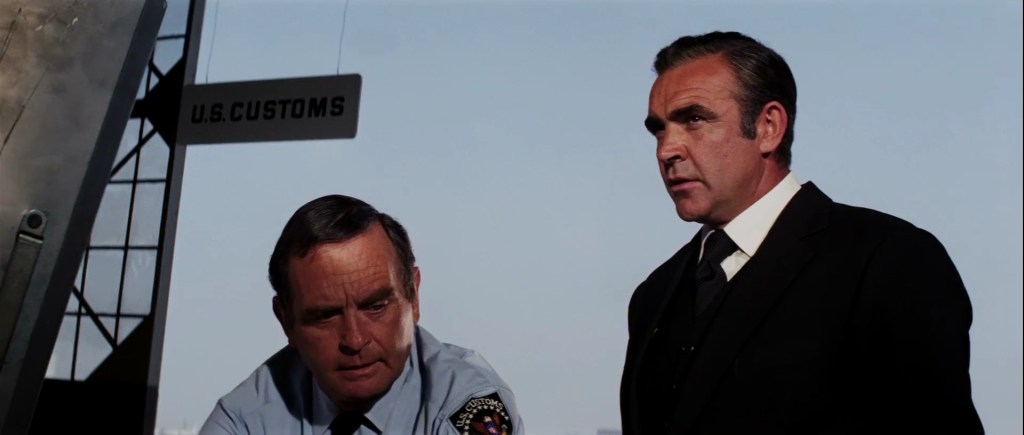
Tiffany Case and James Bond smuggle the body of Peter Franks, along with a literal assload of diamonds, into the United States via LAX. Bond is greeted at customs by none other than Felix Leiter.

Of all the actors to have played Felix, Norman Burton is among the least mentioned. This is a shame because he’s a good choice: he’s not built like an action star; he’s built like a normal schlubby guy doing his job. Burton plays him as a man who wants to do nothing more than go home and bitch to his wife about all the shit that the CIA puts him up to. That’s totally relatable. Say what you will about Guy Hamilton but the man knows how to cast movies.

But in this exchange between Bond and Leiter there comes the most controversial question of the film: who stuffed the fake diamonds into Peter Franks’ asshole? Tiffany Case or James Bond? This has been HOTLY debated for 53 years but the answer is obviously James Bond. Let me explain: Tiffany Case would have assumed they were smuggling REAL diamonds but, as it is revealed later, the diamonds extracted from Franks’ dead body were FAKE. Only James Bond, MI6, and the CIA could have known that. Ergo, James Bond shoved the diamonds into Franks’ rectum.

It really makes you think doesn’t it? Perhaps these are more thought provoking movies than people remember.

After Leiter’s inspection, the body is hauled away by three funeral home employees, who are clearly undercover mob guys, one of whom is played by Sid Haig (one of a few cult-favorite actors to appear in this film). Bond is convinced to ride in the front seat of the hearse all the way from Los Angeles to Las Vegas. So a few thoughts here: why? McCarran International Airport in Las Vegas is featured later in the movie. Why not fly directly there from Amsterdam? Did Amsterdam not have flights directly to Vegas in 1971? Would audiences have given a shit? As an American intimately familiar with the SoCal area, this has always bothered me.

So Bond and the mobsters arrive at Morton Slumber’s Funeral Home in Nevada. Mr. Slumber and Bond hilariously go through the motions of pretending to give a shit about the funeral process; Peter Franks’ body is burned up and in about two minutes the diamonds are retrieved from his colon and placed in an urn. Bond takes the urn into the mausoleum, retrieves some money, and is knocked out cold by Mr. Wint and Mr. Kidd.

TO BE CONTINUED…

Diomonds r 4eva: written commentary (part vii)

The James Bond franchise is noted for its versatility in action set pieces. You have skiing, boat chases, car chases, parkour chases, fighter jets, and even space battles. But I’m a simple man. There’s nothing that I like to see more than two men pummel the shit out of each other.

The train fight in From Russia With Love is probably the greatest example. It’s not only one of the best fights in the franchise, it’s probably one of course most notable in film history. Above all else, James Bond needs to be a brawler. They got away from that in the post-Connery era. No disrespect to Roger Moore, Timothy Dalton, and Pierce Brosnan but I’m pretty sure I’d stand a decent chance at beating their asses if it came down to it. The Broccolis thankfully reestablished Bond as a brute with Daniel Craig but there’s something about Sean Connery that I find raw. Watch any of the earlier films of the 60s. Connery portrays Bond as almost having a psychopathic need to throw down. That’s who James Bond is; he can’t feel alive unless certain death is knocking at his door.

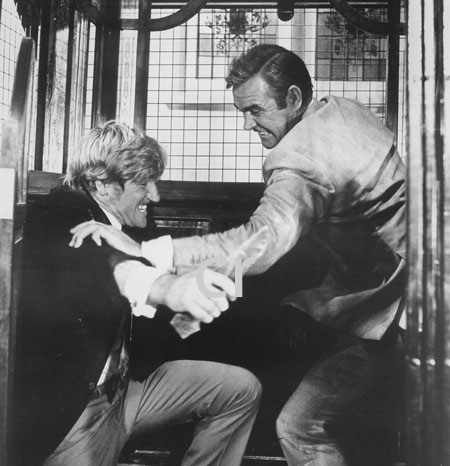
Now I’m not saying that the elevator fight in Diamonds Are Forever is one of the best. It’s not even top 10. Actually it’s probably the worst in the franchise. But even the worst fight in a James Bond movie is better than the greatest orgasm. That’s a hill I’m willing to die on. But this is why the talent behind the camera is the best in the industry: they see an opportunity to do something cool (if not stupid) and run with it. Connery is what? 6’2 220? And the stuntman he’s fighting is at least that much. Then Guy Hamilton sees a 3×3 elevator and decides that’s where they’ll confront each other.

The “bad guy” (Peter Franks) is a total fucking idiot though. Think about it: you killed a guard, escaped prison, then went to Amsterdam. When you arrive at your destination, there’s another big ass dude (James Bond) that happens to show up. THEN you agree to get into a tiny elevator with him?! I get not wanting to look conspicuous BUT if I were Peter Franks, I would NOT let another big dude stand behind me under those conditions. But James Bond fucks up too. He probably should have chosen to choke Peter Franks out instead of winding up to punch him and breaking a glass pane. I mean goddamn, why am I not working for MI6?

Nevertheless a fight ensues, a bunch of glass breaks, a bullet is fired, and none of this gains the attention of residents EXCEPT for Tiffany Case. She stands hopelessly by while the fight spills out of the elevator and Bond defeats Franks with a fire extinguisher. Though Bond is victorious, he could have easily avoided this mess by, again, choking Franks out. No matter though. 007 does some quick thinking by exchanging Peter Franks’ wallet out with his and dragging the dead body into Tiffany Case’s apartment. When she checks the deceased for an ID, she gasps. “My god! You just killed James Bond!”

So, is James Bond famous? Kinda defeats the purpose of being a secret agent.

TO BE CONTINUED…

Diamonds r 4eva: written commentary (part v)

Guy Hamilton cut his teeth as an assistant to legendary directors like Carol Reed and John Huston. The commentary tracks on all Hamilton-helmed Bond pictures remind audiences that he was a stand in for Orson Welles in The Third Man. In the 1950s, Hamilton was elevated to director where he made nine films before being offered the job in 1961 for Dr. No. He turned it down and producers instead went with Terence Young. However, when Young stepped away from the franchise after From Russia With Love, Hamilton came in for Goldfinger (1964). The third James Bond film is often cited for establishing the template for subsequent films in the franchise, to which Hamilton is frequently credited for. After George Lazenby left the role after one picture, Connery returned and producers felt like they needed to re-establish the Goldfinger tone. Enter Hamilton for Diamonds Are Forever.

I’d like to take a moment to praise Terence Young. While there’s the James Bond of the Ian Fleming novels, there’s also the James Bond of the movies. The difference between the two (if we don’t count Sean Connery) is Terence Young. Before being cast in the role, Connery was just a Scottish roughneck actor. Young shaped him, and thus James Bond, into the character we’ve come to love. And James Bond is very much the focus of the action in the first two films, particularly Dr. No. This is what made Red Grant such a formidable opponent in From Russia With Love, because he was essentially James Bond’s equal. Their confrontation, the train fight towards the end, is cited as one of the hallmarks of the series. Young really knew how to build up this character. While the Young-directed films are very much post-war male fantasies, he still manages to ground the picture thus making them feel raw.

Guy Hamilton changes that in Goldfinger. Hamilton’s conception of the character is essentially that of a comic book hero. This is where we see the introduction of over the top gadgets, cartoonish villains, and (let’s be honest) blatant misogynistic attitudes towards women. This is the point in the franchise where the series recognizes itself as a cultural phenomenon. It was an overwhelming success but for whatever reasons Hamilton didn’t return until DAF.

Connery’s biggest complaint for Goldfinger was that Bond was always one step behind the villain, which is a valid criticism. This is remedied in DAF thanks to Mankiewicz’s script and Hamilton mostly sidelines the misogyny, though not entirely (it will make a BIG comeback in Live and Let Die and The Man With The Golden Gun), but the plot still remains over the top.

And this takes us to Tiffany Case in Amsterdam…

TO BE CONTINUED…

Diamonds r 4eva: written commentary (part iv)

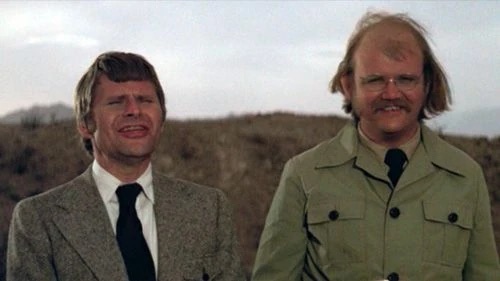
Mr. Wint and Mr. Kidd. Can you name a more iconic duo? These henchmen are played as clearly defined lovers which shows a great deal of progressive foresight by producers and author Ian Fleming. And it was a bit of inspired casting too. They’re played by Crispin Glover’s dad and the bassist to the Righteous Brothers. They’re definitely one of the more memorable characters in the James Bond universe.

But their introduction is a little strange to say the least. Sir Donald’s exposition to Bond and M is broken up by jump cuts to Mr. Wint and Mr. Kidd and their shenanigans. Their scenes are good, which includes blowing up helicopters and dropping scorpions down people’s shirts, but the narrative is very clunky. I kinda get the joke: as Sir Donald explains the situation and the “pride and devotion” of his employees, the audience is keyed into the actual corruption within the diamond industry while the stuffy Brit obliviously blabbers on. Additionally, these scenes establish the tone of the film as a campy joy ride. I get it. There’s a lot that needs to be explained in these scenes because we want to jump into the action as soon as possible.

I just think it could have been told better. So what would I have done?

Glad you asked.

Perhaps start with the dentist extracting a diamond from the tooth of one of the miners and stashing it away. Cut to Mr. Wint and Mr. Kidd philosophizing over a scorpion in the desert, meeting the dentist, killing him, then blowing up the helicopter to take the money. That takes what? Two minutes of screen time? This also streamlines the introduction to intrigue which is sorely missed in the films of the 70s. Then we cut to the exposition dump with Sir Donald, Bond, and M. After M tells Bond that he’s going to Holland, we cut to Mr. Wint and Mr. Kidd handing the diamonds off to the corrupt missionary where she’s told she’s going to Amsterdam. BAM! The plot begins.

And now let me tell you about Guy Hamilton..

TO BE CONTINUED…

Diamonds r 4eva: written commentary (part III)

M is a stone cold bastard. Think about his introduction from the perspective of On Her Majesty’s Secret Service. James Bond’s new wife is murdered. He goes on a rampage to kill Blofeld, does so, then comes back to work not long after. M blabbering to Bond about some stupid fucking diamond takes place what? Maybe a MONTH after his wife’s death?! M was at the wedding for Christ sake! Then the head of MI6 has the GALL to demand that Bond move on and provide some “plain, solid work”!

What an asshole!

Of course I don’t KNOW for a fact that this takes place immediately after OHMSS. Maybe Bond managed to squeeze in a couple of missions before deciding to take a holiday to pursue Blofeld. But I have a hard time believing that James Bond would watch his wife die, maybe take a grieving period before returning to work, wait for more information to trickle out about Blofeld’s whereabouts, then beg M to allow him to go after him, M refusing, then taking vacation time to enact vengeance. The more credible explanation is that after Tracy is killed, Bond…who was already on PTO for his wedding and honeymoon…immediately jumped into action. And this first interaction with M in Diamonds Are Forever takes place right after James Bond comes back from vacation because a minute later, Sir Donald, who provides an exposition dump for the plot, says to Bond “I hear you’ve been on holiday.” In other words, M is a fucking dickhead.

But maybe not!

As I’ve already (successfully) argued, part of the purpose behind the cold open was to erase OHMSS altogether. So in the world of DAF and Sean Connery, James Bond was never married. His beef with Blofeld stems from the events of You Only Live Twice, meaning the mission wasn’t finished. Bond had to take a “holiday” to complete the job. So from this perspective, M is somewhat justified in his annoyance with Bond. Although Blofeld got away at the conclusion of YOLT, his plan was thwarted which could mean the mission was a success. But James Bond wasn’t satisfied so M had to begrudgingly grant him time off (meaning he had to temporarily lose his best agent) even though killing Blofeld was a secondary objective. Yet Bond got his way and now he was back and all M wanted him to do was listen to him yammer on about diamonds. So it’s just another example of OHMSS erasure.

This can be the only plausible explanation for M’s behavior and not at all a result of a lack of attention from the writers.

The script was produced by longtime James Bond screenwriter Richard Maibaum and newcomer Tom Mankiewicz, son of legendary Hollywood director Joseph Mankiewicz. Maibaum wrote the initial drafts while Mankiewicz came in to polish it up. The latter was retained for the next two films: Live and Let Die and The Man With The Golden Gun. It’s unclear to me who wrote what but there’s little doubt about Mankiewicz’s influence as DAF is a marked departure from the previous films where Maibaum played a huge role (with the exception of YOLT which was written by Roald Dahl for some reason). The most obvious difference in the films written by Mankiewicz is that they feel more Americanized. This was probably a deliberate choice by Cubby Broccoli as American actor John Gavin was originally cast to play James Bond in DAF before Connery announced his return. But there’s another commonality between the three Mankiewicz-penned Bond films: they all introduce James Bond to the plot in the most mundane way.

In From Russia With Love, arguably the best in the series and one of the more unusually structured, there’s a solid 15 minute set up before 007 is introduced. This is an interesting device that establishes intrigue but is used intermittently throughout the series. It is almost entirely neglected for the films in the 70s, all of which Mankiewicz had a hand in writing (three credited with DAF, Live and Let Die, and The Man With The Golden Gun. Two uncredited with The Spy Who Loved Me and Moonraker). In all these films, intrigue is only established with set pieces lasting a minute or two, usually in the cold open. Neglecting an element of mystery in the introduction leads to a clumsy exposition dump post-main titles in Diamonds Are Forever, and it’s this trend that I think hampered the films of the 70s.

This may not be the fault of Mankiewicz, who would later unfairly criticize himself as being a Hollywood failson. But it was with the James Bond franchise where he cut his teeth and established a near legendary career as a script doctor and creative consultant. Instead I’d like to point the finger at director Guy Hamilton…

TO BE CONTINUED…

Diamonds r 4eva: written commentary (part II)

So James Bond literally flushes Blofeld into a deep puddle of shit. A Persian cat angerly screams at him and then we cut to the main title sequence.

Now close your eyes. When you think about the James Bond iconography what comes to mind? Is it the opening gun barrel sequence? Is it the silhouettes of naked women waving guns around? If that’s the case then you have Maurice Binder to thank for that.

While Binder provided the title work for Bond’s inaugural film Dr. No, Robert Brownjohn really set the template for subsequent title sequences by projecting images onto half naked women in From Russia With Love and Goldfinger. Binder took it up a notch by being more suggestive and daring with Thunderball, You Only Live Twice, and On Her Majesty’s Secret Service. While these title sequences were always a bit trippy, Binder seems to have been experimenting in Diamonds Are Forever. Perhaps it’s the result of the MPAA giving up the Hays Code in 1968 in favor of the rating system that allowed Binder to be more daring, for in DAF the use of silhouetting is much less prevalent. In our high definition transfers, nudity is very present. It’s obvious that Binder was changing up the formula by outright displaying nude models, although much of the nudity is obscured by use of lighting. It’s not as egregious as it would later become in The Man With The Golden Gun (where it appears that that full on 70s pubic hair is shown) but it’s pretty close. The 70s were a different time. But with that said, this is one of the clunkier title sequences yet Binder would perfect this method in subsequent films.

Now what about the song?

Let me get this out of the way: Shirley Bassey is a legend. With Goldfinger she set the bar for what a Bond song should sound like. Few have lived up to that expectation. But I got to be real with you: this is probably my least favorite of the three she sang, and definitely one of my least favorites as a whole. Sure, it sounds like a Bond song, which isn’t always an easy task. But Don Black isn’t the most subtle of lyricists. Which is fine. James Bond is sometimes not so subtle. But there isn’t much here. Bond songs usually contribute to the narrative or themes of the movie. To be fair, I don’t know what themes there are in DAF, but the lyrics are sang from the perspective of a woman who prefers diamonds to men or love. Who is this for? Tiffany Case? It’s never made clear. Apparently, the use of “diamonds” in the lyrics is supposed to be a metaphor for penis. But except for one verse (“touch it, stroke it…”), that point is not hammered home. So lyrically it comes across as a straightforward song about a woman’s preference for diamonds. It’s just not very much fun and the lyrics hardly make sense if “diamonds” are supposed to mean “penis”. This is a controversial opinion considering Diamonds Are Forever is one of the most popular songs in the franchise, but on close inspection it’s quite middling.

Musically, I find little fault in John Barry. We’ll explore his contributions to the soundtrack as we move forward. But as for the song, at times it’s moody then otherworldly but it meshes well with Binder’s images. This is the first Bond film of the 1970s and there’s a nice evolution to the sound that Barry doesn’t make too egregious and dated.

So with the title sequence over we are thrusted into the plot. Now allow me to introduce you to a man called Tom Mankiewicz…