Masterbeatty

The thing they don’t tell a lot of people is that when you’re about to kill someone, as I’m about to do, your mind begins to wonder. So as I’m sitting here in this Buenos Aires hotel, waiting for my renegade clone (brainwashed by North Korea with aspirations to dominate the world) to come through the door before I pump nine rounds from my Walther P99 into him, my mind wondered to Warren Beatty.

More often than not, I’m more interested in how movies get made than the movies themselves. Film, it is often claimed, is a collaborative medium. Yet due to the nature of the industry, it naturally attracts egos and sociopaths. So if the collaborative claim is true, between on set divas, maniacal studio execs, and authoritarian directors, it’s honestly a miracle that great movies get made at all.

It is a commonly held belief among film buffs that American filmmaking reached its peak as an art form during the 1970s. I mostly agree with this sentiment, which is why I tend to obsessively comb through histories of that era. One name that continually pops up while reading these stories is Warren Beatty.

Beatty these days is mostly remembered for fucking every woman that passed through Los Angeles during his heyday but it’s easy to forget what a formidable presence he was in the industry. And Beatty was choosy as hell with the projects he involved himself in. Despite being a marquee name, from 1970 to 2000 he was only in 13 pictures. We all know he was in some bangers, but half those movies were shit, including, most notoriously, Ishtar.

But what about the good movies he was in? Beatty has the distinction of being one of only two people nominated for Best Picture (as a producer), Best Actor, Best Director, and Best Screenplay at the Oscars for the same movie, with the other being Orson Welles for Citizen Kane. What’s more impressive is that Beatty did this TWICE for Heaven Can Wait and Reds. His other hits include Shampoo, McCabe and Mrs. Miller, The Parallax View, and Bonnie and Clyde. Bonnie and Clyde, released in 1967, is largely considered the turning point in Hollywood towards auteur-friendly cinema that dominated the following decade. As a result, that’s probably Beatty’s lasting achievement.

But what about the rest of his filmography? Outside of Splendor in the Grass and Bonnie and Clyde, a film that he aggressively produced, the 60s were mostly a wash for Beatty. Sure, it was the decade that made him famous, but his career was in serious jeopardy of becoming a flash in the pan before 1967. After the success of Bonnie and Clyde, that fortified Beatty as a Hollywood player and his reputation for being demanding with both executives and fellow collaborators. But to what result?

I’ve probably seen all his notable films post-Bonnie and Clyde. Except for Dick Tracy, I can’t remember any of them. This includes Reds, an effort that earned him an Academy Award for Best Director. In every era of pop culture there’s a monumental figure beloved by critics that, in retrospect, amounted to nothing more than doing the artistic equivalent of sucking their own dick. Kevin Costner, an artist I personally champion, is seen as this figure in the 1990s. Michael Cimino was blatantly doing this for Heaven’s Gate. I think Warren Beatty was this figure in the 1970s, except Beatty was more successful AND better looking.

Despite his many misses, Beatty was able to stay on the A-list due to his charm and relentless politicking within Hollywood inner circles. But this lack of genuine talent can only get you so far. I’ve often said that time is the arbiter of good art and today Beatty’s name is not mentioned in the same breath of Coppola, Scorsese, Spielberg, DePalma, Lucas, and even John Milius. The lasting legacy of Beatty is not any of his films, but his looks and his numerous sexual conquests. It was an odd career, filled with numerous accolades, but it’s hardly discussed today.

His personality in the 60s, pre-Bonnie and Clyde before the awards started rolling in, caused Peter Biskind to label Beatty the “Paris Hilton” of his time, i.e. someone known for being famous without any discernible accomplishment. And strangely, without the lasting cultural cache of his peers, that’s where his legacy somewhat resides.

Etienne Trocme’s “The formation of the Gospel According to Mark” again

The most goddamnedest thing happened to me the other day. So I was minding my own business walking along the Korean DMZ when suddenly I was captured, tortured, and subjected to Steven Soderbergh’s The Informant! on repeat by Kim Jung Un’s thugs. I don’t want to get bogged down in the details about why I was the there. The important thing is that I escaped by impaling the guards with a long makeshift shiv. Before killing the last one, he informed me that the plan was to clone me, brainwash my clone, then send him back to the US to infiltrate the government in some elaborate plan or some bullshit. I didn’t listen that closely because it was all very boring. So I killed the last guard by drowning him in the sink.

Thankfully I caught up with my clone at the top of Pyongyang Hotel. Before strangling him and throwing his body off the roof, he said that there are many clones of me that are fully brainwashed and are preparing to infiltrate governments around the world. So long story short, I’ll be globetrotting for awhile to seek and kill all my clones.

“Isn’t that murder? 😭😭😭” you might ask.

You’re goddamn right it is!

So if you see any posts where I tell my readers to “vote for Trump” or “invest in Ethereum” or “the moon landings are faked”, just know that wasn’t me (probably) and I’ll keep you updated on my whereabouts.

So in the meantime, here’s a post from last year where I discuss Etienne Trocme’s The formation of the Gospel According to Mark. I forgot how excited I was to find a copy of this rarity only to discover that an academic work translated from French makes poor reading. Additionally it kinda goes off the rails about halfway. I haven’t finished reading it to this day.

From June of last year, here Etienne Trocme’s “The formation of the Gospel According to Mark”

“Aren’t you an atheist?”

“Don’t you have anything better to do?”

“Have you considered professional counseling?”

These are just some of the questions I receive when others learn of my obsession with the Gospel According to Mark. Indeed, it’s hard to this passion of mine into words. In short, it’s one of the great mysteries of history. We don’t know who wrote it. And while we have some pretty safe assumptions about why it was written, even that is debated. Hell, we can’t even agree what genre Mark is. 

Moreover, there’s an aspect to it that I almost find comical. While Mark clearly has some artistic intentions behind it, it is not particularly well written. Additionally, due to the politics of its era, there is likely a polemical aspect to it that has been largely lost on modern audiences. So I find it funny that one of the most important texts in ancient history was written by some moderately educated dude trying to piss off his opponents over petty theological differences. Because in doing so, the author basically invented the story of Jesus which is the most important story in Western civilization. 

While I think the Gospel has kernels of historical truth regarding Jesus the man, it’s almost impossible to tell which one of them are facts which further confounds modern scholars. But honestly, I find the Gospel of Mark to be far more interesting than the historical Jesus due to its impact. So Jesus was an apocalyptic preacher who was nailed to the cross by the Romans. Big whoop. But, according to “Mark”, what if Jesus was the Son of God who died on the cross and rose again to save us from our sins? Now that’s show business!

But regarding the political dimensions of the early Jesus Movement, I find this aspect to be largely ignored by modern scholars. I think Monty Python’s Life of Brian is a bit more accurate than we care to admit. While this analogy is far from perfect, the Jesus Movement…specifically the one prior to Paul’s prevalence…was, in part, a response to the dominant Pax-Romana. In sum, this movement could be deemed a “left-populist” one in modern eyes. And if you’ve spent any amount of time with political radicals, you quickly learn that they HATE each other. While the main thrust behind Mark is to provide an unknown (but likely Greek-influenced) early church a coherent theological message, it’s who it’s aimed against that I find interesting.

This matter caught my attention while reading Etienne Trocme’s The Formation of the Gospel According to Mark. It’s a tough read, largely because it was written in French and doesn’t translate well into English, so I haven’t gotten very far. Additionally, I believe that Trocme’s controversial assertion in the work is that Mark originally ended at chapter 13. I do not accept that conclusion and it has been almost universally rejected by all scholars. Nevertheless, I picked up the book hoping to find some insight into Mark’s intentions. 

According to tradition, “Mark” was an interpreter of the Peter, arguably the most important of Jesus’s apostles. But unless you’re a Christian, there’s absolutely no reason to believe this is true. Not only that, but Mark kinda portrays Jesus’s inner-circle as a bunch of idiots that have no understanding what their leader is trying to say and do. Because of this portrayal, preachers today want us to believe that the Apostles were a bunch of well-meaning knuckleheads, but it is possible (in fact, more likely) that Mark had polemical angle here: he was undermining Apostolic authority. In fact, in Mark, the only people that seem to understand Jesus’s mission are just randos. If memory serves, the only person (other than the author and some demons) in the narrative to identify Jesus as “the Son of God” is a Roman centurion after Jesus died on the cross. Additionally, Mark ends at 16:8, when Mary Magdalene, Jesus’s mother Mary (simply referred to as “mother of James”) and Salome find Jesus’s tomb empty with a stranger inside telling them Jesus has risen. Instead of rejoicing at the news, the women fled in terror and told no one.

In short, according to Mark, Jesus’s followers during his time on earth didn’t understand his message and when confronted with the truth, they fled. 

As Trocme indicates, Mark doesn’t downplay Peter’s significance to Jesus but his authority is more or less stripped away. And James the brother of Jesus, who along with Paul and Peter was one of the most important figures in early church history, is essentially non-existent in the text. 

Using my understanding of radical movements, a different interpretation of Mark comes clear: the author was asserting his own theology (possibly influenced by Paul who had his own run-ins with the Apostles) while simultaneously extending the middle finger to Apostolic authority. 

Pardon me and Mark Whitacre please 🙏


Greetings from an Unexpected Corner of the World,

It’s Beau Montana here, writing to you from a rather unexpected and, let’s say, unique location. Life has a funny way of tossing you into the most unpredictable situations, and here I am, in a North Korean prison cell. How I got here isn’t as important as what’s keeping my spirit unbroken: the belief that Donald Trump, once he recovers from his assassination attempt and is re-elected president, will ensure my release.

Now, let’s talk about something slightly less grim but equally surreal: “The Informant!” starring Matt Damon. My captors have an interesting sense of entertainment, and for some reason, this film has been on repeat. But, being the eternal optimist and writer that I am, I choose to see it as an opportunity for reflection.

“The Informant!” is a dark comedy based on the true story of Mark Whitacre, a high-ranking executive at Archer Daniels Midland who turns whistleblower. Matt Damon’s portrayal of Whitacre is nothing short of brilliant. He transforms into this bumbling yet endearing figure who manages to elicit both sympathy and frustration from the audience. It’s a layered performance that brings out the absurdity of corporate espionage and the complexities of human morality.

As I sit here, watching Damon’s exaggeratedly mustachioed face for what feels like the hundredth time, I can’t help but draw parallels between Whitacre’s world and my own current predicament. Both situations are filled with deceit, power struggles, and an overwhelming sense of absurdity. Whitacre, caught in his own web of lies, reminds me that even in the most controlled environments, chaos reigns supreme.

Now, let’s delve into the mastermind behind the film: Steven Soderbergh. His direction in “The Informant!” is nothing short of genius. Soderbergh has a knack for turning the mundane into the extraordinary, and this film is a testament to that talent. He navigates the story with a deft touch, blending comedy and drama in a way that feels both effortless and profound. The use of bright, almost garish colors contrasts sharply with the dark undertones of corporate greed and deception, creating a visual style that is as jarring as it is engaging.

Soderbergh’s decision to use a quirky, almost whimsical score by Marvin Hamlisch adds another layer of irony to the narrative. It’s as if he’s reminding us not to take anything at face value, that beneath the surface of every situation lies a deeper, often more unsettling truth. His ability to balance these tones while keeping the story grounded is what makes “The Informant!” such a compelling watch.

The film, with its quirky tone and constant twists, serves as a bizarre yet comforting distraction. It’s a reminder that truth is often stranger than fiction. Here in this cell, under the watchful eyes of my captors, I’ve found an unexpected kinship with Whitacre. Like him, I’m navigating a treacherous landscape, clinging to the hope that the truth—and justice—will ultimately prevail.

I have to admit, the dark humor of “The Informant!” resonates deeply with me now. It’s a survival mechanism, I suppose. When you’re stuck in a place where the walls seem to close in a little more each day, laughter becomes your best defense. It keeps you sane, keeps you human.

So, here’s to Mark Whitacre and his absurd journey through the labyrinth of corporate corruption. Here’s to Matt Damon for bringing that story to life in such an unforgettable way. And here’s to Steven Soderbergh, whose vision turned a potentially dry story into a vibrant, thought-provoking piece of cinema. And here’s to Donald Trump, whose recovery and political resurgence I believe will be my ticket back to freedom. I implore the former (and future) president, despite our numerous corporate and – at times – treasonous crimes to find it within his power to pardon both Whitacre and myself.

Until that day comes, I’ll keep watching, keep laughing, and keep believing. Because in the end, hope is the strongest form of resistance.

Stay strong, stay hopeful, and remember—life is stranger than fiction.

Yours in confinement but not in spirit,
Beau Montana

*The Democratic People’s Republic of Korea wishes to announce that Beau Montana’s life is not under duress and that the author completed the post on his own without the help of ChatGPT. Additionally, this disclaimer was not written by a Russian bot*

Three Scenes in a Boring Ass Apartment

I’m contractually obligated to complete one story per year. Astute observers will notice that I haven’t come close to completing that objective in 2024. So I’ve decided to set the bar low: this will be a simple stage play. If there is a god in heaven (which there isn’t) then this play will never be produced.

With that said, allow me to introduce Three Scenes in a Boring Ass Apartment by Beau Montana.

SCENE I

In a poorly air conditioned apartment in Jersey City, Don, aged 57, curses the New York Mets for another godawful season from his tattered recliner.

Don: my dick will get hard before I see the Mets in the World Series!

While Don curses baseball, the entire city of New York, and his life’s decisions, his son Drew meanders into the living room to drop his pants and unleash a massive shit onto the carpet below.

Don: Come on Drew! You’re 26 years old. You should be potty trained by now!

Drew: I’m sorry pops. I’m trying my best. I’ll aim for the toilet next time. I promise.

Don regrets his harsh tone with Drew and orders him to his side. He pats his son on the knee to comfort him.

Don: I’m sorry that I have to be tough on you sometimes. But you know your step mother. She’s a total bitch. She’ll have my ass when she finds out you shit on the carpet again.

Moments later, Marlene, aged 49, bursts through the front door to find a large man-sized turd sitting on the floor.

Marlene: Goddamnit Don! When are you going to make your idiot son shit in the toilet?! Do you know how hard it is working my ass off on Broadway only to come back here to this dump of an apartment?! The least you can do is clean up after yourself and not leave literal shit laying on the ground! What are you? Fuckin stupid?!

Don: Marlene, please. Drew didn’t mean to do it. He’s trying his best ya know? We’re all doing our best here.

Marlene: Well your best sucks dick! What happened to you Don? You used to be the toast of this town but now you’re a scummy geezer living in Jersey!

Don: We all know what happened Marlene. No need to keep bringing it up.

Marlene: Nevermind that now. Darlene is coming over for dinner and I need this place looking spotless! So get your ass to work!

Marlene storms out of the living room leaving Don and Drew somewhat speechless.

Don: Come on Drew. We better do what she says.

SCENE II

Don, Drew, and Marlene are joined by Darlene, aged 24, at the dinner table. Darlene speaks in faux, exaggerated southern accent.

Darlene: Oh working with Smitty has been such a delight, mother! I’m so thankful you convinced me to work on Broadway!

Marlene: Smitty is a wonderful director.

Don: Ya know, when I was a director on Broadway, critics loved all the bare titties I’d put on stage. My how times have changed.

Darlene: Yes, but you haven’t directed a production in what? 20 years? I on the other hand am being labeled as the next big starlet by Playbill.

Marlene: You certainly are a wonderful actress Darlene.

Darlene: Of course. If only we can get my lame step brother out of this apartment, we might make something of him yet.

Don: Now you stuff your tongue Darlene. You know how hard life has been for us.

Darlene: Oh spare me, Donald! You can’t keep milking out this sympathy forever. Who wants to waste away in Jersey for the rest of their lives? I’m left dumbfounded as to why mother has shacked up with you! Surely her career isn’t going THAT poorly.

Marlene: My sweet precious daughter, lay off your step father. The creative process is different for everyone. He may have a masterpiece left in him yet.

Drew: I’m not lame!

Darlene: Yes, well, you certainly aren’t as accomplished as everyone else at this table.

Don: Darlene, one more word out of you…

Marlene: Enough of that now! How about we all enjoy a cocktail and a delightful cheesecake from the Cheesecake Factory.

SCENE III

Late at night, Don observes Drew sleeping in his bed. He saunters into the bedroom where he finds Marlene lying down and reading a book. Don briefly observes a picture of Drew’s mother before speaking to Marlene.

Don: Thanks for defending me in there.

Marlene: Darlene can get carried away sometimes.

Don climbs into bed to wrap his arms around Marlene. Don slowly begins to fade away into sleep while Marlene focuses on her book.

Don: Sometimes I think you’re the only one who understands the struggles Drew and I have gone through. Maybe Darlene is right. But I don’t care. I did what was best for Drew. I regret nothing. And I’m always amazed by your thoughtfulness and understanding in that.

Marlene: Uh-huh

Don: I love you.

Marlene: That’s what I like to hear.

END

James “Big Dick” Sikking

July 13th 2024 is a day that will live in infamy. Not only did we lose Richard Simmons, we also lost one of the most under appreciated thespians of our era: James Sikking. Thank god nothing else bad happened that day.

James Barrie Sikking is best known for his roles in Hill Street Blues and Doogie Howser. But for me his finest hour came in 1984 as Captain Styles in Leonard Nimoy’s Star Trek III: The Search for Spock, a film that is finally getting the recognition it has long deserved. But if there is one criticism I have for the movie, it’s the name “Captain Styles”. Sikking’s scene stealing performance didn’t need a name. He should have simply been referred to as “Excelsior captain”.

From his introduction, with his brief banter with Scotty and wanting “break some of the Enterprise’s speed records,” we immediately understand Sikking’s character. We’ve all worked with a guy like that before; i.e the kind that think they shit don’t stank. And he’s able to convey that INSTANTLY, from his posture to his well trimmed mustache and right down to that seemingly pointless horse whip thing he carries under his arm. Only actors with lethally skilled precision can pull that off.

Later, when the Excelsior captain is rudely interrupted by a yellow alert, he asks “how can there be a yellow alert in space dock?”. The asshole that hailed him replies “sir, someone is stealing the Enterprise!”, the look on his face goes from “what the hell?” to “oh, I know what’s going on here.” So he grabs his fake whip and goes to the bridge where Miguel Ferrer explains all the cool shit that the Excelsior can do. The captain chuckles and mutters “what a wonderful machine” and orders a slow pursuit of the Enterprise. Keep in mine, although no one told him (but he knows damn well) that the most decorated officer in Starfleet history is stealing the most storied ship in the fleet, the Excelsior Captain doesn’t once question his ability to capture Admiral James T. Kirk.

Though the script probably explains that the Captain is only doing his job, Sikking, under the direction of Nimoy, really makes you hate this guy. You can easily imagine his backstory: graduated first in his class at Starfleet Academy, met Kirk once or twice and they hated each other, and unlike many of his peers, he’s managed to maintain a family: a wife and two daughters, both the same age but are not twins. While he’s probably cordial, if not jovial, in social settings, deep down everyone knows that he’s a full blown sociopath. He has no friends, not because he doesn’t welcome them, but because whenever someone comes to his house, he joyfully goes into minute detail on his massive collection of medieval torture devices, meanwhile blissfully unaware of how uncomfortable he’s making his guests. And no one dares to ask him about his eerily quiet wife, who he never talks about, not because he might fly into a rage, but because whatever he tells you you know will be a lie. So all of his underlings steer clear of discussing their captain’s private life, somewhat out of fear, but mostly as a way to assuage their own guilt about knowing of a domestic abuse situation.

James Sikking was able to convey ALL of that with less than three minutes of screen time. And as a result, I say it’s one of the greatest performances in Star Trek history. So RIP to my man.

James Barrie Sikking (1934-2024)

The death of Peter and Paul at the hands of Christians

First off, I just wanna say that I’m glad nothing else bad happened yesterday. So I hope that the world and the internet can resume a place or normality for the next few days 🙏

And look, I know that my biblical “scholarship” comes totally out of left field when compared to the rest of my blog. But I’m just gonna say it: this stuff gets hits. And I’m not claiming to be the next Bart Ehrman. But I’ve always said that at my core I’m a historian. And that’s what this blog is. It’s not never ending shitposting or deranged ramblings. It’s history. And when I die, which I stated yesterday will probably be by firing squad, this is how people will remember me.

So let’s explore the topic at hand: the death of Peter and Paul by the hands of Christians in the first century CE. I’m not saying that that’s what happened. I’m saying that’s a claim. And I’m not saying it’s a good claim, but it does provide a few interesting points.

The passage often pointed to as evidence is in Ist Clement chapter 5. For those who don’t know, 1st Clement is one of the earliest Christian texts not found in the New Testament. It was written in the late first century. Because I’m a proud graduate of Reddit University, I often rely on the scholarly work of my peers. So this excerpt is pulled directly from Reddit in both the original Greek and English translation:

διὰ ζῆλον καὶ φθόνον οἱ μέγιστοι καὶ δικαιότατοι στύλοι ἐδώχθησαν καὶ ἕως θανάτου ἤθλησαν λάβωμεν πρὸ ὀφθαλμῶν ἡμῶν τοὺς ἀγαθοὺς ἀποστόλους· Πέτρον, ὃς διὰ ζῆλον ἄδικον οὐχ ἕνα οὐδὲ δύο ἀλλὰ πλείονας ὑπήνεγκεν πόνους, καὶ οὕτω μαρτυρήσας ἐπορεύθη εἰς τὸν ὀφειλόμενον τόπον τῆς δόξης. διὰ ζῆλον καὶ ἔριν Παῦλος ὑπομονῆς βραβεῖον ὑπέδειξεν, ἑπτάκις δεσμὰ φορέσας, φυγαδευθείς, λιθασθείς, κήρυξ γενόμενος ἔν τε τῇ ἀνατολῇ καὶ ἐν τῇ δύσει, τὸ γενναῖον τῆς πίστεως αὐτοῦ κλέος ἔλαβεν, δικαιοσύνην διδάξας ὅλον τὸν κόσμον καὶ ἐπὶ τὸ τέρμα τῆς δύσεως ἐλθὼν· καὶ μαρτυρήσας ἐπὶ τῶν ἡγουμένων, οὥτως ἀπηλλάγη τοῦ κόσμου καὶ εἰς τὸν ἅγιον τόπον ἀνελήμφθη ὑπομονῆς γενόμενος μέγιστος ὑπογραμμός“.

Because of envy and jealousy, the greatest and most righteous pillars have been persecuted and contended unto death. Let us set the good apostles before our eyes. Peter, who because of unrighteous envy, not once or twice but endured many afflictions and having borne witness went to the due glorious place. Because of envy and rivalries, steadfast Paul pointed to the prize. Seven times chained, exiled, stoned, having become a preacher both in the East and in the West, he received honor fitting of his faith, having taught righteousness to the whole world, unto the boundary on which the sun sets; having testified in the presence of the leaders. Thus he was freed from the world and went to the holy place. He became a great example of steadfastness.”

Agreed that if Peter and Paul’s deaths were a result of state persecution from the Romans, as is often believed, this would be an odd way to describe it. Additionally, you can read a larger explanation of this theory here from Chrissy Hansen and there’s an academic paper floating around from a guy named David Eastman (that I didn’t read).

There’s a few reasons why I find this theory interesting. First off, in my view,, it provides a greater insight into early Christianity as socio/political movement which mainstream scholars often fail to explore. I agree with JD Crossan that the Jesus movement was a response to Roman power and authority. While there was little distinction between religion and politics in the ancient world, I still think when movements spring up against power…and there were many in Judea where the Jesus movement hailed from…that factions come along and turn on themselves, sometimes with violent consequences. That’s the nature of radical politics and I think first century Christianity would have been no different. Secondly, as Hansen pointed out, this solves a great mystery in the New Testament as to why there’s no account of the death of Paul (or Peter) from the author of Luke-Acts, with the implication being that in order to portray Christianity as a unified front, the author omitted the story altogether.

If true, then this puts the nail in the coffin of Jonathon Bernier’s earlier dating of the Gospels. If you recall, I reviewed Bernier’s book Rethinking the Dates of the New Testament a few years ago. I think I was intrigued by his arguments but felt that too much of it hinged on Luke-Acts being completed BEFORE the death of Paul which is Bernier’s explanation for why there’s no account in the New Testament. Today, I think Luke-Acts was certainly aware of Josephus, which would date it post-90CE, presumably well after Paul’s death. BUT, as Bernier’s arguments highlighted, the omission of Paul’s death (as well as the first person passages in Acts) need explanation from scholars, none of which I have found totally convincing.

But before I get on board with the explanation that Peter and Paul were killed by competing Christians, I require more evidence. An opaque passage in Ist Clement and a few omissions only hints at something. It doesn’t explain it. Which leads us to a huge problem in biblical studies particularly regarding the New Testament era: there’s too much we don’t know. The people leading this movement weren’t educated. Outside of Josephus and the NT itself, there’s little chronological account. Regarding the Jesus movement and archeological evidence, there’s been little slam dunk discoveries, if any. And the sad part is that there probably never will be. If any does appear, it would take at least a decade to authenticate and it would still be subject to controversy and debate. In short, none of this will be settled in our lifetimes.

So all of this is open to interpretation and speculation. The possibilities are endless. We know Paul was itinerant. Perhaps his ship sunk and all of his remains have been consumed the Mediterranean Sea. Maybe that’s why there’s no account; because no one knows what the fuck happened to him! Maybe Peter dropped dead of a heart attack in the middle of the desert? We just don’t know folks 🤷‍♂️

Probably never will.

The throwback podcast with Dan Hanzus and Bob Castrone

Folks, everyday I think that this could be my last post before the filthy hordes storm into my home and pry my fingers from the keyboard before summarily executing me by firing squad. Few events could trigger such a travesty, but I think one happened today: the death of Richard Simmons. I’m just not sure the world is ready for his passing.

But in such troubling times, there’s a voice that I always turn to. And that voice is Dan Hanzus, formally of the Around the NFL podcast. And let me get this out of the way: I stated previously that I thought Hanzus was an “asshole”, comparing him to Nick Mullen of Cumtown and Mike Stoklasa of Red Letter Media, but allow me to amend this accusation. Unlike Mullen and Stoklasa, I think Hanzus has a method to his madness. He isn’t trying to trigger his peers because he’s an “asshole” generally, like Mullen, or because he perverse preoccupation with torturing his friends, like Stoklasa. Hanzus is aiming for something higher: he’s trying to bring out the best of his cohosts. This is abundantly clear in Around the NFL, often elevating the poeticism of Marc Sessler and analytical abilities of Gregg Rosenthal. Not that these men weren’t geniuses at their craft already, but they needed that push from Hanzus to create an entertaining podcast that connected with audiences around the world. He was the glue that held that show together. In that respect, Hanzus isn’t an asshole at all; he’s an expert journalist and interviewer who knows how to get the best out of his subjects.

With Around the NFL gone, I needed that voice in my life. So I did some digging and found Hanzus’ other project The Throwback Podcast. I didn’t know what to expect and to be honest I found the subject was not to my taste. Hanzus and his co-host, lifelong buddy Bob Castrone, were both born in 1980 and grew up outside NYC. Their discussions generally focus on the music that shaped their upbringing. This means deep dives into sounds of the 90s, usually grunge and alternative. I’ve never made my opinions of this era a secret: while the music of the late 70s/80s often fell into self-congratulatory range with its emphasis on overproduction, the 90s course corrected and sucked it’s own dick with its stripped down sound. While we’re all partial to the music we grew up with, the 1990s was as guilty of committing the same crimes as the artists they were responding to except they weren’t having near as much fun. In short, I feel that the last decade of the 20th century is the worst era of pop culture. This is a hill I will die on. With that said, I was intrigued by many of Hanzus’ and Castrone’s discussions, particularly regarding the forgotten legacy of Collective Soul. The question as to why they’re not a more cherished band is worth investigating. But it’s not the subject matter that intrigued me about the podcast.

What struck me is that Hanzus is more at home here, naturally I suppose. While I mostly knew him as a football guy, it’s refreshing to hear his views not just on music but on a variety of subjects. Hanzus is man of feeling and opinions and when comparing this podcast to Around the NFL, it seems that Hanzus might’ve been too constrained by helming a show owned by a multibillion dollar corporation. I like the Throwback Podcast version of him.

Nay…I PREFER it.

I’m not exaggerating when I say that the “MAY 05-Modern Rock Countdown” is the finest hour and a half in podcast history. This might be because there’s some overlap in our taste of music I’ll admit. I might be letting the guard down when I say that I’m a few years younger than these guys, but the summers of 05 and 06 were big moments for me and the music they discuss played a big role. But that’s not where this episode shined. Hanzus is at his best here when he gets his friend to discuss a very personal moment during the summer of 05. It’s a reminder of how music really connects us to certain time and place. I was beyond moved by their vulnerability. Of course, a running theme in my writing is toxic masculinity and male friendships so this particularly struck a chord with me. And it’s that very kernel of truth, in my view, that resides at the heart of the Throwback Podcast.

So I implore Dan Hanzus, if and when he reads this, now that his career with NFL Media being seemingly over, that he pursues this kind of endeavor. The world needs more of it.

And yet another shot at the title: what’s going on here

As you all know, I don’t like to talk about myself. Obviously this blog is not my vain attempt promote my exaggerated self importance. I’m a humble man. Few people have been more humble than me and the ones that are are dead. So technically I’m the most humble man alive. It’s my cross to carry.

Which brings me to my recent work titled And Yet Another Shot at the Title which is a follow up to my crowning achievement A Shot at the Title. Everyone keeps saying “why a follow up? Did that story really require a sequel?”. And the answer to that is simple: no. But I identify with James Pietermeister. James Pietermeister is Beau Montana and Beau Montana is James Pietermeister. We are both tortured artistic geniuses with zero respect for our craft.

But really Pietermeister is a conduit to explore where I’m at emotionally. And although I hate to admit it, mostly because I’ve never failed at anything in my life, I think my creative endeavors have more or less plateaued. While writing And Yet Another Shot at the Title, I’ve grown somewhat tired of Pietermeister’s antics and feel that the character needs to be elevated somewhat. This makes sense as James Pietermeister is supposed to reflect my own life. In the last few entries, it even feels that James is only doing things reflexively. What’s more wild is that I don’t know if that was a conscious decision from me. So as I navigate this new world in my personal life, I think the time is nigh for James to become self-reflective.

Of course the inspiration of this course corrective is David Duchovny, specifically his podcast Fail Better. Like I said, I’ve never failed at anything so I can hardly relate to Duchovny’s advice, but exploring one’s relationship with failure is an interesting path for James Pietermeister to take, specifically in light of Duchovny’s thesis that failure must hurt before one can learn anything from it. I won’t debate the veracity of this assertion but his perspective works very well artistically. Because that’s what James Pietermeister needs.

But not I, Beau Montana. And that’s totally my real name btw.

End of an era

Not for the first time, but the NFL really shit the bed this off season. Of course I’m referring to the cancellation of the Around the NFL podcast featuring the talent of Dan Hanzus, Marc Sessler, Gregg Rosenthal, and the late great Chris Wessling. Last year I watched a grand total of zero hours of football but I still managed to catch every episode of Around the NFL.

Brandon Perna discusses the importance and appeal of Around the NFL so I won’t go into that. Instead I wish to piss and moan over the decline and fall of my favorite podcasts/shows featuring three or more male friends discussing shit. In this regard, Around the NFL is on the Mount Rushmore along with Cumtown and Red Letter Media.

Cumtown ended a couple of years ago, leaving Red Letter Media as the lone survivor. So everyone say a prayer for Mike Stoklasa and Rich Evans to not succumb to alcohol poisoning and diabetes.

I don’t think people appreciate how difficult it is to achieve what Marc Sessler, Dan Hanzus, Gregg Rosenthal, Chris Wesseling, Nick Mullen, Stavros Halkias, Adam Friedland, Mike Stoklasa, Rich Evans, and Jay Bauman have all achieved. Any group of random assholes can get together and create a podcast. But it takes a special chemistry to achieve greatness. No doubt there are countless podcasts featuring lifelong friends discussing their passions and almost all of them suck. So what made these guys different?

As you will find in any male friendship groups, there’s always the alpha. Not that anyone thinks of him as the alpha, he just so happens to be the biggest asshole of the group. The other friends just go along with his psychotic behavior to avoid incurring his wrath. In our case, that’s Dan Hanzus for Around the NFL, Nick Mullen for Cumtown, and Mike Stoklasa for Red Letter Media. This is where other podcasts/youtube channels get in trouble; the “alpha” lacks any semblance of self-awareness and treat their platform as a means to enact their inferiority complex (like Adam Carolla)

Equally important to our viewing experience is the “omega” or the guy that everyone shits on. In other words, this is Marc Sessler for NFL, Adam Friedland for Cumtown, and Rich Evans for Red Letter Media. Far be it from this individual being a laughingstock, they usually develop the fervent following among the listenership.

This balance is nearly impossible to achieve. Only the most talented, good looking, sexiest, thick dicked men can get it done, and that’s every guy on the list above (except Adam Friedland). And with Around the NFL gone, this leaves on Red Letter Media to carry on the mantle.

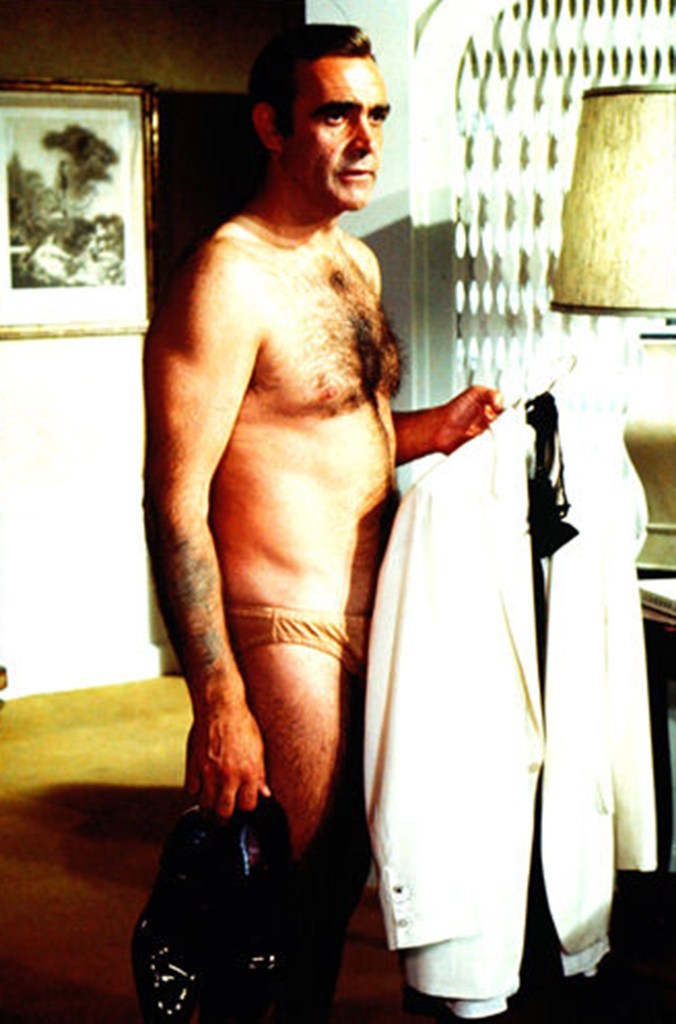
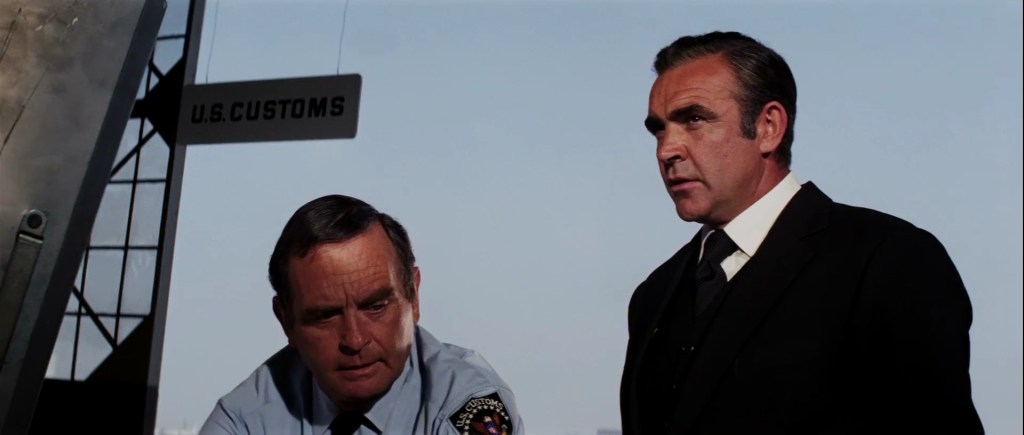
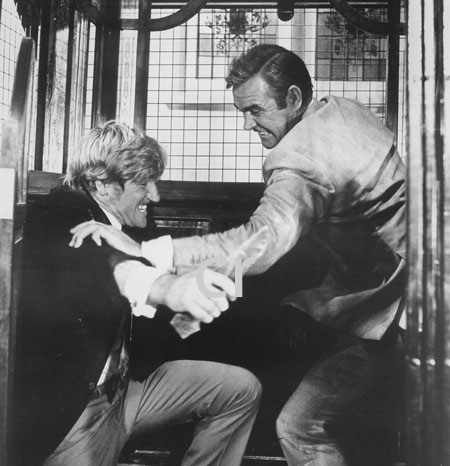
Diamonds are forever commentary (part iii)

Truth be told, I don’t have much to say about Charles Gray’s Blofeld. His casting and acting choices encapsulate the movie perfectly. Counter balancing Connery’s carefree performance, Gray actually worked for his paycheck. He made his interpretation a marked difference from Donald Pleasence and Telly Savalas who preceded him in the role. It’s probably my favorite Blofeld. Gray’s acting may not be to everyone’s taste. In fact, some are even distracted by his casting given he played a Bond ally in the previous Connery outing, You Only Live Twice, as Mr. Henderson.

This further lends credence to my theory that Diamonds Are Forever is a direct sequel to You Only Live Twice. If true, then this would be a groundbreaking moment in the series that would not be seen again until Casino Royale/Quantum of Solace over 35 years later. Hear me out: after the events of You Only Live Twice, Blofeld changed his appearance to fit not just anyone, but Mr. Henderson specifically. Why Mr. Henderson? Who knows. To be honest, Roald Dahl’s script was so batshit that I don’t recall if Mr. Henderson’s background was ever explained. I believe it was hinted that he knew of SPECTRE; so he appeared to be a well-connected guy. Perhaps he knew Willard Whyte? That might explain how Blofeld managed to infiltrate Whyte’s organization for DAF. But whatever the case, I’m sure there’s no need to inspect for holes in my theory as it is ironclad.

So I don’t have much to say on Gray’s Blofeld but I do have a lot to say about his introduction, specifically the set. Let me preface this by saying that Ken Adam might be the greatest production designer of all time. He’s certainly the most iconic of the James Bond franchise. But that set, where Bond confronts Blofeld for the first time in the film, looks like shit. Literally. Everything is dark and brown, right down to Connery’s suit. I’m willing to give Adam the benefit of the doubt. As you all know, I don’t do research. So it’s possible that this “set” isn’t a set at all but is actually someone’s house, specifically Guy Hamilton’s. I’m making this assumption based on no proof, but it feels like Cubby Broccoli went into Hamilton’s basement and said “this would be the perfect place to shoot a Bond film.” Hamilton, being the English gentleman that he is (or was), simply shrugged and said “whatever you say Cubby.” Meanwhile Adam, along with set decorator Peter Lamont, threw up a bunch of rock to conceal the dreariness of the room, leaving cinematographer Ted Moore with the unenviable task of lighting it. That is the only logical conclusion I can come to given the talent involved. Adam, Lamont, and Moore have all won Academy Awards.

But it’s in this scene where Connery has to do a little bit of work, probably the most he’ll do throughout the film. It appears he did his own stunt work by doing a front roll then pulling a switch that dumps a bunch of shit onto a guy pointing a gun at him. Then he briefly tangles with two guards before jumping slightly to the side to avoid a knife attack from Blofeld. I’m surprised they convinced Connery to do as much. It’s probably the laziest fight scene in the whole series.

With Blofeld “dead”, this leads us into the main title sequence…

TO BE CONTINUED