
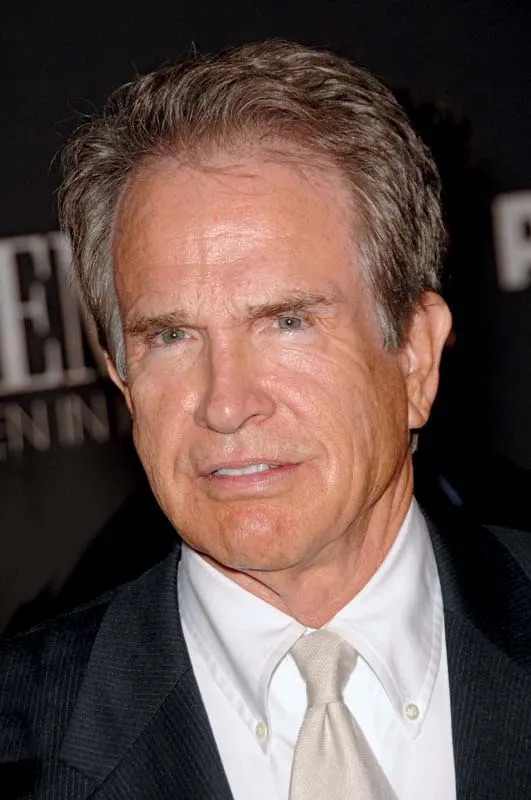
The thing they don’t tell a lot of people is that when you’re about to kill someone, as I’m about to do, your mind begins to wonder. So as I’m sitting here in this Buenos Aires hotel, waiting for my renegade clone (brainwashed by North Korea with aspirations to dominate the world) to come through the door before I pump nine rounds from my Walther P99 into him, my mind wondered to Warren Beatty.
More often than not, I’m more interested in how movies get made than the movies themselves. Film, it is often claimed, is a collaborative medium. Yet due to the nature of the industry, it naturally attracts egos and sociopaths. So if the collaborative claim is true, between on set divas, maniacal studio execs, and authoritarian directors, it’s honestly a miracle that great movies get made at all.
It is a commonly held belief among film buffs that American filmmaking reached its peak as an art form during the 1970s. I mostly agree with this sentiment, which is why I tend to obsessively comb through histories of that era. One name that continually pops up while reading these stories is Warren Beatty.
Beatty these days is mostly remembered for fucking every woman that passed through Los Angeles during his heyday but it’s easy to forget what a formidable presence he was in the industry. And Beatty was choosy as hell with the projects he involved himself in. Despite being a marquee name, from 1970 to 2000 he was only in 13 pictures. We all know he was in some bangers, but half those movies were shit, including, most notoriously, Ishtar.
But what about the good movies he was in? Beatty has the distinction of being one of only two people nominated for Best Picture (as a producer), Best Actor, Best Director, and Best Screenplay at the Oscars for the same movie, with the other being Orson Welles for Citizen Kane. What’s more impressive is that Beatty did this TWICE for Heaven Can Wait and Reds. His other hits include Shampoo, McCabe and Mrs. Miller, The Parallax View, and Bonnie and Clyde. Bonnie and Clyde, released in 1967, is largely considered the turning point in Hollywood towards auteur-friendly cinema that dominated the following decade. As a result, that’s probably Beatty’s lasting achievement.
But what about the rest of his filmography? Outside of Splendor in the Grass and Bonnie and Clyde, a film that he aggressively produced, the 60s were mostly a wash for Beatty. Sure, it was the decade that made him famous, but his career was in serious jeopardy of becoming a flash in the pan before 1967. After the success of Bonnie and Clyde, that fortified Beatty as a Hollywood player and his reputation for being demanding with both executives and fellow collaborators. But to what result?
I’ve probably seen all his notable films post-Bonnie and Clyde. Except for Dick Tracy, I can’t remember any of them. This includes Reds, an effort that earned him an Academy Award for Best Director. In every era of pop culture there’s a monumental figure beloved by critics that, in retrospect, amounted to nothing more than doing the artistic equivalent of sucking their own dick. Kevin Costner, an artist I personally champion, is seen as this figure in the 1990s. Michael Cimino was blatantly doing this for Heaven’s Gate. I think Warren Beatty was this figure in the 1970s, except Beatty was more successful AND better looking.
Despite his many misses, Beatty was able to stay on the A-list due to his charm and relentless politicking within Hollywood inner circles. But this lack of genuine talent can only get you so far. I’ve often said that time is the arbiter of good art and today Beatty’s name is not mentioned in the same breath of Coppola, Scorsese, Spielberg, DePalma, Lucas, and even John Milius. The lasting legacy of Beatty is not any of his films, but his looks and his numerous sexual conquests. It was an odd career, filled with numerous accolades, but it’s hardly discussed today.
His personality in the 60s, pre-Bonnie and Clyde before the awards started rolling in, caused Peter Biskind to label Beatty the “Paris Hilton” of his time, i.e. someone known for being famous without any discernible accomplishment. And strangely, without the lasting cultural cache of his peers, that’s where his legacy somewhat resides.
 The Internet Ruined Everything